


From the 1980s through the 1990s, Japanese anime experienced an unprecedented boom.
It was still the era of cel animation, but starting in the 1980s, Japan’s anime industry saw rapid growth.
With Weekly Shonen Jump entering its golden age, many anime from this period are still cherished today as landmark works that changed the times.
Here, we’ve picked out classic anime that especially resonate with people born in the 1980s.
You’ll find everything from major hits to slightly more niche titles, so take a trip down memory lane and check them out!
- [Nostalgic] A roundup of popular anime series broadcast in the 1980s
- [Nostalgic] A roundup of anime songs and theme songs that were hits in the 1980s
- Anime songs recommended for people in their 40s, from nostalgic classics to the latest hits.
- Recommended anime songs for people in their 50s. Classic and popular anime theme songs.
- [Nostalgic Songs] A compilation of classic anime themes that hit home for those born in the Showa and Heisei eras
- Anime songs that were hits in the 1990s. Recommended masterpieces and popular tracks.
- [Nostalgic] Classic and Popular Anime Songs Recommended for People in Their 30s
- [Showa Classics] A Collection of Nostalgic 70s Anime Songs
- Now’s the time to listen! Uplifting Showa-era songs that brightened Japan
- Anime songs recommended for people in their 60s: from nostalgic classics to the latest hits
- Anime songs recommended for people in their 70s: nostalgic theme songs that let you feel the history of anime.
- Calling all thirty-somethings! Nostalgic anime (based on the 1990s)
- Cute Anime Song Special: From the 1970s to Today!
A Must-See for the ’80s Generation! | Nostalgic Anime Special (1–10)
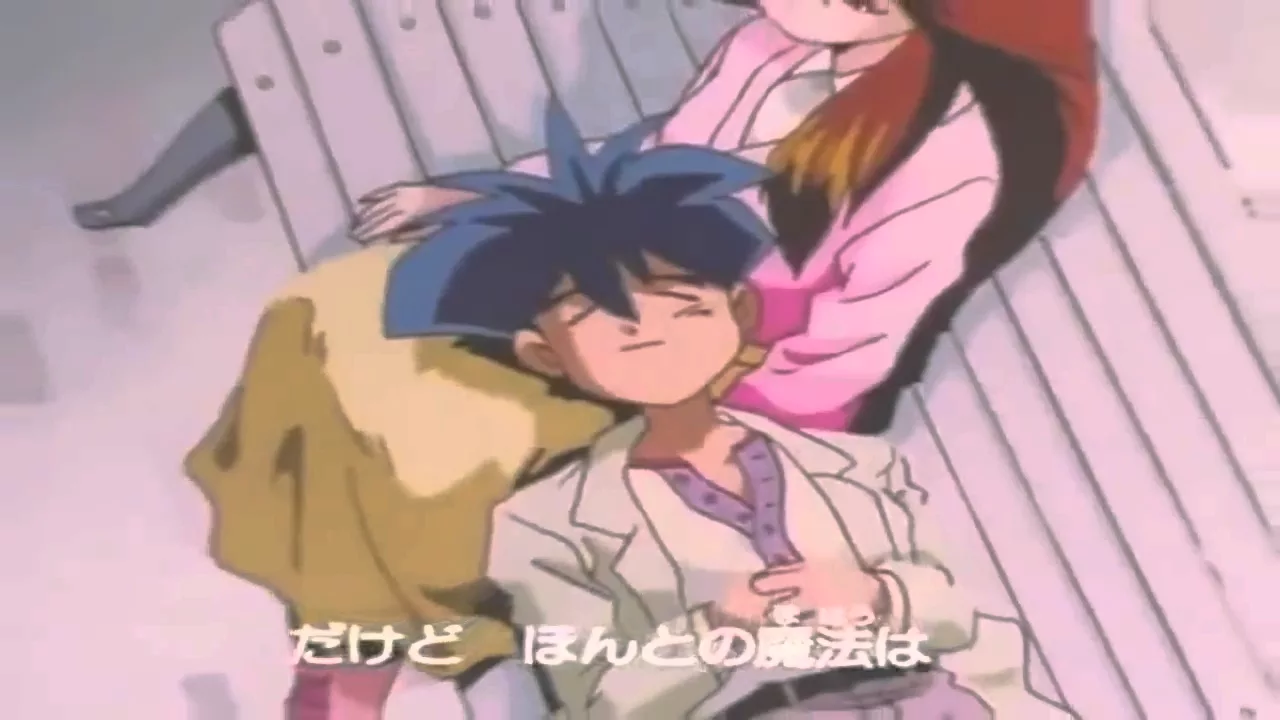
Magical Taluluto (Magical Taruruuto-kun)

An anime based on a manga by Tatsuya Egawa, it was serialized in Weekly Shonen Jump and began airing in 1990.
It’s a gag-style work depicting the slapstick daily life of Honmaru Edojou and the wizard Taruruto.
The cute appearance of Taruruto and the various magical items with different effects drew attention.
Due to Honmaru Edojou’s personality and other factors, the show also incorporated a lot of risqué humor and featured many black jokes, which is why it’s often spoken of as a legendary anime that can’t be rebroadcast.

Charge! Men’s Private School

This is an anime based on Akira Miyashita’s manga that aired starting in 1988.
It depicts the friendship and battles of delinquent boys from all over the country who undergo Spartan training at Otokojuku, highlighting its raw power and wildly over-the-top content.
With elements like Minmei Publishing—a fictitious publisher—and the school’s famously peculiar classes, there’s a lot that piques interest.
The characters’ unique personalities and lines, as well as the signature Otokojuku gags, have been parodied in later works, making it a series that could be called a legend passed down through the years.
Ranma 1/2

An anime that began airing in 1989, based on Rumiko Takahashi’s manga.
Centered on the relationship between high school martial artist Ranma Saotome and his fiancée Akane Tendo, it depicts the daily uproars surrounding their families and the people around them.
A standout point is Ranma Saotome’s premise of turning into a girl when splashed with water, and the gags that make full use of this setup add lively color to the story.
While its distinctive characters—strongly imbued with romantic comedy elements—are a major draw, since they’re all martial artists, the fight scenes are also a key highlight to watch.
Kiteretsu Encyclopedia

Based on a manga by Fujiko F.
Fujio, this work had a special broadcast in 1987 and began airing on television in 1988.
Like Doraemon, another signature work by Fujiko F.
Fujio, it features a mascot-like character and handy gadgets; however, a major difference is that in this series those gadgets are inventions by a figure from the Edo period.
Another noteworthy point is that the relationship between the protagonist, Kiteretsu, and the robot he created, Korosuke, stands in stark contrast to the relationship between Nobita and Doraemon in Doraemon.
Drawing on the Edo-period invention motif, many of the device names are distinctly Japanese, and the touch of period-drama elements is one of the series’ charms.
City Hunter
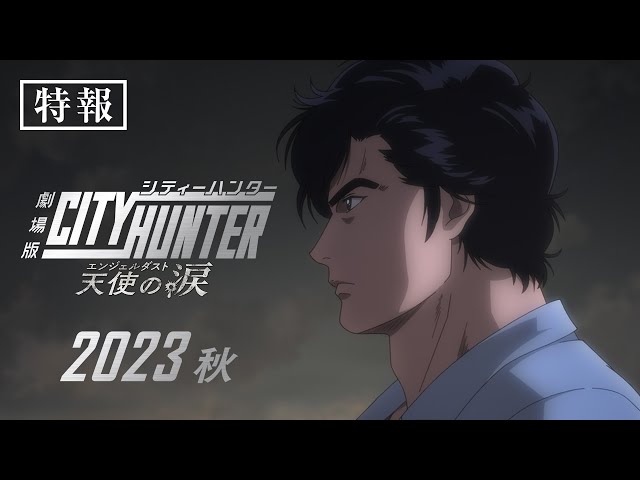
This work is a hard-boiled action series depicting the exploits of Ryo Saeba, a sweeper operating behind the scenes in Shinjuku.
Based on the manga serialized in Weekly Shonen Jump, the anime began airing in 1987.
Its repeated TV runs, numerous specials, and theatrical films all attest to the series’ enduring popularity.
The protagonist’s cool, professional way of handling requests—and the comedic interludes interwoven throughout—create a striking contrast that gives the story real impact.
TM NETWORK’s song “Get Wild” is also indispensable when discussing this series, further emphasizing its cool atmosphere and leaving a strong impression.
Dragon Ball Z

Dragon Ball Z is known as one of Japan’s representative anime works, even having been adapted into a Hollywood film.
Compared to the early days, the battle elements grew stronger, and the introduction of compelling allies and rivals captivated many fans.
The development where a rival is defeated, then becomes an ally to face an even more powerful enemy continues to live on as a classic formula in many shonen manga to this day.
It’s no exaggeration to say the series established a format for later Japanese anime, and it remains an enduringly popular work even now.

Nadia: The Secret of Blue Water
Based on Jules Verne’s novels Twenty Thousand Leagues Under the Sea and The Mysterious Island, this work was broadcast on NHK starting in 1990.
It is a project in which Hideaki Anno served as the overall director and is remembered as one of his signature masterpieces.
Packed with a variety of science fiction elements—from the Book of Genesis in the Old Testament to the legend of Atlantis—it is said to have had a major influence on later anime.
Not only are the characters compelling, but the incorporation of various legends in the background offers multiple angles of enjoyment.