

[For Seniors] Recommended Summer Songs for August [2026]


August is the height of summer.
Because the heat is intense, more older adults tend to spend time indoors.
Many people may be wondering how to help seniors enjoy themselves while staying inside.
In such cases, song-based recreation themed around August is recommended.
Not only can you feel the events of August, but you can also reminisce about nostalgic summer memories.
Here, we introduce children’s songs and popular songs recommended for seniors in August.
Please use this as a reference for song-based activities in senior care facilities.
- [For Seniors in Their 80s] Recommended Summer Songs: From Enka and School Songs to Folk Songs
- [For Seniors] Popular Summer Songs: Selections That Liven Up Karaoke
- [For Seniors] Speaking of July, it’s this song! A selection of tunes to enjoy the hot summer
- Ranking of popular songs for senior citizens
- [For Seniors] Songs Everyone Can Sing Together! A Roundup of Recommended Crowd-Pleasers
- Recommended Summer Songs for People in Their 70s: A Collection of Nostalgic Summer Tunes [2026]
- [For Seniors] September Song Special: Introducing Nostalgic Classics and Children’s Songs that Evoke Autumn
- Recommended love songs for people in their 80s: A collection of classic love songs that colored the Showa era
- Recommended Autumn Songs for People in Their 80s: A Collection of Seasonal Kayōkyoku and Children's Songs
- [For Seniors] Let’s Have Fun Together! Introducing Uplifting, Energizing Songs
- [For Seniors] Summer Haiku: Ideas to Feel the Season
- Recommended summer songs for people in their 90s: A collection of Showa-era summer tunes [2026]
- [For Seniors] Recreations to Experience in August
[For Seniors] Recommended Summer Songs for August [2026] (41–50)
Shiretoko Ryojo (Shiretoko Travel Sentiment)Katō Tokiko

As a classic song celebrating Hokkaido’s magnificent landscapes, it has long been cherished by many.
Released by Tokiko Kato in 1970, the piece delicately depicts the natural beauty of the Shiretoko Peninsula and the feelings of the people who live there.
The lyrics also weave in the Ainu word “pirika,” conveying respect for the region’s culture.
In 1971, it topped the Oricon charts for seven consecutive weeks and was performed at that year’s Kōhaku Uta Gassen.
When sung during recreational activities or karaoke time at facilities, it is sure to offer a heartwarming moment filled with nostalgic memories.
Look up at the stars in the nightSakamoto Kyu

Beloved as a song for gazing up at the night sky, this piece resonates as a warm cheer for those facing hardships.
With lyrics by Rokusuke Ei and music by Taku Izumi, it has long been cherished in the enveloping voice of Kyu Sakamoto.
Released as a single in May 1963, it was originally written as the theme song for a musical.
It is also a celebrated masterpiece that won the Japan Record Award for Composition.
Though born as a message of encouragement for young people studying at night school, it is a song that transcends generations to bring hope and courage.
It’s perfect for everyone to sing together during recreation time at the facility.
The Mountain Hut’s LightŌmi Toshirō
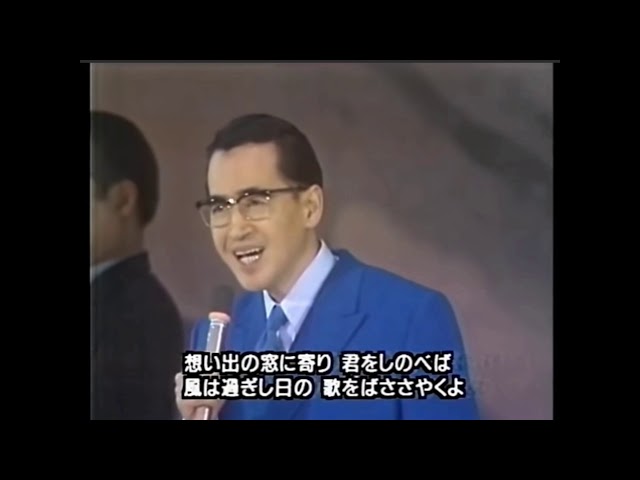
Composed and written by Masao Yoneyama in 1947, shortly after the war, this classic song is a heartwarming piece that depicts the gentle glow spilling from a mountain hut.
Toshirō Ōmi’s tender, enveloping vocals delicately convey the beauty of nature and the warmth of people.
Broadcast as an NHK Radio Kayō program, the song deeply resonated with many listeners seeking hope and comfort amid the postwar turmoil.
Its calm, lyrical melody transcends the boundaries of popular kayōkyoku, carrying elements of folk music as well.
It’s a song we’d love to see sung by those who cherish mountain landscapes and nature, or who hold fond memories of their hometown.
Tokyo Ondomin’yō

Born in 1933 (Showa 8), this is a classic Bon Odori song that represents Japan.
Its lyrics charmingly sing about Tokyo’s famous spots—like the flowers of Ueno and the willows of Ginza—and its light, friendly melody is very appealing.
The rhythm incorporates the flavor of Kagoshima’s folk song “Ohara-bushi,” making it beloved across generations.
Created by Yaso Saijo and Shinpei Nakayama, it was performed by Katsutaro Kouta and Issei Mishima.
Premiered at a Bon Odori festival held in Hibiya Park, it has long resonated with people as a symbol of Tokyo’s recovery and community revitalization.
Filled with nostalgia and perfect for moving your body with joy, this Bon Odori standard is an ideal choice for summer recreation.
Tankō-bushi (Coal Miner’s Song)min’yō

It is a folk song from the Chikuho region, cherished as a hallmark of summer in Japan.
Born in the Meiji era from songs sung by women during coal sorting at mines, it spread nationwide in the early Showa period through radio broadcasts.
Its familiar melody, depicting coal mine labor and everyday life, remains a staple for Bon Odori dances.
In August 2024, BEGIN released a new arrangement incorporating Brazilian samba rhythms, but the traditional choreography—characterized by movements that mimic mining work—makes it easy to dance together with older adults.
Since 2006, Tagawa City in Fukuoka Prefecture has hosted the Tanko-bushi Festival every summer, and the song continues to be passed down across generations.
Tokyo Boogie-WoogieKasaogi Shizuko

When it comes to the rhythmic, boogie-woogie-style songs of Shizuko Kasagi, a singer who represents postwar Japan, everyone knows these classics.
The hope-filled melodies are exhilarating, and the simple, rhythmic lyrics are easy to hum along to, making them fun for everyone to sing.
Released by Nippon Columbia in January 1948, this work was a massive hit, selling 270,000 copies.
It’s also interesting that Ryoichi Hattori is said to have taken inspiration for the rhythm from the swaying of a train.
The song appears in the film Drunken Angel and has been beloved across generations.
Singing it together with older adults can spark lively conversations about memories from that time.
Clapping along naturally gets the body moving and helps develop a sense of rhythm.
With its blend of nostalgia and fun, this classic offers a wonderful moment to enjoy.
summer vacationyoshida takurou

This is a classic song by Takuro Yoshida, written with a gentle, bittersweet melody that traces summer memories in Kagoshima and Hiroshima.
Included on the 1971 live album “Yoshida Takuro On Stage Tomodachi,” the piece vividly paints scenes of a summer vacation that anyone might find nostalgic.
Childhood memories and moments with a cherished teacher are woven together with heartwarming lyrics.
A studio version was released on the 1972 album “Genki Desu.,” and the song has continued to be beloved by the artist and fans alike.
Inviting listeners to look back tenderly on summers from their youth, it’s a tune you can hum together with older generations, sparking wonderful conversations about treasured memories.