
[With Video] Let's Play! A Roundup of Instruments That Make Up a Band

When you’re about to say, “Alright, let’s start a band!” the first thing to decide is each member’s role, right?
Who’s going to sing, who’s going to play—fun but tricky decisions.
In this article, we’ll introduce a range of instruments that are used in real band lineups.
From the classics to unusual ones you may not have heard of, we’ve got a pretty wide selection!
It might be especially helpful if you’re thinking, “I want to form a slightly unconventional band that stands out.”
- Recommended songs for beginner bands: simple and crowd-pleasing tracks.
- Recommended songs for beginner band members by instrument
- A special feature on girls' band tracks and female-vocal study songs that help you focus
- [For Beginners] Recommended Songs for Female Vocal Bands: Great for Choosing Your Setlist! [2026]
- First live band performance: Popular recommended songs to cover for entertainment acts and showcases [2026]
- The depth of guitar sound. A collection of songs with cool guitar.
- Band-sound Vocaloid Song Special [Rock]
- [Rock] Easy Band-Style Vocaloid Songs for Beginners [Simple]
- A collection of video game music I want to perform in a wind ensemble
- Challenge percussion! A collection of songs I want to play on the cajón
- A collection of cool songs that sound great when sung by women, originally male songs
- Recommended Songs for Beginner Bands at School Culture Festivals
- [Music-themed Educational Toys] A roundup of toys that let you enjoy sounds
[With Video] Let's Play! A Summary of Instruments That Make Up a Band (11–20)
flute

The flute is a very elegant wind instrument, played sideways.
You often see it in wind ensembles and orchestras.
Unlike other brass and wind instruments like the trumpet, it’s characterized by a warm, soft tone.
While you might not think of it as a typical “band instrument,” its flexible articulation lets it handle fast melodies, so it can cover upper-layer parts like a keyboard or synth.
It also works quite well taking on the vocal part with the flute.

shamisen
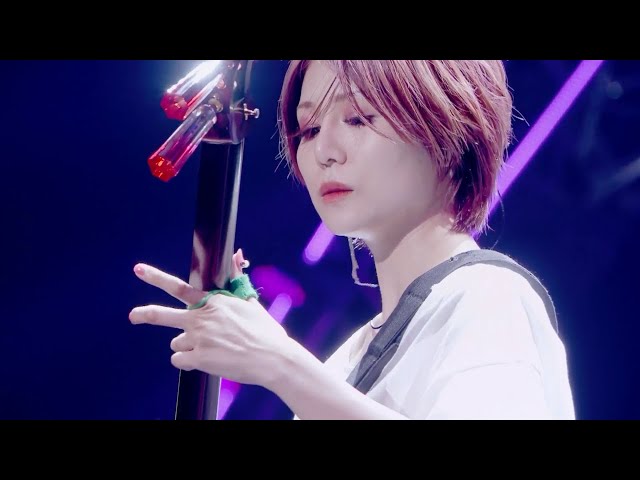
A stringed instrument said to have been introduced from the Ryukyu Kingdom during the Sengoku period, it is classified as a relatively new addition among traditional Japanese instruments.
It’s often recognized in its Tsugaru shamisen form, and its sharp tone—distinct from the warm timbre of the Okinawan sanshin that evokes Okinawa—creates a definite impact even in band settings.
In recent years, it’s been gaining popularity thanks in part to Beni Ninagawa of Wagakki Band, who has delivered sensational performances that fuse shamisen with rock.
With its sense of speed and the traditional sound unique to Japanese instruments, it’s a quintessentially Japanese part that ramps up the energy.

shoulder keyboard

A keyboard that you hang from your shoulder with a guitar-like strap.
In Japan, it’s known as a highly mobile instrument strongly associated with music producers Tetsuya Komuro and Daisuke Asakura.
Unlike a typical keyboard, which keeps you stuck in front of the instrument, a shoulder keyboard lets you move around while holding it, greatly expanding your performance possibilities.
Since you control effects and tones with your left hand and play only with your right, it might take quite a bit of practice to master.
vocoder

There are a lot of ways to look at it, so it’s hard to sum up in one neat phrase, but to put it super simply, a vocoder is an instrument that can produce a “robot voice.” This instrument can create sounds like a rhythmically distorted singing voice, and the surprising way you play it is by actually singing.
The vocals picked up by the mic are fed into a synthesizer, where the tone is altered to make it sound robotic—but it’s not the same as a normal singing voice.
The unique sound that only a vocoder can make is really addictive to listen to.
The rock band POLYSICS uses it a lot.
mandolin
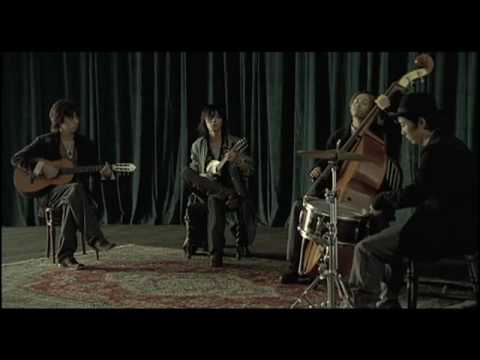
The mandolin is an instrument often used in music genres like bluegrass and country.
It originated in 17th-century Italy as a derivative of the lute and was played mainly across Europe.
Its appearance and tone convey a sense of elegance and splendor.
Like the guitar, it cannot sustain notes, so techniques such as tremolo and arpeggios are frequently employed.
Its refreshing melodies evoke rich natural landscapes, and in the United States it is used alongside the fiddle and banjo.
The warm timbre of this stringed instrument adds color to a band’s sound.

ukulele

A four-string instrument that was brought from Portugal and evolved uniquely in Hawaii.
In Japan, it’s strongly associated with Hawaiian music, and many people may find it hard to imagine it fitting into a band ensemble because of its organic, gentle tone.
However, Canadian ukulele player James Hill and others have shown that, when used with effects like a guitar, it has the potential to handle a wide range of genres—rock, pop, jazz, and even hip-hop.
Also, since its chords are simpler than those on instruments like the guitar, it’s an accessible choice for beginners.
In conclusion
When it comes to band setups, guitar, bass, and drums are popular, but there’s no rule that says you absolutely have to use those three. If you look around, you’ll find plenty of bands without guitar, bass, or drums. In that spirit, try thinking of a lineup that lets you express your own music without being bound by convention!