

A must-see for piano beginners! Carefully selected classic pieces you should play at least once

Do you assume that as a piano beginner there’s absolutely no way you can play famous pieces?
In fact, among classical works, there are many masterpieces that are approachable even for those who’ve only just started practicing the piano.
In this article, we’ve picked out classical pieces recommended for piano beginners!
We’ll introduce a wide range of piano works, as well as piano arrangements of orchestral pieces, from the Baroque era to the modern and contemporary periods.
You can choose to play just a section, or slow down the tempo and play at your own pace—enjoy performing great music in the way that suits you best!
- Piano Masterpieces: Surprisingly Easy Despite Sounding Difficult!? A Curated Selection Perfect for Recitals
- [Beginner] Start Here: Classic Practice Pieces Recommended for Adult Piano Beginners
- [Beginner] Recommended for adult piano beginners! Beautiful & stylish piano pieces
- Beginner to Intermediate: Chopin pieces with relatively low difficulty. Recommended works by Chopin.
- For Beginners: Easy to Play and Sounds Impressive! Pieces That Shine at Piano Recitals
- [Beginner] Also great for piano recitals! Classical pieces that look cool when you can play them
- [For Piano Recitals] Simple yet Cool Classical Pieces
- [Piano Pieces] Easy for Children to Play! A Roundup of Simple Classical Works
- [Beginner] Recommended Piano Pieces to Play at a Recital
- [For Elementary School Students] Brilliant, Showy Masterpieces That Sound Impressive at Piano Recitals
- [Classical] Famous Piano Works | Gem-like Masterpieces You’ll Want to Play at Least Once in Your Lifetime
- Beginner to Intermediate: Recommended Bach Pieces You’ll Want to Play on Piano
- [Intermediate Level] Cool Piano Pieces You Can Play [Great for Recitals Too]
A must-see for piano beginners! Carefully selected classic staples you should play at least once (21–30)
Songs Without Words, Book II, Op. 30, No. 1: MeditationFelix Mendelssohn
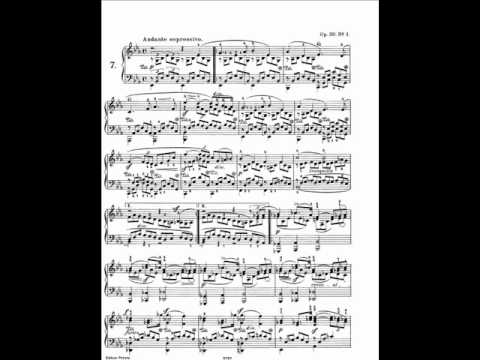
This work, notable for its slow and gentle melody in E-flat major, is one of the pieces from the Songs Without Words published in Bonn in May 1835.
Evoking the atmosphere of quiet meditation, it combines rich lyricism with relatively modest technical demands.
Cast in ternary form, it features a coherent structure and simple yet profound emotional expression, making it a valuable teaching piece for developing a pianist’s expressiveness.
It is an ideal choice for those looking to broaden their repertoire or seeking a calm, reflective piece.
Livia Rév’s 1986 recording received France’s Grand Prix du Disque and is highly acclaimed for its delicate interpretation.
MemoryWolfgang Amadeus Mozart

This is a piano miniature in G major, notable for its gentle atmosphere and flowing melody.
Employing an accompaniment pattern known as the Alberti bass, the beautiful melody conveys the refined aesthetic of the Classical era despite its simplicity, soothing the listener’s heart.
The fluid accompaniment based on broken chords is a hallmark found in many of Wolfgang Amadeus Mozart’s piano works, and its charm is fully showcased here as well.
While the piece is structured to be approachable for performers, it also offers ample opportunities for expressive playing.
It is an ideal choice for those who have mastered basic piano techniques or for listeners wishing to become more familiar with classical music.
A must-see for piano beginners! Carefully selected classic masterpieces you should play at least once (31–40)
Songs Without Words, Book V, Op. 62 No. 5, No. 3: “Venetian Boat Song”Felix Mendelssohn

This is a piece from Felix Mendelssohn’s celebrated collection of piano miniatures, the masterpiece “Lieder ohne Worte” Op.
62.
The 6/8 accompaniment in the left hand deftly depicts a gondola gliding along the canals of Venice, while the right hand sings a melody like a plaintive song echoing over the water.
Its appeal lies in the way it conveys a poised dignity and elegance within sorrow, rather than being merely dark.
Published in 1844, this set is dedicated to Clara Schumann.
It is recommended for those times when you don’t want to force yourself to feel cheerful, but instead wish to surrender to this beautiful melody and savor the sensation of quietly sinking into the depths of your heart.
French Suite No. 1, BWV 812: SarabandeJ.S.Bach

For those who admire Baroque music but struggle with complex counterpoint, this piece is recommended.
Composed around 1722, it appears in Anna Magdalena Bach’s Notebook, indicating that it was intended for approachable, domestic performance.
It’s a slow dance in triple meter, characterized by simple harmonic progressions and beautiful ornamentation.
The tempo is leisurely, and there are no difficult phrases or virtuosic passages, so beginners to Baroque music can learn to play it quickly with practice.
Since tone color, expression, and dynamics are emphasized, play while exploring a beautiful sound.
French Suite No. 2, BWV 813 – CouranteJ.S.Bach

Among the French Suites, this piece is filled with dance-like charm, distinguished by its elegant triple meter and flowing melody.
Composed between 1722 and 1725, it is a Baroque masterpiece that blends French and Italian dance styles into a refined work.
Though it has no lyrics, the music itself speaks, and its expressive, richly contoured melody conjures images of graceful courtly dances.
Despite its relaxed tempo, it weaves in complex rhythms, making it recommended both for those aiming to develop performance technique and theoretical understanding, and for listeners who want to savor the allure of Baroque music.
Composed for educational purposes, it combines ease of playing with artistic depth.
French Suite No. 3, BWV 814, MinuetJ.S.Bach

Brimming with the charm of an elegant and refined dance, this piece is cherished as part of a suite composed between 1722 and 1725.
Structured in ternary form, it exquisitely contrasts flowing, beautiful melodies with introspective, delicate expression, allowing performers to showcase a wide range of musicality.
While it requires an understanding of Baroque ornamentation and articulation, its technical demands are relatively modest, making it ideal for those who wish to focus on musical expression and sensitivity.
It is also widely featured in educational settings and is used as an important repertoire to cultivate both performance technique and musicality.
Gavotte from French Suite No. 4, BWV 814J.S.Bach

Here is a Baroque masterpiece that lets you savor the light, buoyant rhythms of the French dance style.
Composed between 1722 and 1725, it is known as the fourth movement of a suite and is structured as a clear, dynamic dance in 2/4 time.
It features the repeated use of a concise motif built from consecutive two-note figures, showcasing a superb fusion of Bach’s distinctive contrapuntal beauty with the elegance of a courtly dance.
Although originally written for harpsichord, it is commonly performed on the piano today, demanding a crisp sense of rhythm and a delicate touch.
Recommended for those who want to explore Baroque music or experience the charm of dance forms.