

[John Cage] A piano piece? A fantastically eccentric work by an avant-garde artist

John Cage was an extraordinary musician: an American composer, poet, thinker, and, driven by his fascination with nature, a dedicated mushroom researcher.
Many of you may know him as a composer famed for experimental works that incorporate elements seemingly uncharacteristic of music—such as placing rubber or metal between piano strings, or sitting in front of a closed piano lid for several minutes.
This time, we’re picking out piano pieces from John Cage’s oeuvre!
That said, some of them might make you wonder whether they can truly be called piano works…
Please enjoy exploring the world of John Cage—who created music by viewing his surroundings from a perspective unlike anyone else’s.
- [Contemporary Pieces] A curated selection of classical works that captivate with the piano’s mysterious resonance!
- [Schoenberg's Piano Pieces] Atonal works by the founder of the twelve-tone technique
- [Toru Takemitsu's Piano Pieces] A Select Collection of Exquisite Masterworks Left by the World-Renowned Takemitsu
- [Ryuichi Sakamoto] Piano Works | A Selection of Moving and Healing Masterpieces
- Satie’s Piano Pieces | Fleetingly Beautiful Works by Music’s Maverick
- [Japanese-style Piano Pieces] A selection of recommended works with a pleasantly Japanese flavor
- Stravinsky’s Piano Pieces: Masterpieces by a Composer Who Defined the 20th Century
- Scriabin’s Piano Works: Selected Masterpieces by a Pioneer of Modern Music
- Innovator of Hungarian Music: A Summary of Béla Bartók’s Piano Works
- [Advanced] A Comprehensive Introduction to the Difficult Piano Pieces of Chopin, the Poet of the Piano!
- Piano Works by Joplin: Cheerful Masterpieces by the King of Ragtime
- Autumn for the Arts: Treasured Piano Pieces | Enjoy Classical Music by Listening and Playing
- Hindemith’s Piano Works: Sparkling Masterpieces by a Composer Who Mastered Numerous Instruments
[John Cage] Piano Pieces? Fantastical Works by an Avant-Garde Artist (1–10)
Sonatas and Interludes for Prepared Piano: Sonata VJohn Cage

John Cage is a leading avant-garde composer representing the United States.
His music is known for actively incorporating unique elements—such as chance operations and environmental sounds—that go beyond traditional frameworks.
Sonatas and Interludes for Prepared Piano is one of his signature works, employing a “prepared piano,” in which the instrument’s timbre is altered through special techniques.
This approach produces unexpected sounds and noises from the piano, offering a diverse palette of tones reminiscent of percussion.
It’s recommended not only for those interested in avant-garde music, but also for anyone who wants to experience the boundless expanse of sound.
dreamJohn Cage
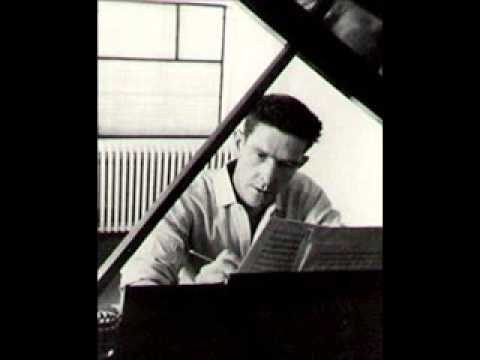
John Cage, a representative figure of twentieth-century avant‑garde music, is known as a pioneer of indeterminate music and electronic music, and as a singular composer who challenged conventional uses of instruments.
His 1948 work Dream is a piano piece born from his collaboration with dancer Merce Cunningham; while following a rhythmic structure, it creates a gentle, meditative atmosphere through sustained resonances.
Within its tranquil sounds unfolds a world of deep reflection—an appealing work not only for those interested in contemporary music, but for anyone seeking to bring a new sensibility to everyday life.
Music of the I ChingJohn Cage

John Cage, an American avant-garde musician, was an unconventional composer who brought major innovations to twentieth-century music.
Music of Changes is a work that employs an avant-garde, experimental approach in which choices of sounds and their organization are determined based on the Chinese classic, the I Ching.
The unique sonorities born from the chance operations of each individual note seem to embody Cage’s own musical outlook, which boldly steps away from Western musical tradition.
It is a recommended work not only for those interested in contemporary music, but also for anyone who wants to experience a fresh sonic world unbound by preconceived notions.
[John Cage] Piano Pieces? Fantastical Works by an Avant-Garde Artist (11–20)
Seven Haiku No. 1John Cage

American avant-garde artist John Cage’s work Seven Haiku No.
1 is a solo piano piece composed between 1951 and 1952.
Reflecting influences from Asian cultures and philosophy, each movement is structured according to the haiku form, with the durations of notes arranged in a 5-7-5 relationship.
In composing the piece, Cage employed chart techniques based on chance operations and incorporated silence as a musical element, aiming for expression that transcended existing frameworks.
The work is dedicated to various people in his life, and its striking feature is the mysterious fragments of sound that seem to emerge from silence.
It is a piece recommended not only for those interested in twentieth-century music, but also for anyone drawn to contemporary art.
Metamorphosis No. 1 (Transformation)John Cage
Metamorphosis is a piano piece composed in 1938 by John Cage, known as a standard-bearer of avant-garde music.
It employs a distinctive method, constructed solely from fragments of rows without variation.
The work strongly reflects his experimental approach, making extensive use of serialism and counterpoint.
While it lacks the familiar melodies and harmonies found in conventional pieces, by attuning oneself to its non-traditional sonorities, one can experience a new kind of musical encounter.
Highly recommended for those interested in contemporary music or wishing to explore Cage’s innovative style.
0 minutes 00 secondsJohn Cage

John Cage, a leading avant-garde musician of the 20th century.
Among his many innovative works, one of the most unconventional is 0’00”.
This piece, which instructs the performer to take “any action,” challenges the very definition of music.
At first glance, it seems to produce no sound, yet Cage’s philosophy—seeing everything heard during the performance, from ambient noises and the audience’s reactions to the performer’s very presence, as “music”—is distilled within it.
Perhaps within the “silence” we usually overlook lies an irreplaceable form of music.
Why not contemplate new possibilities for music through Cage’s works?
OneJohn Cage

John Cage was a leading American composer of the 20th century who created original works in the field of avant-garde music.
He is known for music that incorporates elements of indeterminacy and for innovative silent pieces such as 4’33”.
In his late One series, Cage employed a unique compositional method called “time brackets,” which grants performers a certain degree of freedom and creates an anarchic space.
These expansive works, constructed from limited sonic elements, heighten awareness of everyday sounds and offer listeners a new musical experience.
They are works that anyone interested in contemporary music should encounter at least once.