


Confucius was a thinker and philosopher who was active in China during the Spring and Autumn period, and he is counted among the Four Sages alongside the Buddha, Christ, and Socrates.
Did you know that the Analects—compiled by his disciples—still contain many ideas that resonate with people’s daily lives even after many centuries?
This time, we will introduce some of the famous sayings Confucius left behind.
You’ll find words that jolt you when you’re troubled and perspectives so fundamental we tend to forget them—offering hints for living from a variety of angles.
- Enriching Sayings of Mencius: A Collection of Words to Guide Your Life
- Life’s guideposts illuminated by sayings from the Analects: Confucius’s teachings that move the heart.
- If you know them, they’ll surely guide your life! Important words to etch into your heart
- Cherish each and every day! Let your life shine with profoundly moving, supreme quotes.
- You might even find your motto—short phrases that leave a lasting impression.
- That one line is sure to jolt you! Short but cool words
- Fuel for tomorrow! Change your life with words that fire you up.
- Famous quotes by philosophers around the world, originating in ancient Greece
- Beautiful words by great and famous people that illuminate life
- [Spring Quotes] Glamorous words perfect for adding color to a new beginning
- Mottos that are sure to lift your spirits and keep you positive!
- Just remembering them fills you with courage! Striking quotes that touch the heart from great figures and famous people
- Witty one-liners that pierce the heart: a collection of brief yet profoundly meaningful maxims
Confucius, the founder of Confucianism, left behind quotes that became life hits (1–10)
Too much is as bad as too little.Confucius
The idea that having more of everything and plenty to spare is better is a way of thinking that most people tend to have.
This famous saying of Confucius warns against that all-too-common tendency to overdo things, insisting that moderation in all things is essential.
It tells us that excess is just as undesirable as deficiency, and that recognizing the right balance is crucial.
It’s as if he’s saying that whether it’s food or study, the appropriate amount is what leads to a healthy, well-rounded life.

Do not do unto others what you do not desire for yourself.Confucius
As words attributed to Confucius, this saying appears twice in the Analects.
It means, “What you do not wish others to do to you, do not do to others.” This is the essence of compassion toward others, and Confucius teaches that it is indispensable not only in politics but also in the home for building good human relationships.
This principle is known as the Silver Rule, and similar teachings can be found in many religions, so if you’re interested, please look into them.

Enjoy whatever you do. When you do things with enjoyment, unexpected strengths reveal themselves.Confucius

The more strongly you want to produce results, the more the time you spend facing the task can feel difficult and painful.
This is precisely when I want you to remember Confucius’s famous saying that expresses how important it is to approach things with enjoyment.
It encourages you to relax your shoulders, conveying that letting go of unnecessary tension can lead to better performance and outcomes.
When you’re at an impasse, recalling these words and relaxing may broaden your perspective and help you see a solution.
When it comes to benevolence, one should not yield even to one’s teacher.Confucius
Having figures like parents or teachers—people we ought to respect—can enrich our lives.
Yet this quote conveys a steadfast resolve: even toward such important figures as teachers, there are things one cannot yield.
By expressing an unwillingness to defer in the accumulation of benevolence and the cultivation of virtue, it asserts that we should advance by cultivating virtue in our own way.
It also suggests that how to accumulate benevolence is not something to be taught by someone else, but something one should think through and pursue independently.
A superior person cooperates with others without losing their autonomy, while a small-minded person outwardly conforms but never truly becomes close at heart.Confucius

Confucius emphasized the importance of morality and education, and one of his famous sayings goes: “The superior person seeks harmony but does not conform; the petty person conforms on the surface but does not truly connect.” In other words, while cooperating with those around you, you should firmly maintain your own principles and values.
No matter who you’re dealing with, you can behave smoothly on the surface while still honoring yourself.
In work and human relationships, harmony and cooperation are important, but this saying—urging us to get along well while cherishing our own core—remains relevant today.

If I hear the Way in the morning, I can die in the evening.Confucius
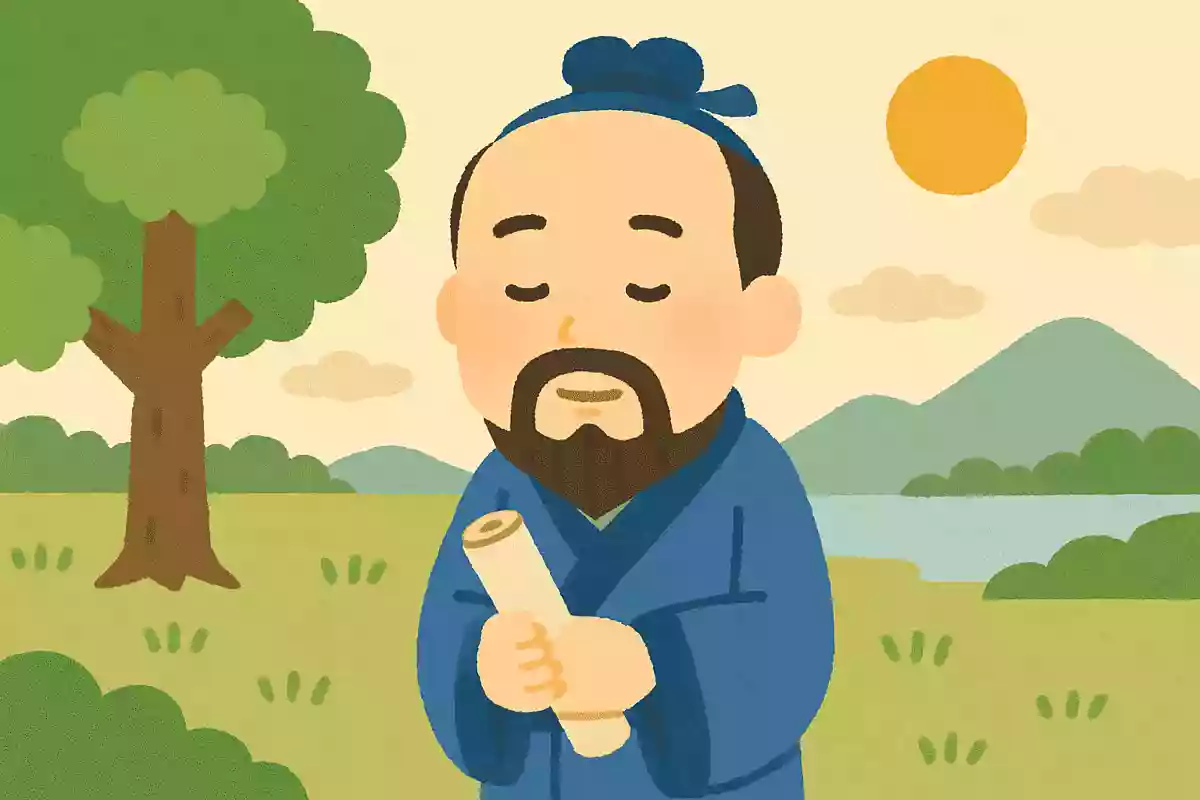
These words express the idea that realizing how one ought to live as a human being is of utmost importance, and that once you attain that realization, you will have no regrets.
Thinking from the latter part of the statement, you can also sense Confucius’s stance of pursuing the Way so that there will be no regrets.
Precisely because the proper path in life is not easily found, it also feels like an expression that our regrets remain because the Way is still unfinished.
It is a famous saying that conveys a resolve to devote one’s entire life to learning, and asserts that without such determination, the Way cannot be found.
To know that you do not know is true knowledge.Confucius
In our daily interactions, it can sometimes feel embarrassing to admit when there’s something we don’t know.
This is a quote from Confucius that highlights the importance of acknowledging what we don’t know and hints at future connections.
By admitting our ignorance, we may be taught what we lack and open the door to new knowledge.
It also conveys that understanding what we know and what we don’t—engaging in self-analysis—can be the starting point for acquiring broader knowledge.
To see what is right and not do it is a lack of courage.Confucius
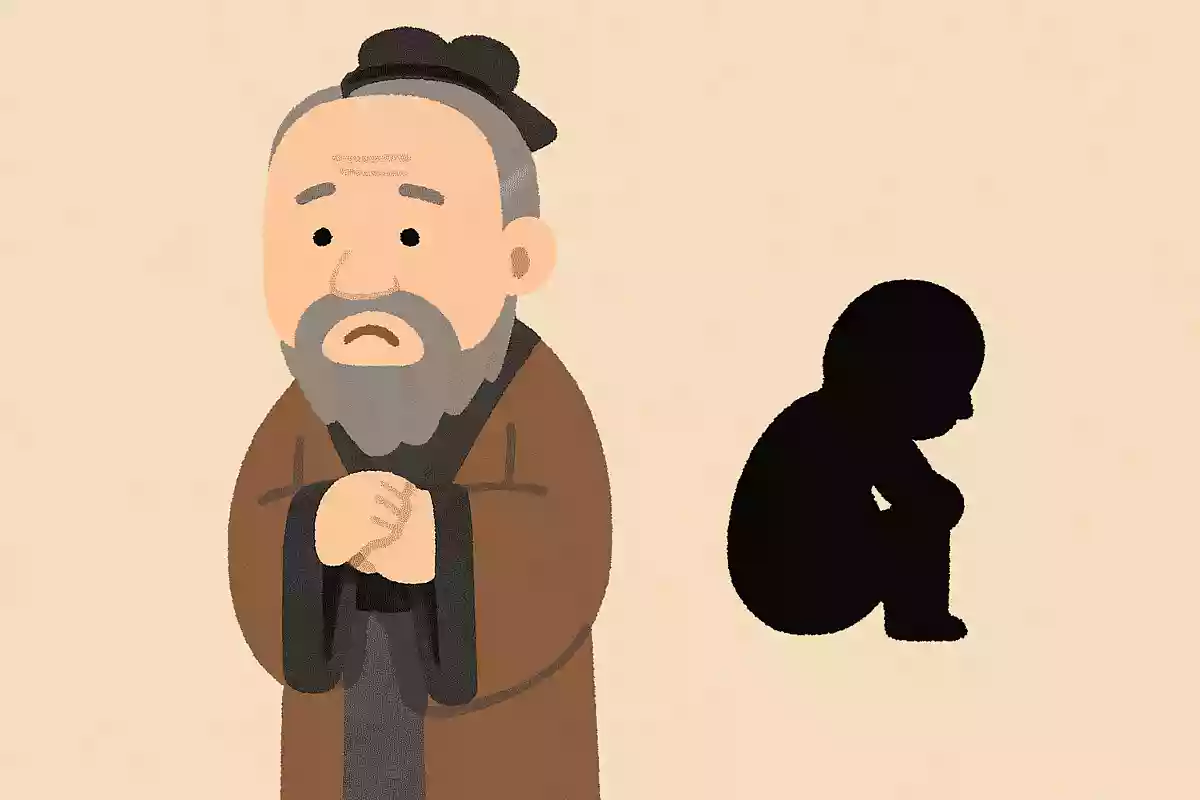
It’s a famous saying that encourages doing what is right, conveying the idea that failing to act despite knowing what is just comes from a lack of courage.
It teaches that the person who can extend a helping hand to someone in need right before them is the one who truly has courage—an ideal long valued in Bushidō.
Getting involved does carry risks, but the saying urges us to take that first step, as it leads to personal growth.
It also seems to caution us in our daily lives about how foolish it is to turn a blind eye.
Good medicine tastes bitter but benefits the illness; honest advice is unpleasant to hear but beneficial to conduct.Confucius

To gain certain benefits—like taking a bitter medicine to treat an illness—we’re sometimes required to endure discomfort.
This quote clearly conveys that idea: just as good medicine is often bitter, good advice is often hard to accept.
For those who’ve experienced the effectiveness of bitter medicine, these words can inspire them to endure and accept even the advice that’s difficult to take in.
When anger arises, imagine its outcome.Confucius

Anger is one of the most intense human emotions, and when it can’t be controlled, it may escalate into trouble.
Here is a saying by Confucius that helps you restrain such anger while supporting the avoidance of conflict.
It conveys that you should imagine what kind of outcome will result if you unleash the anger that has surged in your heart, and then decide what to do with that anger based on the consequences you foresee.
By inserting the step of envisioning the outcome of anger, these words seem to embody a strategy aimed at helping you regain a calm state of mind.