

A quote by Albert Einstein, the greatest physicist of the 20th century

Albert Einstein, a great figure from Germany who left numerous achievements as a theoretical physicist and a socialist, has etched his name in history.
This time, we’ll introduce a selection of famous quotes attributed to Albert Einstein.
From lines that make you think, “As expected from a physicist,” to words that anyone can agree with, we’ve compiled a wide-ranging list.
These are all sayings that will support you when you’re feeling down or on the verge of breaking, so be sure to check them out!
- Words from famous people that I’d like to adopt as my motto. Inspiring quotes that convey the power of words.
- Quotations with a sense of humor: witty words from great figures that make you chuckle.
- When you’re feeling unmotivated! Inspiring words from great figures and famous people
- You can push a little further! Inspiring quotes from great figures to boost your study motivation
- Quotations from literary masters: messages from authors who weave captivating works.
- Famous quotes everyone knows, including words from great figures and characters
- Words from great and famous people that make you forget negativity in an instant!
- [Quote of the Day] A little phrase to brighten your day!
- A collection of quotes from people of the past: messages from famous military commanders and great figures of the world.
- It’s sure to resonate most with those who are striving! Words of encouragement from great figures and famous people.
- Guaranteed to move you! Memorable words by great figures and famous people.
- Beautiful words by great and famous people that illuminate life
- Heartfelt! Inspiring Quotes Left by Great Figures of Japan
The top quotes (1–10) by Albert Einstein, the greatest physicist of the 20th century
Weaknesses will eventually become character.Albert Einstein

It’s said that even Albert Einstein, remembered as a genius, had a weakness: he struggled to remember numbers and symbols.
This quote offers a chance to face the kind of weaknesses we all want to hide in a positive light.
We often think weaknesses must be fixed or overcome, but it suggests that, in some cases, accepting them and living alongside them can even turn them into part of your character.
If there’s a weakness that’s been on your mind, why not use this as an opportunity to decide whether it’s something to conquer or something you can coexist with—and to face it head-on?

Even if the state demands it, you must not do anything that goes against your conscience.Albert Einstein
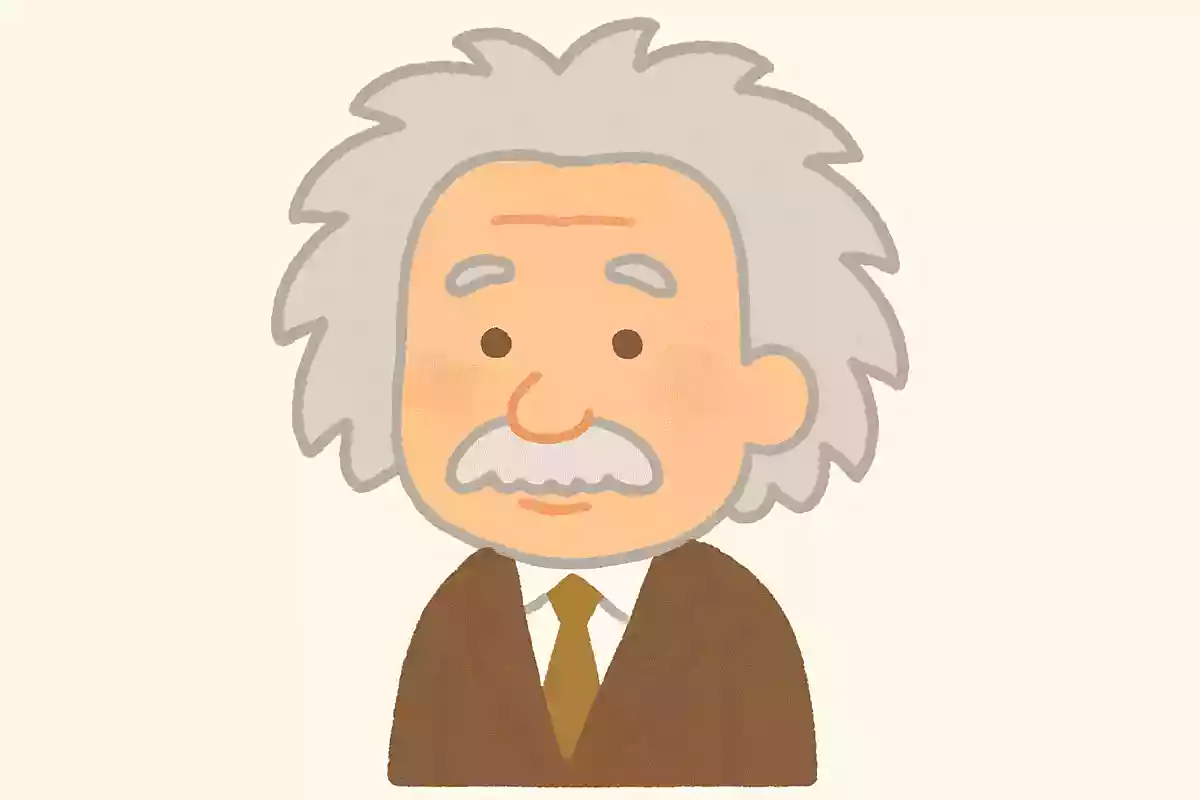
This is a famous quote by Albert Einstein—who proposed numerous theories—that expresses an ideal posture, imbued with reflection and regret.
It is said to be words he left in later years, in light of the situation created by nuclear weapons, which he had been involved with through his theoretical work, urging that conscience should take precedence over the state.
The demands of the state are powerful, but he conveys in strong terms—tempered by self-reflection—that we should approach everything with a conscience that takes priority over them.
It is a statement that makes us think deeply about our actions: what each of us can do, and with what mindset we ought to engage.
It’s insane to keep doing the same thing while expecting a different result.Albert Einstein
It’s a famous quote that conveys a way of thinking about how to take on challenges, reflecting a history of trial and error and perseverance as a scholar.
It says that to achieve results, you should make gradual changes in your approach, and that repeating the same thing while expecting a different outcome is reckless.
This mindset applies not only to experiments and research but also to everyday life: when things aren’t going well, you should try changing your method.
It’s the kind of remark that encourages us not to abandon thinking, but to consider our approach and move forward in everything we do.
Quotes (11–20) by Albert Einstein, the greatest physicist of the 20th century
Why do you blame yourself? Other people will blame you when necessary, so isn’t that enough?Albert Einstein

The more serious and hard on themselves people are, the more they tend to blame themselves when they make mistakes—and sometimes that cycle traps them in a loop where nothing goes well.
This quote poses a question to those who self-blame and gives them the strength to look forward.
It says that you don’t need to go out of your way to blame yourself—if blame is necessary, others will do it—and it’s better to keep your own heart facing forward.
It’s a line that makes you think it’s okay to sometimes leave things to those around you and simply keep your eyes on the direction you should be heading.
A person’s worth is measured not by what they gain, but by what they give.Albert Einstein

Because he was someone who left behind a variety of theories for future generations, his words carry real weight: this famous quote presents a way of thinking about where a person’s true value lies.
When we achieve great results, we tend to feel that makes us valuable, but it tells us that a person’s value is determined more by what they give to those around them.
It not only encourages contributing to others, but also seems to point to a path for attaining even greater results.
These words may prompt us to reflect on how to live our lives—what to prioritize as we move forward so that we can enhance our own value.
If you can’t explain it to a six-year-old, you don’t really understand it.Albert Einstein

This is a famous quote that presents a way of thinking about understanding, one that even questions whether people called scholars truly grasp their respective fields.
It says that if you really understand something, you should be able to explain it in a way that a six-year-old child can understand; if that’s difficult, then you can’t claim to understand it.
It conveys that true understanding isn’t just satisfying yourself internally, but making others understand as well.
It also suggests a study method: by striving to explain things to others, you can deepen your own understanding even further.
Life is like riding a bicycle. To keep your balance, you must keep moving.Albert Einstein

As we go through life, we all stumble over something, and some people stop in their tracks at those moments.
This quote offers a chance to think about how to face the difficulties we encounter in life.
It tells us that if we stand still, we close off the possibilities of the future; like keeping a bicycle steady by moving forward, it’s important to keep going, even little by little.
These words make us feel that by continuing to move, even at a slow pace, our possibilities can expand without limit.