

[For Seniors] Heartwarming Handmade New Year’s Cards: Fun Ideas Using Everyday Materials

Handmade New Year’s cards naturally carry a warm, heartfelt touch.
In this article, we introduce a variety of ideas—from cleverly using eraser stamps and origami, to the Japanese elegance created by brush lettering, torn-paper collages made from newspaper, and even original postcards crafted from milk cartons.
You’ll also find plenty of tips that use familiar materials like masking tape, cotton swabs, and vegetable stamps.
Why not get your fingers moving and create a one-of-a-kind New Year’s card of your very own?
- [For Seniors] Let’s Make New Year Decorations by Hand! A Collection of Easy Ideas Using Everyday Materials
- For Seniors: Auspicious Handmade Zodiac Ornament Craft Ideas
- [For Seniors] Gift It to Someone Special: A Collection of Handmade Birthday Card Ideas
- [For Seniors] Recommended Wall Decorations and Crafts for January
- Lucky Daruma: Craft ideas for decorating January wall displays for seniors
- [For Seniors] January Craft Ideas for Day Service Activities
- [For Seniors] Next Year is the Year of the Horse! Handcraft a Heartfelt New Year’s Card with a Horse Motif
- [For Seniors] Thoughtful one-liners to add to New Year's cards: A collection of sample phrases that convey your feelings
- [For Seniors] Brighten Up Your New Year’s Party: A Collection of Handmade Decoration Ideas
- [For Seniors] Craft Ideas Recommended for New Year’s and the New Year
- [For Seniors] Short New Year's card messages to include: ideas and examples that will bring a smile
- [For Seniors] Stylish and Cute! Handmade Christmas Card Ideas
- [For Seniors] Try Making Your Own Kadomatsu! A roundup of ideas using origami, felt, and yarn
[For Seniors] Heartwarming Handmade New Year’s Cards: Fun Ideas Using Everyday Materials (11–20)
New Year’s cards painted with cotton swabs
https://www.tiktok.com/@srkmnnmn.7/video/7307238543779237121How about New Year’s card art using cotton swabs that even people who aren’t good at drawing can enjoy? You can buy ink and cotton swabs at 100-yen shops, so it’s easy to give it a try.
Dip a cotton swab in ink and draw the zodiac animal.
The video shows the Year of the Snake, so green ink is used.
Choose a color that matches the zodiac animal of the year.
Once the ink dries, use a black ballpoint pen to add features like the face and feet.
What matters isn’t skill, but having fun while drawing! For next year’s New Year’s cards, why not send them with heartfelt, original illustrations?

New Year’s cards with stencils

The technique of painting or spraying over a sheet with cut-out letters or designs to transfer the image is called stenciling.
Stenciling creates a natural look, making it perfect for anyone who wants to make warm, comforting New Year’s cards.
For text, it’s best to use commercially available stencil sheets.
If you want to use New Year’s motifs like the zodiac animals, it can be fun to make your own by cutting a clear file into a stencil.
Once you’ve made the sheet, a great bonus is that you can use it not only for New Year’s cards but also on other materials like fabric or wood.

New Year’s cards with paper-cut art

Here’s a craft idea that uses paper cutouts to beautifully decorate handwritten New Year’s cards.
Prepare New Year–themed illustrations such as the characters for “Kinga Shinnen” (Happy New Year) or “Geishun” (Welcoming Spring), plum blossoms, and the first sunrise of the year.
Place drawing paper under the illustrations and carefully cut them out with a craft knife.
Finally, glue the cutouts onto the New Year’s card that you’ve brushed with paste, and it’s complete.
This piece captures a distinctly Japanese “wa” (traditional) atmosphere, making it perfect for New Year’s cards exchanged among seniors.
Why not try creating a richly expressive New Year’s card that feels like a work of art?

New Year’s cards with pressed flowers

You might want to make your own New Year’s cards, but sometimes you just don’t have much time.
In those cases, pressed-flower New Year’s cards are perfect.
Start by pressing flowers the usual way: place the flowers between sheets of paper and press them.
Once your pressed flowers are ready, glue them onto the card, and you’re done.
This lets you easily add a handmade touch even if you’re using store-bought cards.
If you can spare a bit more effort, it’s also fun to make it look like an illustration is holding the pressed flowers.

New Year’s cards made with torn newspaper collages
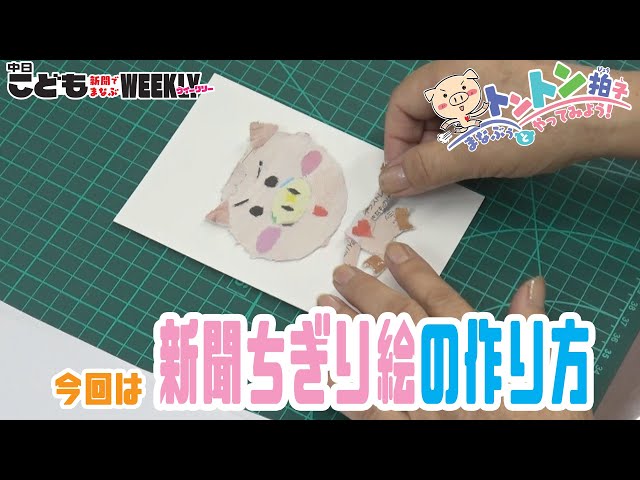
Torn-paper collage, which gives a warm impression, is also great for New Year’s cards.
You can use any kind of paper, but using newspaper makes the color-hunting process fun, too.
First, make a rough sketch on thin paper like washi or calligraphy paper.
Then stack carbon paper, newspaper, and your sketch in that order, and trace the sketch with a bamboo skewer.
Next, go over the cut lines on the newspaper (now bearing the transferred sketch) with an awl, and tear by hand.
Repeat until you’ve made all the parts, then paste them onto the New Year’s card to finish! It’s a good finger exercise, and it’s interesting how the impression changes depending on which parts of the newspaper you use.
Give it a try and send a handmade-feel New Year’s card!

New Year’s cards with eraser stamps

Eraser stamps are a popular hobby.
How about carving your own stamp and using it to send original New Year’s cards? Erasers are softer and easier to carve than wood, so they’re recommended even for seniors trying it for the first time! Regular erasers are fine, of course, but stamp-specific erasers have a colored surface, which lets you check your carving marks and depth.
For beginners, simple designs—like celebratory characters or zodiac motifs—are best.
When sketching your design, be careful so the image doesn’t end up reversed when you stamp it!
[For Seniors] Heartwarming Handmade New Year’s Cards: Fun Ideas Using Everyday Materials (21–30)
[Colored Pencil Drawing] How to Draw a Horse – Year of the Horse
![[Colored Pencil Drawing] How to Draw a Horse – Year of the Horse](https://i.ytimg.com/vi/MTVBouPAIoY/sddefault.jpg)
When you draw with colored pencils, your illustration gains a gentle, warm feel, and the overall atmosphere brightens.
Start by sketching the outlines of the horse in its base color—face, mane, body, and legs.
The key is to keep the horse’s proportions in mind as you draw.
When coloring, first apply a light, even layer over each part, then build up additional layers on top; this helps achieve uniform color and prevents blotchiness.
After coloring the mane and tail, add shadows with a darker color, and you’re done.
Because coloring with layered strokes engages the fingertips and the brain, colored pencil work can also be suitable and approachable for older adults as a form of rehabilitation.
