

![[For Seniors] Four-character idioms that wish for happiness: auspicious, lovely words to gift to someone special](https://media.ragnet.co.jp/img/1200__png__https://www.studiorag.com/files/2025/10/03bfaf63605e310b506e11918f3ea54e.webp)

Four-character idioms that wish for life’s joy and happiness are imbued with warm wisdom and kindness.
How about learning together with older adults through these idioms, exploring the deep meanings and backgrounds behind the words? Encounters with soothing expressions can naturally spark conversation and blossom into fond reminiscences.
They also make a heartfelt gift of words for someone special.
Please consider weaving these compassionate, hope-filled idioms into your daily life and enjoy heartwarming moments of communication.
- [For Seniors] Uplifting four-character idioms: Introducing beautiful, heart-touching words
- Four-Character Idioms for Seniors as New Year’s Resolutions: A Collection of Uplifting, Heartfelt Words
- Four-Character Idiom Slogans That Resonate with Seniors: A Collection of Beloved Quotes for Facilities and Communities
- [For Seniors] Beautiful four-character idioms: Introducing words whose appearance and meanings are elegant, expressed with rich nuance
- [For Seniors] Beautifully Resonant and Memorable! Popular and Stylish Four-Character Idioms
- For Seniors: A Collection of Four-Character Idioms with Cool Meanings and Stylish Look—Great as Personal Mottos Too
- Four-character idioms for seniors that express goals, effort, and aspirations: words that stir the heart
- Four-character idioms expressing the spirit of perseverance for seniors: encouraging words that give you a gentle push forward
- [For Seniors] Recommended for Kakizome! Introducing Popular Four-Character Idioms and Their Meanings
- [For Seniors] Interesting Four-Character Idioms: Introducing four-character idioms whose appearance, words, or meanings are uniquely entertaining
- Introducing words that will delight elderly people
- For Seniors: Four-Character Idioms that Embody Resilience—Inspiring Words of Perseverance
- [For Seniors] Uplifting Words That Comfort the Heart
For the Elderly: Auspicious Four-Character Idioms Wishing Happiness—Lovely, Lucky Words to Gift to Someone Special (1–10)
Eternal peace and prosperity
This is a four-character idiom that prays for long-lasting joy and happiness enduring for ten thousand years.
“Chōraku” means to enjoy life richly over a long time, and “mannen” signifies an immeasurably long span; together, they express a wish for happiness and peace that approaches eternity.
It is perfect for conveying appreciation for a life lived so far and the hope that one will continue to spend the days cheerfully.
Added to milestones like birthdays or longevity celebrations, it has the power to inspire a bright future in the recipient’s heart.
It is a phrase to send, as a gift filled with gratitude and respect, to someone dear.

Return of the sun; the turning of the tide toward good fortune (Ichiyō Raifuku)
Like the way winter reaches its peak and spring comes around again, this four-character idiom means that good fortune will surely return once a bad period has passed.
Evoking a single ray of light piercing the harsh cold, it has long been cherished as a word symbolizing hope and renewal.
Given to an elderly person, it becomes a message of encouragement that the road ahead is full of bright signs.
Used at the turn of the year, it can deepen bonds with family and friends and help you share a positive spirit with one another.
Imbued with the hope that happiness will surely follow hardship, it is an auspicious phrase you’ll want to choose as a gift for someone dear.
New Year’s abundant blessings
This four-character idiom expresses a wish for abundant happiness at the start of a new year.
It’s considered auspicious as a greeting at the beginning of the year and is often used when adding a note to a gift or letter, especially for someone important.
The term “manpuku” conveys the nuance of countless blessings and happiness, offering reassurance and joy even to elderly people.
Used in New Year’s greetings, on New Year’s cards, or rendered in calligraphy and displayed, it can brighten everyday life.
Because it directly conveys the hope for calm and healthy days, it’s perfect not only for close family and friends but also for occasions when you want to express gratitude to those who have helped you.
Perpetual longevity and auspicious blessings
“Eiju” means living a long, healthy life, and “Kafuku” signifies beautiful, joyful good fortune.
Combined, they form an auspicious phrase that prays for a rich life and peaceful days.
It is well-suited for celebrations and gifts for elders, and when used in contexts honoring longevity, it will warmly brighten the recipient’s heart.
It also carries an air of refinement when chosen for New Year’s cards or as a theme in calligraphy, offering a sense of reassurance to those who see it.
Because it conveys respect for those who have journeyed through life and the wish that their days ahead be filled with smiles, it is a recommended phrase to offer to someone dear.
A boundless journey ahead (literally: a future that stretches for ten thousand miles)

It is a four-character idiom that means the road ahead stretches as far as ten thousand li, filled with great hope.
It has long been used as an expression wishing for future prosperity and forward-looking progress, conveying a prayer that the recipient’s path ahead will be brilliant.
When given to an elderly person, it both honors the life they have led and offers encouragement that “many wonderful days still lie ahead.” It is also a fitting phrase for younger generations to express respect and congratulations.
It is an auspicious and beautiful expression that gives shape to wishes for longevity and happiness.
May the noble person live ten thousand years
This four-character idiom expresses the wish that a person of great virtue may live a long and healthy life.
It appears in ancient Chinese classics and has long been used to convey respect and a prayer that an admirable person will enjoy a long, happy life.
It is especially fitting as a dignified gift at celebrations for elders.
The sound of “mannen” (ten thousand years) carries not only the wish for longevity, but also a warm hope that one will lead a rich and fruitful life.
Given to someone at a milestone in their life, it becomes a reassuring phrase that lets you share in their joy.
Immeasurable happiness
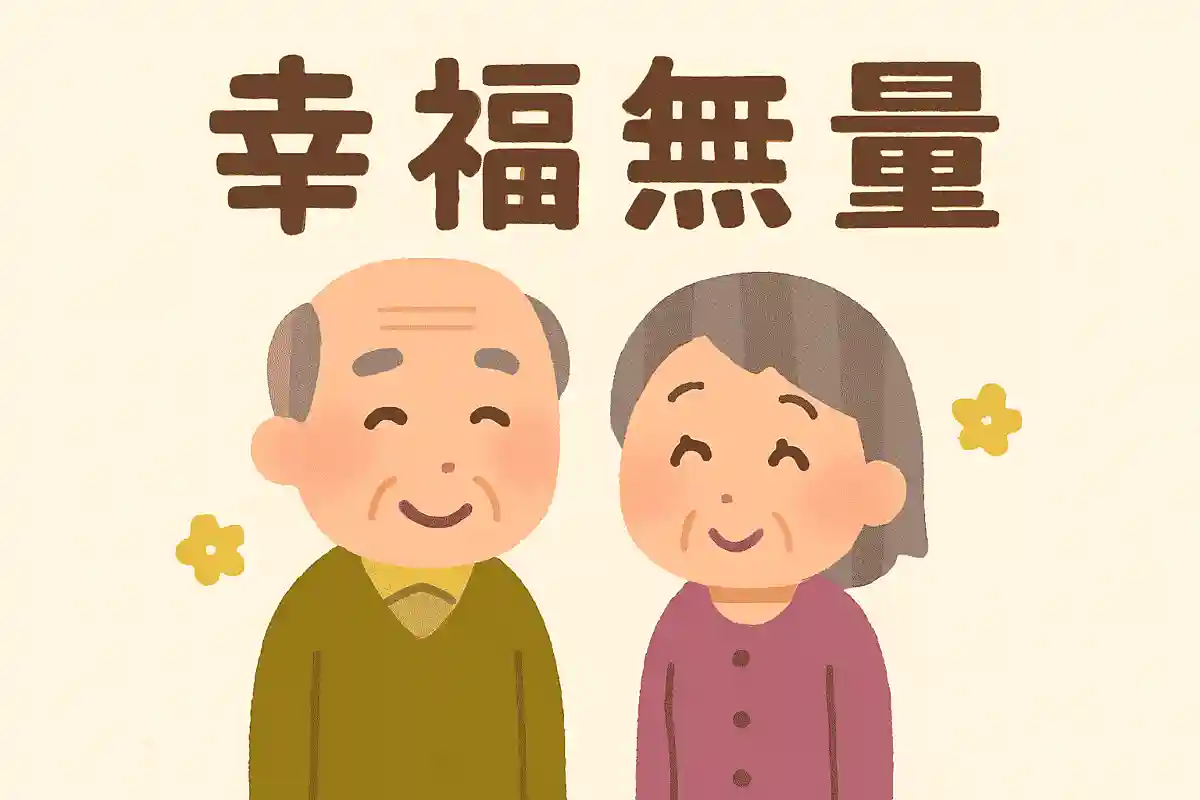
“Kōfuku” signifies inner richness and joy, while “Muryō” denotes boundlessness; together they express happiness that stretches without limit.
When given to an elder, these words are appreciated as a blessing that honors a life well lived and prays that their days ahead remain wrapped in smiles.
Added to milestone celebrations, commemorative gifts, or letters, they convey congratulations with greater depth.
The term “Muryō” also carries a Buddhist nuance, offering a gentle, reassuring resonance that lingers in the heart.
It is an auspicious phrase, ideal when you wish for a dear person’s life to be long filled with peace and joy.