

Men’s enka: a collection of classic songs portraying the way men live and their fighting spirit

There are many enka songs that depict the way men live and their stylish, gallant spirit.
There are also songs that sing about bonds and love from a male perspective.
In this article, we’ll introduce a wide selection of songs that convey men’s emotions.
We’ve gathered plenty of chic, cool tracks and deeply moving songs full of compassion.
We’re sure you’ll find songs that resonate with you regardless of gender, so please listen while following along with the lyrics.
- Cool masterpieces of enka, the heart of Japan
- Enka Path: A collection of enka songs that liken life to a road
- Enka songs that are easy for men to sing: a roundup of tracks to try at karaoke
- [Men] Enka Songs That Can Score High in Karaoke
- [For Men] Masterpiece Enka Songs with High Difficulty
- [Enka] A feature on male singers in their 60s: enka vocalists whose rugged charm shines
- A collection of classic enka masterpieces about love: songs that depict the nuances of mature romance.
- Legendary enka songs that fire up the crowd. A song catalog of enka picks you won’t go wrong with at karaoke.
- [For Beginners] Recommended Enka Masterpieces for Karaoke — Male Singers Edition
- [2026] Life's Cheering Songs: A Collection of Recommended Enka to Lift Your Spirits
- [Enka] A special feature on male singers in their 30s: authentic kayōkyoku brimming with sensual allure
- [2026] Representative Famous Enka Songs: A Compilation of Classic Favorites [Beginner-Friendly]
- Roundup of male enka singers in their 50s: masters who are active at the heart of the enka world
Men’s enka: A collection of classic songs (1–10) that portray the way men live and their spirit
acting like a handsome guyYoshi Ikuzo
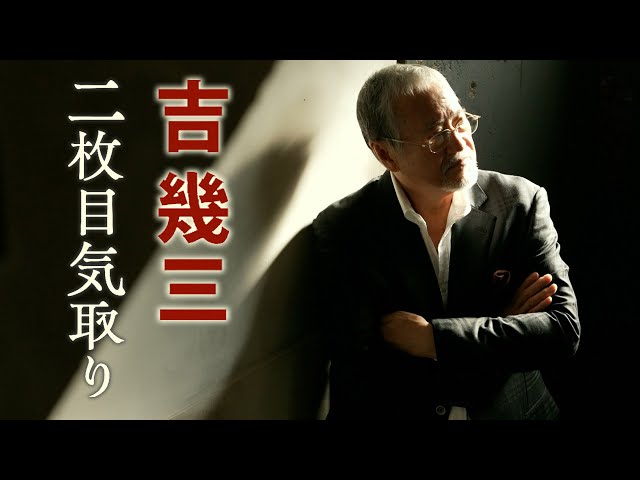
Ikuzo Yoshi is known for his versatile musicality that extends beyond enka to include even rap.
“Nimaime Kidori” is a single released in September 2025, and a long-awaited work that reunites him with his close ally, composer Makoto Sugimoto, for the first time in 13 years since 2012’s “Sono Mukashi.” It vividly portrays the raw, inescapably human clumsiness and bittersweet sorrow lurking behind a man who puts on airs and tries to look cool.
A masterpiece that conveys the astringency of life, its seasoned vocals resonate deeply in the heart.
I’m going to Tokyo.Yoshi Ikuzo

Enka singer Ichi Ikuzō, known for his wide-ranging musicality from comic songs to songs in a female voice and heart-wrenching ballads.
Unusual for an enka singer, he also has the side of a singer-songwriter, and his original songs, for which he writes both lyrics and music, are full of creativity and have remained beloved across generations.
Speaking of Ikuzō Yoshii’s masterpieces, it has to be “Ora Tokyo sa Iguda,” doesn’t it? While it has elements typical of enka, it features many spoken-style parts, so the overall difficulty is on the lower side.
As a comic song, it really gets the crowd going, so be sure to add it to your repertoire.

Casablanca GoodbyeToba Ichirō

Enka singer Ichiro Toba, popular for his wide-ranging musicality from male-voiced to female-voiced songs, has left many masterpieces.
Among them, Casablanca Goodbye is especially recommended as an easy song to sing.
While there are a few spots that feature kobushi (traditional enka vocal ornaments), overall the piece has a flavor closer to kayōkyoku (Japanese popular song).
It employs a very light mixed voice, but the high phrases aren’t very long, and it doesn’t demand much power overall, so the overall difficulty is on the lower side.
Its mood-rich melody is sure to get the crowd going!
Men’s Enka: A collection of classic songs portraying the way of life and spirit of men (11–20)
Oga PeninsulaKitayama Takeshi
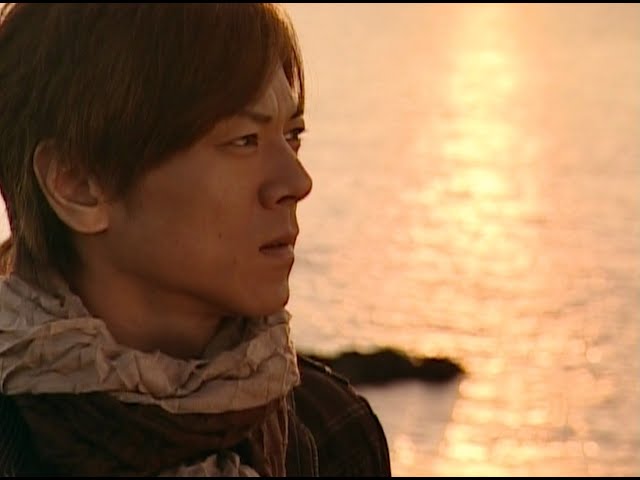
Set against the majestic nature of Akita Prefecture, this is one of Takeshi Kitayama’s signature songs, powerfully singing of a man’s romance and resolve.
It portrays a protagonist who, even without words, burns with a hidden passion, facing harsh nature head-on while keeping his eyes fixed on the future.
With lyrics that vividly paint the scene and a grand, expansive melody that moves the listener, it is a quintessential example of classic enka.
Released as a single in August 2007, Kitayama performed it passionately on that year’s NHK Kōhaku Uta Gassen.
The coupling track Yume Ichizu is also known for being chosen as the theme song for the TV Asahi period drama Ronin Tsukikage Hyōgo.
This work will likely resonate with those attempting a new challenge or quietly nurturing a fighting spirit in solitude.
Castle of White CloudsHikawa Kiyoshi

It’s a single that unfolds like a grand historical tale, woven from bygone glory and the passage of time.
Released by Kiyoshi Hikawa in 2003, it’s included on the album “Kiyoshi Hikawa: Enka Masterpiece Collection 3 ~ Castle of White Clouds.” Set against the backdrop of a decayed castle, its poetic worldview strikingly contrasts the transience of human life with the eternity of nature.
The scenes recalling the once-valiant young warrior depicted in the lyrics deeply move the listener.
A classical orchestration that transcends the bounds of enka fuses beautifully with Hikawa’s passionate vocals, stirring the heart with an overwhelming sense of scale.
It’s a masterpiece to savor on a night when you want to dwell on the romance of history.
Nostalgic JonkaraHosokawa Takashi

Takashi Hosokawa is known for his naturally expansive high notes and exceptional vocal ability and expressiveness, grounded in a background in folk music.
This work is one of his signature songs, released in 1985—a masterpiece among masterpieces that overwhelms with its striking shamisen tones in the intro and Hosokawa’s folk-influenced singing.
Even an amateur can grasp the difficulty of mastering this song from the very beginning, but the folk-style sections are arguably the toughest part.
That said, the main sections also feature many performances marked by Hosokawa’s trademark powerful high notes and sustained tones, demanding considerable lung capacity.
You’ll likely find it very difficult to keep time in the folk-style parts as well, so listen to the original track repeatedly and train your body to internalize the rhythm and melody.
youSen Masao

Known as a signature song from the mid-career period, “Anta.” Unusually for a song by Masao Sen, it is a piece sung from a female perspective, expressing the feelings of a woman who still longs for the man she parted ways with.
Throughout, the vocals remain quietly reflective, and surprisingly, there are few instances of kobushi (ornamental turns), and the ones that do appear are not difficult.
This makes it very easy for beginners to sing.
The vocal range is also quite narrow, so if you adjust to a suitable key, anyone—regardless of gender—should be able to sing it smoothly.