
Pick-up of famous lyricists who left their mark on the history from Showa-era kayokyoku to J-POP!


When we recall the masterpieces that have colored the history of Japanese popular music and have been loved for so long, it’s the wonderful lyrics—awakened alongside the melodies—that linger in listeners’ hearts.
They give us a powerful push forward, put into words worries we can’t tell anyone…
No matter how great a melody is, many hits owe their success to the lyrics being what they are.
This time, we’re shining a spotlight on the renowned lyricists who brought such remarkable words into the world—along with their signature works.
- [Classic Showa Kayō Hits] The captivating Showa-era pop songs beloved even by younger generations
- [2026 Edition] Songs Loved by People in Their 60s: Classic Hits from Their Youth
- Cool songs from the Showa era. Masterpieces from Showa that shine with sensuality, passion, and rugged charm.
- Heart-touching, tear-jerking masterpieces from the Showa era
- Great songs recommended for people in their 80s: a collection of tracks with lyrics that touch the heart
- Evokes the charm of the good old days. Showa-era inspirational songs that are still loved today.
- A collection of iconic, cool Showa-era kayōkyoku classics sung by male vocalists
- Showa-era nostalgic songs: Popular ranking
- So nostalgic it feels new? Showa retro classics that colored Japan’s period of rapid economic growth
- Showa-era masterpieces roundup: A must-listen collection of nostalgic oldies and hit songs
- [Feeling Despair] Classic Showa-era Songs with Dark Lyrics
- Good songs recommended for people in their 60s: classic and popular Japanese tracks
- Coming-of-age songs for your 50s: heart-thumping × heartwarming classics and popular tracks [2026]
Picking Famous Lyricists Who Left Their Mark on Showa Kayō to J‑POP History (1–10)
Hymn to LoveIwatani Tokiko

Tokiko Iwatani wove the magic of words throughout Japan’s music scene.
From French chanson adaptations to kayōkyoku pop, she created masterpieces across genres.
Beginning with her Japanese lyrics for “Hymne à l’amour” made famous by Koshiji Fubuki, and including era-defining hits like Yuzo Kayama’s “Kimi to Itsumademo” and The Peanuts’ “Una Sera di Tokyo,” her work colored the times.
Her wins of the Japan Record Awards’ Lyricist Prize in 1964 and 1966 speak to her overwhelming achievements.
She cherished the resonance and dignity of language and had a remarkable ability to draw out the full allure of a singer.
For anyone who wants to immerse themselves in the elegance of beautiful Japanese or is seeking music that resonates with a mature heart, she is a lyricist you should definitely explore.
Sakura, Bloom!Aida Tsuyoshi

Drawing on his experience in music production, Takeshi Aida has worked on numerous idol songs and kayōkyoku.
After a tenure at Sony Music, he became a lyricist and wrote many classic tracks that supported SMAP’s early years, including “Makeruna Baby! ~Never give up,” released in 1992.
He has also earned high acclaim in the enka field—his 2012 single for Takao Horiuchi, “Warau wa Kusuri,” was a winner at the 45th Japan Lyricist Awards.
His craftsmanlike approach—tailored to each singer’s individuality and emphasizing how words sit on the melody—resonates across genres.
He’s recommended for those who enjoy rhythmically satisfying lyrics and want to experience the diverse worlds woven by a master of words.
acting like a handsome guyAsa Koyomi
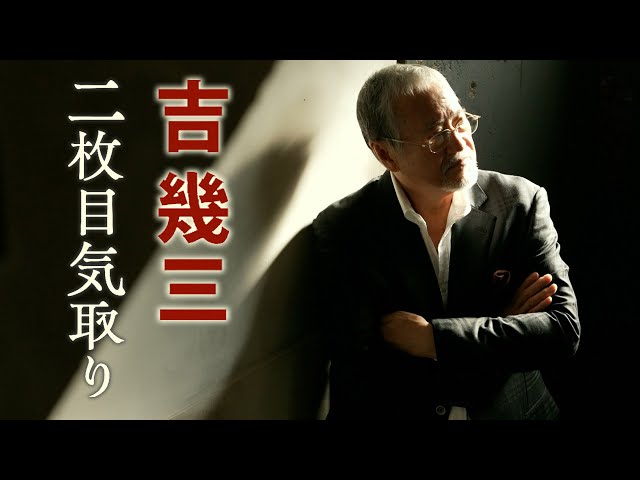
Koyomi Asa, born in Koriyama, Fukushima Prefecture, has long been active in the fields of enka and kayōkyoku.
Since the 1980s, this master wordsmith has supported Japan’s music scene by providing works to numerous singers.
Her representative works include Aotsuki for Yoko Nagayama and songs written for Kaori Kozai, and many of these masterpieces are loved across generations.
In 1994, Aotsuki won the Grand Prize at the 27th Japan Lyricist Awards, a testament to her highly acclaimed descriptive power and structural finesse.
Her style, which weaves aching emotions into vivid, concrete scenes, brims with a realism that makes listeners overlay the songs with their own memories.
When you want to dwell on a sorrowful love or feelings for your hometown, the words spun by Koyomi Asa will gently keep you company.
Showa-era Kayōkyoku to J-POP: Spotlight on Legendary Lyricists (11–20)
CAN YOU CELEBRATE?Komuro Tetsuya

When people see the name Tetsuya Komuro, many probably first picture him as a music producer.
It goes without saying that in the 1990s he racked up numerous million-selling hits, sparked the “Komuro boom,” and had such influence that the groups and artists he worked with were collectively dubbed the “Komuro Family.” But since this article’s theme is “lyricists,” let’s focus here on Tetsuya Komuro as a lyricist.
Komuro began his professional career as a teenager in the 1970s, formed TM NETWORK in 1983, and, as a synthesizer player, mainly handled composition and arrangement.
Even so, he was already writing lyrics with their debut single, “Friday’s Lion.” While lyricist Mitsuko Komuro is well known for TM NETWORK’s songs, those unfamiliar with the band might be surprised to learn that Tetsuya Komuro himself handled a fair share of the lyric writing.
From the 1990s onward, as a music producer he often took on both lyrics and composition, powering a string of hits not only with popular groups like trf and globe, but also with artists such as Ryoko Shinohara and Tomomi Kahala, and even scoring million sellers with H Jungle with t, his collaboration with Masatoshi Hamada.
Reading the lyrics of Komuro’s ’90s hits, it feels as though rather than depicting the shifting emotions of the youth of the time—especially young women—head-on, he expressed them with a masterful choice of words that could sound somewhat ambiguous.
Do take a closer look at Tetsuya Komuro the lyricist as well.

Love Fuguenakanishi rei

In December 2020, Rei Nakanishi, who sadly passed away, was a legendary lyricist in the Showa-era pop scene, and as a novelist he won the Naoki Prize for Nagasaki Burabura-bushi.
Nakanishi’s words continue to resonate in the hearts of many Japanese people.
Prompted by his encounter with the great Showa-era star Yujiro Ishihara, Nakanishi began his career as a lyricist.
In 1965, he wrote Japanese lyrics for the foreign popular song “I Really Don’t Want to Know,” which became a hit as “Shiritakunai no” sung by Yoichi Sugawara, and he went on a rapid rise with achievements such as winning the Japan Record Award for Lyrics for the Peanuts’ “Koi no Fuga.” By 1969, the total sales of works he had been involved with surpassed 10 million copies, cementing his status as a top lyricist.
He reportedly had a mutually conscious, watchful relationship with Hiroshi Akuno (Yū Aku), who was active as a hit maker in roughly the same era, and when Aku passed away, Nakanishi spoke candidly about his feelings toward him.
Nakanishi’s lyrics, influenced by his early work translating chanson, are notable for their refined, literary worldview.
For example, Yoshimi Iwasaki—famous for “Touch”—released her debut single during her idol days under the straightforward title “Red and Black,” a choice that reflects the distinctive sensibility of Nakanishi, a graduate in French literature.
Despite his many talents, Nakanishi battled illness for many years in his private life and led a tumultuous life.
If you’d like to learn more about him, be sure to pick up his semi-autobiographical novel “Kyōdai” (Brothers).
Like the flow of a riverAkimoto Yasushi

From the 1980s to the present 2020s, the lyricist who best represents the forefront of the Japanese music scene is surely Yasushi Akimoto.
From the mid-1980s, he wrote the lyrics for every song by Onyanko Club, who dominated the idol scene, and in the 2000s he became known for masterminding the AKB48 group and the Sakamichi Series—his work with idols is famous.
At the same time, he has left remarkable achievements across a wide range of fields, such as pure kayōkyoku, where his talent as a lyricist is unmistakable—most notably Hibari Misora’s timeless classic “Kawa no Nagare no Yō ni” (“Like the Flow of the River”).
Although Akimoto had a relatively stable career as a broadcast writer, he reportedly felt uncertain about his future, and in the early 1980s he began providing lyrics as a songwriter, starting with anime songs and then to recording artists.
In parallel, he steadily built his career as a broadcast writer by structuring popular TV programs like The Best Ten, All Night Fuji, and Yūyake Nyan Nyan—truly impressive.
He also drew attention as the brains behind The Tunnels, writing lyrics for many of their hits, including “Ame no Nishi-Azabu,” “Nasakenē,” and “Ichiban Erai Hito e.” The explosive success of the AKB48 group since the 2000s needs no explanation.
In 2013, he surpassed Hiroyuki Aki to become number one in total single sales as a lyricist, and over 100 of the works he has handled have reached number one on the charts.
There’s no doubt he’s a living legend in J-pop history.
For those who only know Akimoto post-AKB48, I highly recommend checking out the 1980s–90s hits he created with bassist-composer Tsugutoshi Gotō!
Yoko of the Port, Yokohama, YokosukaAki Yōko

Yoko Aki began her career as a lyricist in 1969.
In 1971, she married Ryudo Uzaki, who is also a composer.
She wrote the lyrics for Downtown Boogie-Woogie Band’s “Minato no Yoko, Yokohama, Yokosuka,” for which he served as the bandleader, and its profound lyrics helped make it a major hit.
Moreover, as exemplified by Akina Nakamori’s “DESIRE -Jounetsu-,” her expressive skill in depicting the give-and-take of romantic relationships is another hallmark of Aki’s songwriting.
