

[Women] Songs you can score 90 points on at karaoke without pushing yourself

“I want to score high at karaoke, but my points just won’t go up…” If you’ve been feeling that way, you’re not alone.
In fact, simply choosing the right songs and tweaking how you sing can make it much easier to break through your scoring plateau.
In this article, we’ll introduce plenty of songs for women aiming for 90 points at karaoke—tracks with easy-to-catch pitch and steady rhythms.
Find a favorite that fits your vocal tone, and aim to set a new personal best on your next stage!
- [Men] Songs you can score 90 points on at karaoke without straining
- Karaoke songs that make it easy for women to score high
- Karaoke songs that make it easy to score 100 points [for women]
- [For Women] A roundup of enka songs that can score high in karaoke
- For Women: Karaoke Songs You Can Enjoy Even If You're Tone-Deaf – Easy-to-Sing Popular Numbers
- [Karaoke] Songs That Make It Easy to Score High | From Classics to the Newest Hits
- Easy-to-sing songs recommended for women in their 90s: A roundup of tracks to try at karaoke
- [Karaoke] A roundup of songs that are easy for women to sing!
- [For Women in Their 30s] Aim for a High Score at Karaoke!
- If you’re unsure what to pick, you should definitely sing these! Recommended songs by female artists for karaoke
- Songs to Help Women Sing Better: Practice Tracks for Improving at Karaoke
- A must-see for low-voiced women! Popular songs that are easy to sing at karaoke
- For Women in Their 60s: Karaoke Songs That Score Well | Classic Nostalgic Hits
[Women] Songs you can score 90 points on at karaoke without overexerting yourself (1–10)
The Future Projection IIDREAMS COME TRUE

DREAMS COME TRUE’s signature song “Mirai Yosouzu II.” When it comes to DCT ballads, this is the one, right? Lots of people probably sing it at karaoke.
First, since the opening notes are quite high, be careful not to let your guard down from the very start.
If you listen closely to the intro and form a clear image of the pitch, you should be fine.
Also, because the tempo is relaxed, try to sing carefully without letting phrases run together, almost as if you’re placing each note.
In the chorus, the melody goes into a higher range, so sing boldly and hit the pitches with a grand, expansive feel.

User ManualNishino Kana

This single was released on September 9, 2015, and it’s the theme song for the film “No Longer Heroine.” The lyrics, which humorously yet realistically liken the complexities of a woman’s inner self to an “instruction manual,” resonated with many listeners.
The song itself has a steady rhythm and a range that isn’t excessively wide, so as long as you pay attention to pitch, you can aim for a high score.
Also, because the lyrics are delivered in a talk-like manner with many words, enunciating clearly instead of letting them blur together will be accurately reflected on the pitch bar.
As the song progresses, there are more high notes, so it’s best to project your voice without hesitation—visualize the notes and aim to match them to the pitch bar.
flameLiSA

Released as a single on October 14, 2020, it is the theme song for the film Demon Slayer: Kimetsu no Yaiba the Movie: Mugen Train.
Many people likely got to know LiSA through Demon Slayer.
Unlike Gurenge, Homura is a ballad-style song that makes it easier to match the pitch, and if you practice thoroughly, you can aim for a score of over 90.
Tips for a high score include singing carefully in a ballad-appropriate manner that conveys a poignant emotion, using falsetto if chest voice is difficult, and delivering a powerful expression in the chorus.
Since the tempo is relaxed, be careful not to rush through the lyrics.
[Women] Songs you can score 90 points on at karaoke without strain (11–20)
youKōda Kumi
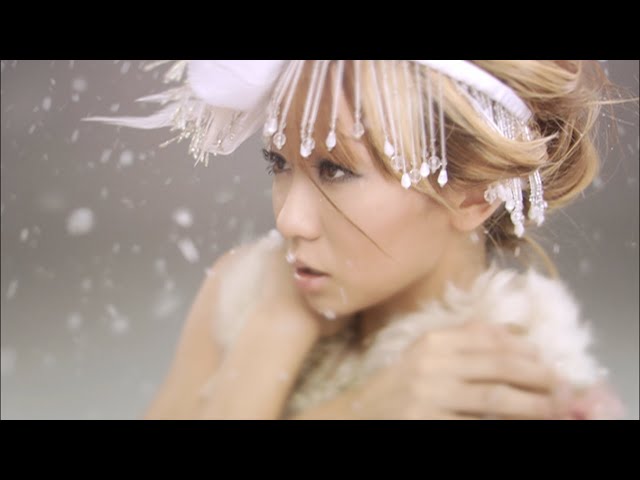
It earned her first-ever No.
1 on the Oricon chart, and its lyrics about a bittersweet winter romance and its lyrical melody resonated with many, making it one of the defining winter songs of the 2000s.
It’s a ballad with a range that isn’t extremely wide and can be sung calmly, so it’s one of the easier songs to aim for a karaoke score of 90 or above.
Since Kumi Koda’s hallmark is her low register, it may suit those who can produce stable low notes.
However, if you sing the chorus too evenly, it will lack dynamics and feel flat, so try emphasizing the opening phrases and slightly varying your volume with each melodic line.
Don’t forget that the phrasing at the very end of the last chorus changes a bit!
366 daysHY

A signature “tearjerker” song known for its overwhelmingly relatable lyrics and heartrending vocals.
Though released in 2008, it became the motif for a TV drama in 2024 and a film in 2025, and vocalist Izumi Nakasone has collaborated with various artists—proof that the song has been loved for a long time.
It’s also famous as a “high-scoring” karaoke pick; I can actually score over 90 on it, so I highly recommend it.
While it’s on the longer side, the structure is easy to grasp, with clear peak moments that make expressive singing more attainable.
For the long tones, watch the pitch bar and sustain firmly to the end, and be mindful of switching between chest voice and falsetto.
Listening to OliviaAnri

A heartrending ballad with a heartbreak theme.
Although it’s a song from 1978, it remains popular for karaoke and often ranks in nationwide scoring systems like JOYSOUND and DAM—a true classic.
The tempo isn’t too fast or too slow, so you should be able to calmly follow the pitch and lyrics.
There aren’t any sections where the pitch suddenly jumps very high, but the chorus starts on G4 and is generally on the higher side, so keeping your resonance placement consistent will help your voice stay steady.
Try singing with a slightly higher-placed voice.
crescent moonayaka

Ayaka’s signature song “Mikazuki.” Since it’s a ballad, as long as you don’t rush the tempo and sing carefully, I think anyone can aim for a score of 90.
The unique pauses in the A verse of “Mikazuki” are very important, so I recommend singing while firmly keeping the rhythm with your body.
Also, you might feel like adding vibrato on the long tones, but try holding back at first and extend your voice straight.
In JOYSOUND’s karaoke scoring rankings, the top spots seem to be in the high 90s, so it’s a masterpiece where you can expect a high score if you practice thoroughly.