

Enchanting Improvisation: Landmark Works and Popular Albums of Free Jazz

For example, works that attempted completely different styles or methods from existing classical music came to be called modern music, and there’s a genre called post-rock that developed approaches different from standard rock styles—there are many subgenres within any given genre.
Free jazz, true to the term, is a genre newly born within the umbrella of jazz, characterized by avant-garde methodologies and freaky, free-form improvisation.
This time, we’ve selected a representative album and some popular works that are labeled as free jazz.
It’s by no means music that will appeal to everyone, but if you’re interested, please take this opportunity to give it a try!
- Start here first! Classic jazz-rock masterpieces. Recommended popular tracks.
- Acid jazz masterpieces. Recommended popular tracks.
- [2026] Discover Today's Jazz! A Roundup of the Latest Spotlight and Popular Tracks
- [2026] Jazz piano masterpieces: from standards to recent favorites
- [Contemporary Pieces] A curated selection of classical works that captivate with the piano’s mysterious resonance!
- Classic swing jazz tunes. Recommended popular songs.
- A classic jazz-funk masterpiece. A popular recommended track that offers a different flavor from traditional jazz.
- Hall of Jazz: Classic Blue Note Records. Recommended jazz albums.
- [For Beginners] Classic Modern Jazz Albums: Recommended Records to Start With
- Danceable Jazz! Classic and Recommended Albums of Acid Jazz
- [Start Here] Jazz Masterpieces: A Must-Listen Album Selection
- Today's Jazz: Tunes for today! A selection of timeless classics and contemporary jazz
- What is jazz: If someone asks you to make it sound jazzy, what should you do?
[Enthralling Improvisation] Free Jazz Masterpieces and Popular Albums (1–10)
AmajeloDon Cherry

Don Cherry, hailing from Oklahoma in the United States, worked alongside Ornette Coleman, a seminal figure in free jazz, and took part in key works in the genre’s history such as The Shape of Jazz to Come and Free Jazz.
A trumpeter and cornetist known as a “pocket trumpeter,” Cherry collaborated with many free jazz musicians throughout the 1960s, and from the 1970s onward settled in Sweden, continuing to release a wide range of jazz sounds.
One of Cherry’s signature works, ‘Mu: First Part,’ was released in 1969 on a French jazz label.
Created solely by Cherry—who played not only trumpet but also flute and piano—and jazz drummer Ed Blackwell, his frequent collaborator, the album unfolds like a spiritual dialogue between musicians.
The exchange of phrases and rhythms born from improvisations rooted in primal impulses can be seen as a high-purity crystallization of creativity that transcends the category of experimental music.

Globe UnityAlexander von Schlippenbach
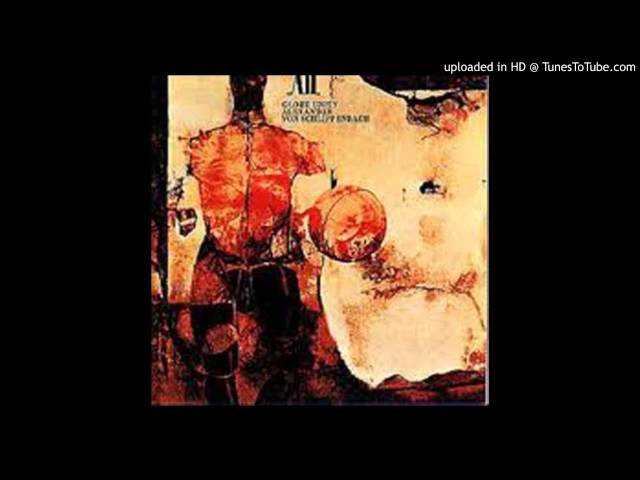
In November 1966, the Globe Unity Orchestra—an ensemble performing free jazz with a large group, formed by Berlin-born jazz pianist and composer Alexander von Schlippenbach, then 28—gave a performance at the Berlin Jazz Festival that shocked the audience.
Schlippenbach, who had also studied contemporary music, interpreted the American-born free jazz movement through contemporary techniques, forging a radically new sound.
The studio album Globe Unity, released the following year in 1967 under Schlippenbach’s name, became a pioneering work in the history of European free jazz.
Taken together with his vigorous subsequent activity, it is fair to say this is an essential listen for anyone wishing to understand the currents of European free jazz.
Amid the improvisation characteristic of free jazz, there is a kind of austere aesthetic that refuses to drown in mood or sentiment—one that conveys a sense of pride as a European, and as a German.
Space Is the PlaceSun Ra

When you see the word “spiritual,” many people might feel a whiff of dubiousness.
But the rich sonic world that spreads from free jazz to spiritual jazz, created by Sun Ra—a legendary musician who called himself born on Saturn and who possessed his own cosmic philosophy—is anything but a sham.
The fact that it’s categorized within jazz feels more like a coincidence; it seems simply to be the result of translating Sun Ra’s extraordinarily free soul into sound.
His cosmic masterpiece Space Is The Place, released in 1972, bears a title that was his personal motto, and the performances by his self-styled “Arkestra” feel like a primal, otherworldly celebration, released from all constraints of musical theory.
From the over-20-minute title track onward, the groove of African rhythms and the darting Moog and organ tones whisk the listener away to a completely different world.
It’s a favorite among the club generation as a sampling source, and with the inclusion of female vocals, it also serves perfectly as an entry point for stepping into Sun Ra’s universe.
[Enthralling Improvisations] Free Jazz Masterpieces and Popular Albums (11–20)
Titan MoonEvan Parker

Released in 1970, the album The Topography of the Lungs is regarded as a highly significant work in the history of European free jazz.
It was the first album released under the name of British saxophonist Evan Parker, and it features the charismatic British improvising guitarist Derek Bailey and the Dutch drummer Han Bennink—truly a meeting of singular talents from the European free jazz scene of the time.
The trio’s improvisations, which unfold across the entire album, are destructive and chaotic, yet the occasional moments of silence seem to provide a sense of ebb and flow.
The sound world, which is markedly different from a conventional band ensemble, can be challenging; it might be difficult to get through unless you’re quite familiar with free jazz.
Since the three musicians are positioned separately in the mix, headphones are recommended when experiencing this album.
The Magic of Ju-JuArchie Shepp

Born in 1937, Archie Shepp is an indispensable saxophonist in the history of free jazz and a key figure who also appeared in the 1981 documentary film Imagine the Sound: The Pioneers of 1960s Free Jazz.
Beyond free jazz, he has released works in traditional jazz as well as in the realms of Black music such as blues and R&B, maintaining a broad, genre-defying career.
Recorded in 1967 and released the following year, The Magic of Ju-Ju is a work that fully showcases the aggressive and radical spirit of experimentation characteristic of Shepp’s intensely active 1960s in the free jazz world.
Its heavy tenor saxophone sound and percussion that generates primal rhythms influenced by African music create a shamanic atmosphere—perfectly in keeping with the eerie skeleton on the album cover.
If you want to savor the essence of radical 1960s free jazz, this is an experience you should try at least once.
People In SorrowArt Ensemble Of Chicago
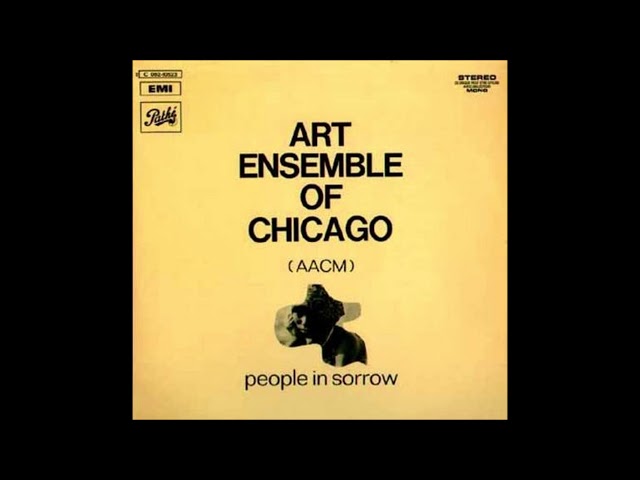
When it comes to representative free jazz bands, the Art Ensemble of Chicago—true to its name, hailing from Chicago—surely comes to mind.
Formed primarily by members of the AACM, a non-profit organization founded by African American musicians in Chicago, they made their record debut in 1968.
Among their early work is their contribution to the classic 1969 album Comme à la radio by the avant-garde French musician Brigitte Fontaine.
The album featured here, People In Sorrow, was released in 1969 and recorded while the band members were in Europe.
From its Japanese title, “Kuno no Hitobito” (“People in Sorrow”), you might sense a lofty or highbrow air, but the sound—born from improvisations by the four members at the time—especially in the first half, incorporates many quiet passages and paints a scene far removed from chaos, creating a deeply emotional world.
In the latter half, there are exchanges characteristic of free jazz, yet the thematic melodies carry a plaintive resonance, and the album as a whole has a dramatic structure that might make it surprisingly approachable.
Red, Black & GreenPharoah Sanders

Born in 1940, Pharoah Sanders is a saxophonist who, while rooted in free jazz, has continually pursued his own unique sound by incorporating Black music such as African music, gospel, and funk.
Having performed alongside the late John Coltrane and even taken part in Coltrane’s only concert in Japan, he has often been regarded as Coltrane’s successor.
From the many works released over Sanders’s long career, I’d like to introduce an early masterpiece: Thembi, released in 1971.
Unlike his earlier output, which tended to focus on extended pieces, this album consists of six relatively concise tracks.
Its sound—dreamlike and tinged with a sense of the exotic—is never overly difficult; if you immerse yourself in its spiritual flood of sound, you may find yourself guided to another world beyond this one.
Featuring the playing of Ronnie Laws—no, correction: the scene’s popular pianist associated with so-called rare groove, Lonnie Liston Smith—it’s easy to see why the album is beloved by the club generation.