



What kind of genres come to mind when you hear “French music”? If you like Western music, you might be able to name a few French bands or artists, but it’s not so easy to immediately explain the genres, is it? French music includes genres that originated in France, and even popular genres like rock and metal have developed in unique ways there—digging into them can be truly fascinating.
So this time, we’ve put together a summary of various French music genres, focusing mainly on popular music from the modern era onward.
Read this and you might become an expert on French music! Enjoy!
- Everything is stylish! Popular music in France
- For those of you who want to discover French singers and musicians: standout artists
- Chanson masterpieces. Recommended popular songs.
- Popular French bands. Recommended groups.
- [Nostalgic Collection] Classic oldies masterpieces. Recommended popular songs
- Music Genres Loved in Spain | Featuring Famous Artists!
- [Tango] Famous Tango Songs: Recommended Popular Tracks
- [Celtic Music] Masterpieces of Celtic music. Recommended Irish music
- Overseas ska: A roundup of must-know representative bands
- Famous songs recommended for musical beginners
- [2026] The Appeal of Canadian Rock: Recommended Popular Bands from Canada
- [Classics] Famous waltzes: recommended popular pieces
- [Western Music] A Collection of the Coolest, Most Rocking Guitar Riffs [2026]
Summary of French music genres (1–10)
Everything, everything for my darling / A Kiss for My SherryMichel Polnareff
The most popular French music genre is “French pop.” As the name suggests, it refers to French pop music, similar to Japan’s J-pop or Korea’s K-pop.
It’s often confused with “chanson,” another term for French music, but you can remember that French pop consists of popular songs enjoyed by a wide range of generations.
Incidentally, songs well-known in Japan, such as “Sherry, She Said” (Sugartown), fall into this category.

The Crowd / The MobÁngel Cabral

Speaking of France, the beautiful cityscape of Paris also leaves a strong impression, doesn’t it? You often see it featured on TV programs.
And don’t you often hear accordion music playing as the background music in those segments? That genre is called musette.
It began in the 1880s with dances set to the sound of the bagpipe and was often enjoyed on the streets.
By the way, the dance associated with musette is called “java.” Be sure to pay attention to the dance as well.
MirageJean-Luc Ponty

Jazz was born in America in the 1920s and 1930s.
As many Americans moved to France, it also became popular there, giving rise to what’s known as “French jazz.” While there aren’t any clear-cut differences from American jazz, one notable characteristic is the frequent use of the accordion.
Because of this, French jazz often feels gentler than the American jazz many people imagine.
It’s also worth noting that some interpret it as a fusion of musette and jazz.
De FuturaMagma

When talking about French music, you can’t leave out “French prog.” This term refers to progressive rock from France.
Progressive rock itself originated in the UK as an innovative form of rock.
Over time and across regions, it has evolved in many ways.
Adapted to France, it became what’s known as “French prog.” Overall, it tends to feature many bands and songs with a darker aesthetic.
The inclusion of improvisational elements, similar to jazz, is also considered one of its appeals.
Vortex Temporum / Vortex of TimeGérard Grisey

Spectral music is music created after analyzing the frequencies of sounds on a computer.
Incidentally, the “spectral” in the name refers to analyzing and breaking down light or sound and rearranging its components in order of magnitude.
That can sound rather abstruse, so for starters, think of it simply as “a type of contemporary music that uses computers.” Although this genre originated in France, artists around the world are now creating it.
Poupée de cire, poupée de son / The Dreaming Chanson DollFrance Gall
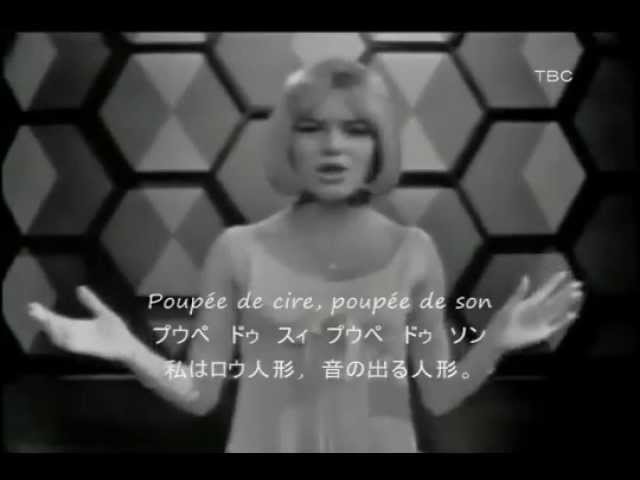
“Poupée de cire, poupée de son” (known in Japanese as “Yumemiru Chanson Ningyō”) is a song almost everyone has likely heard at least once.
That track is classified under the genre known as yé-yé.
This refers to music that combines rock imported from the UK with elements of jazz and chanson.
While retaining the elegance of chanson, it is characterized by having many up-tempo songs.
Incidentally, the name yé-yé is said to come from how “yeah” and “yes” sounded to French ears.
La Vie En RoseEdith Piaf

Chanson is one of the musical styles that originated in the Middle Ages.
The word “chanson” means “song,” and in most cases it refers to pieces with lyrics.
In France, its definition has varied over the eras, but in Japan it has taken root with nuances like “French songs with lyrics” or “songs with an elegant atmosphere.” In fact, many artists in Japan have created chanson pieces in Japanese.
If you’re interested, try looking them up.