

A collection of funny birthday messages to send to friends: jokes and example phrases that will make them laugh out loud


When it’s your friend’s birthday, if you’re going to send a message, you probably want to add a little line that’ll make them chuckle.
A plain old “Happy Birthday” can feel a bit underwhelming… so here are some fun birthday message ideas that are perfect for those moments.
We’ve picked a wide range—from gag-style lines that’ll make them burst out laughing to cleverly twisted messages that bring a slow-burn smile.
There are even some ideas with a touch of dark humor, but since these are birthday messages, it’s important to get a laugh without making the recipient uncomfortable.
Try using them in a way that fits your relationship with the friend you’re sending them to!
- Sample heartfelt birthday messages to send to a friend
- [Funny] Gag-worthy birthday gift items and idea collection
- [Tears of Joy] Beautiful Friendship Songs with Lyrics You’ll Want to Gift to a Dear Friend
- A moving birthday song to give on someone’s special day. A birthday song so heartfelt it could bring you to tears.
- A fun quiz that liven ups the birthday party
- [Also great as video BGM] A birthday song to give a friend on their birthday
- [For High School Students] A Collection of Friendship Songs to Give on Birthdays
- Make your once-a-year special day dazzling! A birthday song born in the Heisei era
- A gratitude song for friends. A thank-you song dedicated to someone special.
- Brighten your special day with happiness! A birthday song born in the Reiwa era
- Birthday video ideas: Popular birthday movies to gift to friends, family, and loved ones.
- [For the best day ever] Surprise ideas recommended for birthdays
- Recommended birthday songs for Instagram birthday stories and reels.
Funny birthday messages to send to a friend: A collection of laugh-out-loud jokes and example phrases (1–10)
Well, isn’t this something to celebrate. You, who used to have such an amazing figure, have even gained an air of gravitas with that well-stocked belly. At long last, you’ve turned ◯ years old. I’m happy for you, my friend.
Have you ever received a baffling message from a friend on your birthday? It might actually have been an acrostic.
An acrostic is a kind of code where you read the first letters of each line of a horizontally written passage vertically to find a hidden message.
Think of it like a “congrats” version of an alphabet poem; that might be easier to picture.
When you try it yourself, aim to write sentences that won’t make it obvious it’s an acrostic.
Once you reveal it afterward, it’s sure to be a hit.
By the way, you don’t have to limit yourself to the first letters—you can use other positions, too.

Bakeries around the world will surely be emptied for the ◯◯ celebrations. Before they sell out, I’ll buy some too—want to eat together?

When it comes to birthday celebrations, it’s all about the birthday cake! Many people prepare a cake for a close friend’s special day.
Here’s a fun, classic cake-themed message for such an occasion: cakes sell out at bakeries all over the world because everyone’s celebrating your friend.
It carries the meaning that so many people are sending their best wishes.
And by saying, “I’ll buy one before they’re all gone—let’s share it together,” you can also express your desire to celebrate the special day together.
It might make them chuckle, but it’s a message filled with genuine care for the person.

Today, ◯◯ is the star! Starting tomorrow you’ll go back to being just regular friends, but today, become a princess and have as much fun as you can!
The day we were born into this world, each of us was the protagonist, welcomed with blessings from many people.
And every birthday we celebrate each year is a special day when anyone can be the star! The message is that on such a day, we hope you’ll have fun pretending to be a princess or a prince.
The added line, “But starting tomorrow, we’ll go back to being ordinary friends,” is brimming with humor, isn’t it? No matter how old you get, it’s always wonderful to be celebrated on your birthday.
Being called the protagonist or a princess can feel a bit over the top and a little embarrassing, but realizing you have friends who wish for you to have a birthday that joyful is the kind of message that’s sure to make you feel happy.
Funny birthday messages to send to friends: a collection of laugh-out-loud jokes and examples (11–20)
Age is just a number. Help yourself to unlimited cake and laughter!
Birthday messages often end up sounding the same every year, don’t they? Here’s one recommendation for times like that.
Many people can’t help wondering how old someone’s turning, but try sending a positive message that says, “Let’s just laugh, eat, and live without worrying about age.” In reality, people who feel bound by age tend to limit themselves, thinking, “I’m already X years old.” While it’s important not to push yourself physically, it’d be nice to always keep a young heart.

Happy Birthdayhamnida!
Let’s put a little twist on the classic birthday message “Happy Birthday”! In this idea, you intentionally write “congratulations” in katakana and add “-hamnida” at the end to give it a Korean-style flair.
By the way, “hamnida” is a word that corresponds to polite endings like “desu/masu” in Japanese.
It would likely delight people who love Korea or are fans of K-pop groups.
They might think it’s just a normal “Omedetou,” only to find an unexpected ending that makes them chuckle—what a fun message!

I’m glad we can still celebrate birthdays at this age. We’re both aging and getting more wrinkles at the same time, though.
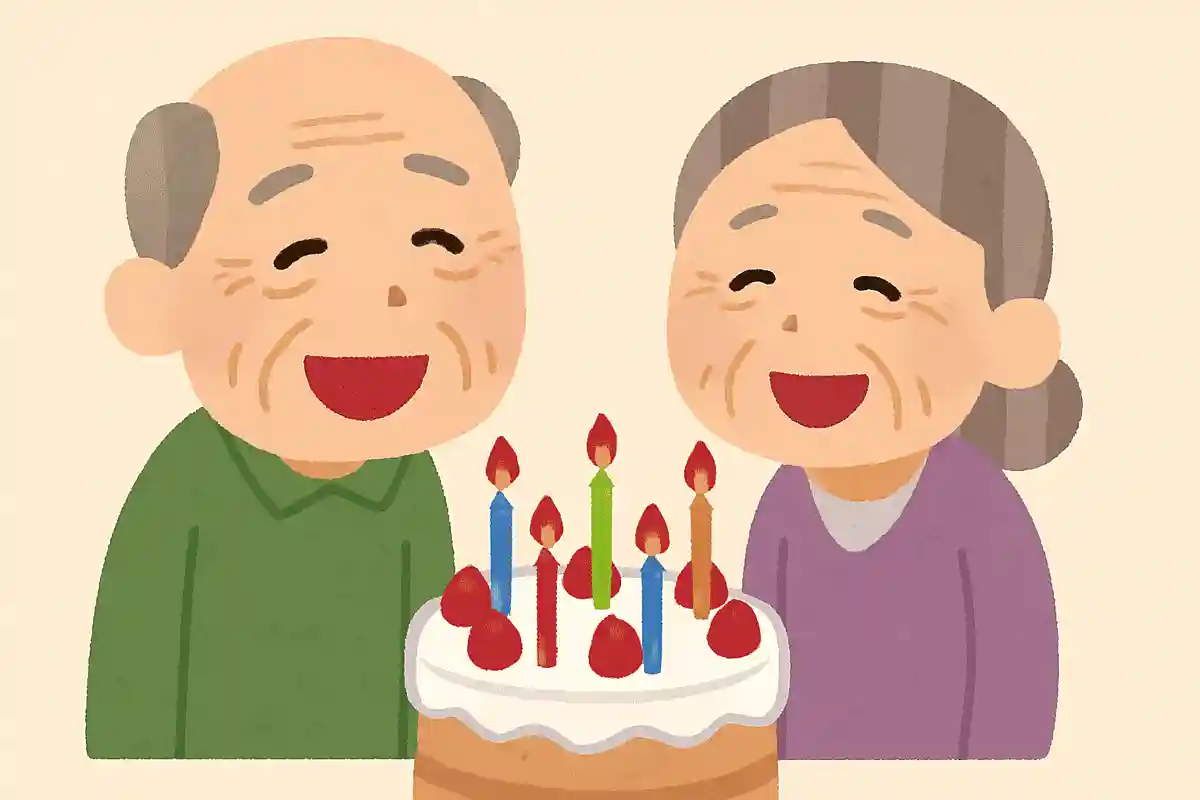
Being able to stay close with friends the same age is one of life’s treasures.
Here’s a message I’d love to give to those easygoing friends you can truly relax around.
By acknowledging that we’ve grown older together in a good way, it feels like our bond will deepen even more.
This message also carries the hope that we’ll keep having fun together, sometimes helping and encouraging each other, and continue living long lives side by side.
Wouldn’t it be wonderful if we could keep weaving joyful times together from here on out?
Too many candles—have the fire truck on standby!
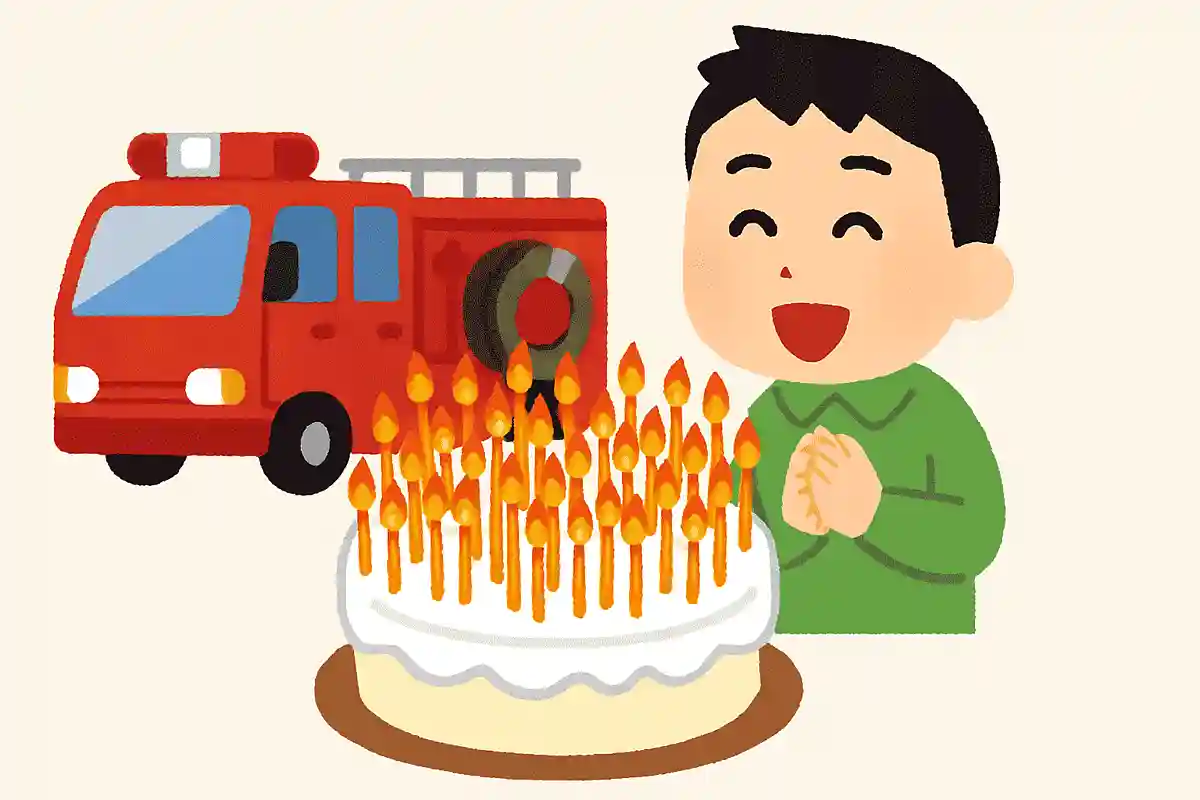
This is a playful message that jokes about age using the number of candles on a cake.
Normally, you wouldn’t imagine a fire breaking out from just a few decorative candles, right? But what happens as the number grows? With each passing year, the candles increase, and if you actually put that many on the cake and light them, you can’t help but worry, “Won’t this start a fire? Is it safe?” This message humorously portrays that idea using an ambulance—the kind of hero that would come to the rescue in such a moment—to add a fun, lighthearted twist.