
A spine-chilling, terrifying song. Japanese music that evokes madness and horror.


Don’t you ever feel like listening to scary songs? That sensation where curiosity about scary things wins out—like with horror movies, haunted houses, or famous ghost spots.
In this article, I’ll introduce tracks with chilling themes: horror-inspired worlds, madness and hidden psychology, twisted love, and more.
If you’re a horror-song freak, this is a must-read.
It might also help when you’re thinking, “There was a scary song I heard once long ago, but I don’t remember the title.”
- A spine-chilling scary song: masterful tracks that evoke fear and eerie recommended songs
- [Dark Side] Songs with scary lyrics. Tracks that make you shiver with chilling phrases.
- Disgusting music. A classic of Japanese pop/rock.
- Actually scary nursery rhymes. Children's songs that give you the chills once you understand their meaning
- [Yami Song] Fight darkness with darkness!? Deep tracks that stay close to your pain
- Stalker’s Song: A Rhapsody of Twisted Love
- The World of Addictive Songs: Loops that Spiral with Irresistible Catchiness
- [Dark Songs] A carefully curated selection of deeply dark tracks and heartbreaking songs that accompany you in tough times
- Masterpieces that sing of despair. Recommended popular songs.
- [Trash Songs] A carefully curated selection of tracks about the lowest, worst kind of loser—and hidden gems!
- [Bereavement Song] To you whom I can no longer meet... Tear-jerking songs about death
- A fearsome and beautiful masterpiece: Themes from terrifying film scores
- [Showa × Halloween] A roundup of chilling songs with scary lyrics and an unsettling atmosphere!
Chilling, spine-tingling scary songs: Japanese tracks that evoke madness and horror (41–50)
motherMachigerīta P

This track, “Okaasan,” stands out with an intro that borders on noise music.
It was composed by Machigerita-P, who’s well-known for horror and eerie styles.
The melody has been crafted into a deeply unsettling, spine-tingling tone.
Its structure is quite close to noise music.

doppelgängerfantomu shiitaa
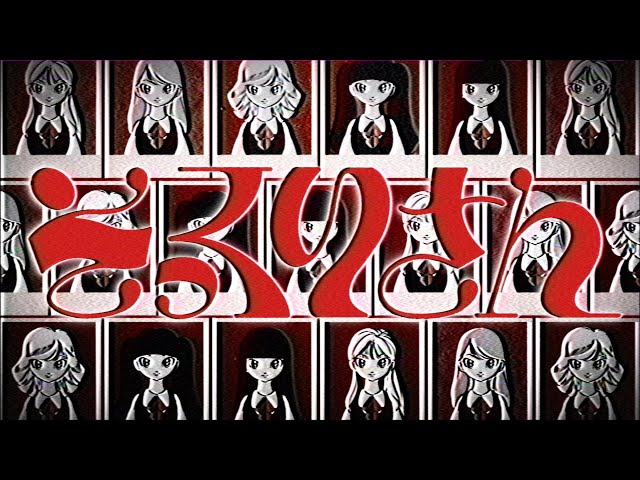
What would you do if a counterfeit showed up and copied your entire way of life? This song by Phantom Sita is a dark pop track packed with searing anger toward someone who threatens your very existence, and a heartbreaking cry of “Don’t interfere with my life that’s mine alone!” It’s included on the single “Suki, Kirai,” released in July 2025.
Dive into this eerie yet uplifting, strangely captivating music!
Kill my ex-boyfriendGōruden Bonbā

Golden Bomber is strongly associated with a goofy, upbeat comic-song image, but they actually have some pretty intense tracks too.
This song portrays a man who’s gone off the deep end from loving his girlfriend too much; male “menhera” seems even heavier and scarier than the female kind.
I would absolutely never want a guy like that as my boyfriend!
Wax MuseumSeikima II

Even if they’ve never listened to the whole song, many people probably know the opening line, “Shall I turn you into a wax figure, too?!” It’s a quintessential horror track, with a fittingly ominous title and eerie lyrics.
Surprisingly, though, it’s said that listening to it can sometimes make babies stop crying.
GeGeGe no KitaroKumakura Kazuo

It’s scary, yet somehow you can feel a sense of humor in the song—that’s GeGeGe no Kitaro.
Many of you may already know it as the theme song of the TV anime GeGeGe no Kitaro.
It’s sung by Kazuo Kumakura, who was active as both an actor and a voice actor.
His distinctive, flavorful voice matches the world of the anime, and it’s also well known that Kiyoshi Hikawa covered it in recent times.
It’s a little scary, but it was made to appeal to children as well, so the scariness is softened.
Please enjoy the theme song along with the anime.
Give it back to me right now.Za Pīnattsu

This song is so frightening that it was even designated as banned from broadcast.
In 1963, a boy was kidnapped and murdered, and at the time, there was no clue to the whereabouts of the abducted Yoshinobu-chan.
Amid such circumstances, this song was created to appeal to the perpetrator over the radio.
Precisely because it’s based on a real incident, it’s a pretty scary song…
sweet fruitSuga Shikao

Shikao Suga is a singer-songwriter with a large fan base in Japan, known for creating many classic songs.
One of his slightly unsettling tracks is “Amai Kajitsu” (“Sweet Fruit”).
It portrays someone who is controlling in a relationship—so much so that they even suspect there might be someone else just from the sounds on the other end of a phone call.
What’s even scarier is that the person doesn’t realize how controlling they’re being.
The song captures the reality of possessiveness in romance very vividly, so even if you haven’t experienced it yourself, it might be interesting to give it a listen out of curiosity.