

Recommended as life tips! A collection of short, memorable quotes from great figures

Many people who have achieved great things throughout human history have left behind quotes that symbolize their legacy.
These words often capture their guiding principles or philosophies, and many can serve as hints for living well even in the modern day.
Here, we present a selection of short yet profound quotations left by great figures.
Whether you have dreams and goals, or are troubled or uncertain about something, you’re sure to find words that fit your situation.
Please use them as a reference.
- Quotes from great figures that give us the power to live
- Heartfelt! Inspiring Quotes Left by Great Figures of Japan
- If you know them, they might become beacons that light your life’s path: a collection of memorable quotes.
- Gives you the power to overcome entrance exams! Short quotes by great and famous people.
- Short quotes that reach your heart in an instant. Words to encourage you right now.
- Short but moving words to remember when your heart is tired
- Mottos that are sure to lift your spirits and keep you positive!
- A collection of quotes from people of the past: messages from famous military commanders and great figures of the world.
- Short quotes from Disney characters. Words by Walt Disney as well.
- Words from famous people that I’d like to adopt as my motto. Inspiring quotes that convey the power of words.
- Encouraging words that give you strength. Words you’ll want to share with those around you.
- That one line is sure to jolt you! Short but cool words
- Words I want to make my motto that always inspire me
Recommended as life tips! A collection of short, memorable quotes by great figures (41–50)
Peace begins with a smile.Mother Teresa

Mother Teresa, who devoted herself to helping people around the world suffering from poverty and illness and who won the Nobel Peace Prize in 1979, left words reminding us that small actions can create a peaceful world.
Her message teaches the importance of reexamining our own attitudes as the first step toward resolving interpersonal and social issues.
Offering a smile to others in places where we live our daily lives—such as at work or school—can create a warm atmosphere.
It is a quote that conveys how being mindful of kindness and compassion can bring positive change to our immediate surroundings.

A leader is someone who distributes hope.Napoleon Bonaparte

After the French Revolution, Napoleon Bonaparte made a name for himself as a military leader, achieving victories in numerous European wars.
The words he left behind show that leadership is about giving people hope.
What he conveyed on the battlefield and in politics was not merely command ability, but the power to inspire his subordinates and citizens with expectations for the future and confidence.
His life tells us how crucial a leader who gives hope is when people face difficult circumstances.
This lesson also resonates with modern leadership theory and can be seen as a driving force that moves people forward.
A true sage is one who knows his own folly.Socrates
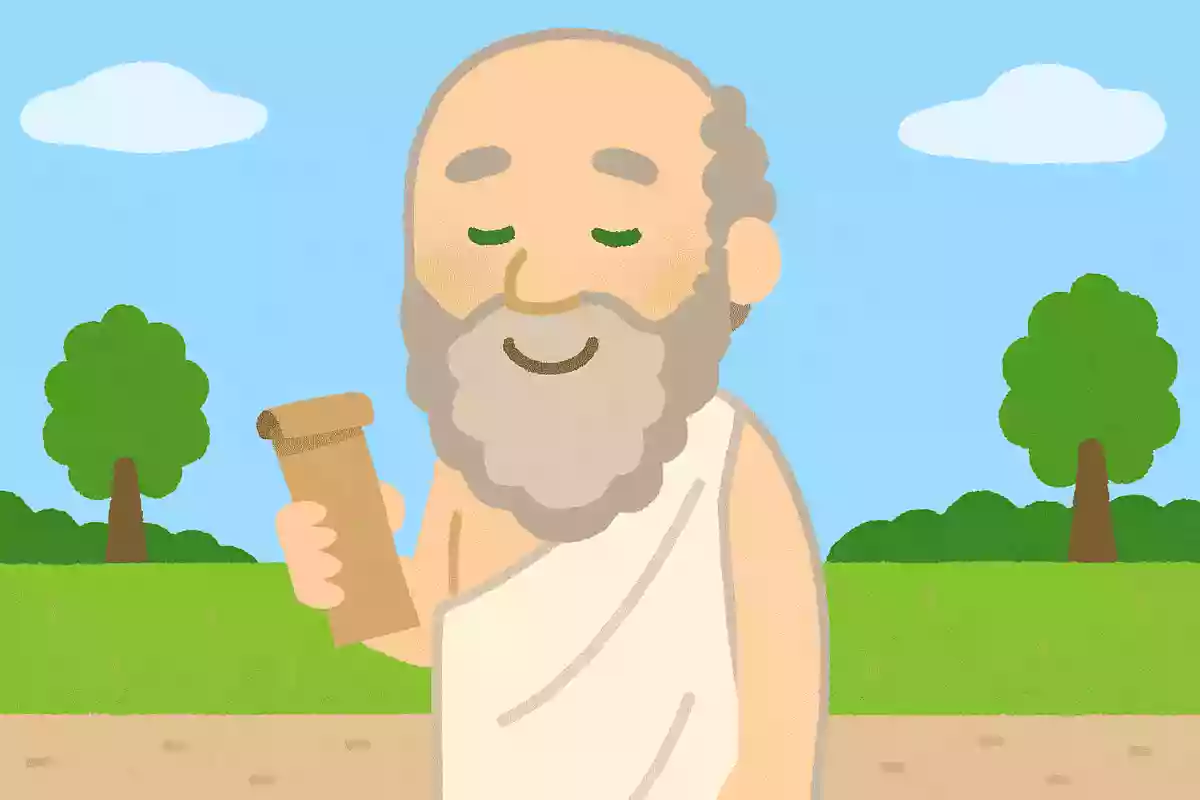
The ancient Greek philosopher Socrates is a figure who laid the foundations of Western philosophy.
The idea he preached was that knowing one’s own shortcomings is the true path to wisdom.
This view teaches that acknowledging one’s ignorance is the first step toward growth.
It conveys the importance of avoiding overconfidence and acting in ignorance, and of maintaining a humble attitude toward learning.
Socrates’ teachings still resonate deeply today and continue to prove their value in the fields of self-improvement and education.
His philosophy teaches that, in the pursuit of knowledge, we must first reflect on ourselves.
Worrying is a waste of time. Worry gets in the way when I try to solve problems.

This is a famous quote that conveys Donald Trump’s drive to take action, emphasizing that it’s more important to act first than to spend time on needless worries.
It also expresses his own stance of constantly working toward solving problems, saying that for someone like him, worrying is a waste of time.
While worry can serve as preparation, there’s also a chance the feared problem won’t happen at all—so taking action should come first.
It’s a message that encourages those who hesitate to act, urging them to focus on action over worry in order to achieve greater results.

Even if you compare yourself to others and find yourself inferior, it is by no means something to be ashamed of. However, if you compare yourself to who you were last year and find that you are worse this year, that is truly something to be ashamed of.Konosuke Matsushita

Konosuke Matsushita, one of Japan’s leading entrepreneurs known as the “God of Management,” is famous for building Panasonic Holdings in a single lifetime and serves as a role model for many business leaders.
This quote teaches us about the right way to grow.
When there’s someone who shares the same goal, we tend to compare ourselves with them.
However, the focus should not be on rivals but on ourselves.
Even if you outperform others, if you are inferior to who you were last year, it cannot be called growth.

Be all the more cautious when making that final push.Takeda Shingen

This is a famous saying left by Takeda Shingen, a renowned warlord of the Sengoku period known for combining calmness with boldness.
It teaches the importance of not forgetting caution precisely when success or victory is within reach.
Aware that haste and overconfidence can invite failure, he argued that careful responses can greatly influence the final outcome.
This lesson still applies today: in planning and work, composed conduct can be the key to success.
The message that the very last step toward achieving a goal should be taken with the greatest care serves as guidance in many situations.
Achieve great things by accumulating small efforts.Ninomiya Sontoku

Ninomiya Sontoku is famous for having statues erected at elementary schools across Japan.
Known also by the name Ninomiya Kinjiro, he was an agricultural reformer in the Edo period who taught the importance of frugality and hard work.
He showed that achieving great goals requires steady, daily accumulation.
When restoring devastated villages, he advanced careful, incremental reforms, realizing sustainable agriculture and communal prosperity.
His philosophy can be applied to modern personal growth and organizational success, demonstrating that small efforts eventually lead to great results.
His words remind us that each action we take every day shapes the future.