

How to Write a Graduation Essay That Conveys Your Feelings: A Collection of Moving, Ready-to-Use Example Ideas


Are you unsure what words to leave in your graduation anthology?When you finally sit down with the manuscript paper, you may find the words just won’t come—many people feel the same way.Precisely because your graduation anthology is something you’ll cherish, you want to leave writing that will stay with you and bring back your feelings from that time when you read it again.In this article, we’ll introduce plenty of ways to write a moving graduation piece, along with example passages.We’ll cover various themes like friendship, dreams for the future, and gratitude to those who supported you, so use them as hints to find words that feel true to you!
- A collection of moving graduation illustrations that will bring tears to your eyes. Memorable ideas.
- [Graduation] Thank-you messages to teachers; messages from teachers to graduates, too
- [Great Lyrics!!] Recommended Tear-Jerking Graduation Songs with Heartfelt, Moving Words [2026]
- [Gratitude, Encouragement, Memories] Tear-Jerking Graduation Songs You Can’t Listen to Without Crying [2026]
- [Parting] Special Feature on Vocaloid Graduation Songs
- A graduation surprise that delivers heartfelt emotion: a collection of memorable ideas
- [2026] A Collection of Graduation Songs Recommended for Gen Z [A Page of Youth]
- From classic choral pieces to popular J-pop! Moving songs you’ll want to sing at graduation ceremonies
- [For Graduates] Graduation Songs and Cheer Anthems to Convey Gratitude and Support
- [Graduation Songs] Choral pieces perfect for singing at elementary school graduation ceremonies: A collection of moving classics
- Thank you, Teacher: A Song of Gratitude for Teachers and Mentors — An Emotional Farewell Song for the Journey Ahead
- [For Middle Schoolers] Recommended Classic Songs to Sing at Graduation Ceremonies
- [Stylistic Techniques] A Collection of Ideas Useful for Graduation Projects
How to Write Graduation Anthology Entries that Convey Your Feelings! A Collection of Moving, Usable Example Sentences (41–50)
A collection of quotes that deeply move the heart
Let’s gather the moving, inspirational quotes that abound in the world and turn them into a single work.
By learning about the background of each quote—who said it and in what context—the impact will be even greater.
Start with quotes that everyone knows, then gradually move to lesser-known ones to draw readers in bit by bit.
It’s fine to compile sayings from historical figures and celebrities, but it could also be fun to pick out memorable words from people close to you—like a teacher’s remark or something a classmate said.

Write what you want to read.

For students on the verge of graduation who are unsure how to write their yearbook essays, and homeroom teachers racking their brains over how to guide them, I recommend the book “Write What You Want to Read” by Yasunobu Tanaka.
It offers a simple, straightforward lesson on how to write good prose.
Ideally, you’d read the book and put it into practice, but doesn’t the title alone—“Write What You Want to Read”—already click for you? If you start by asking, “What kind of piece would I want to read?” and build your content from there, you’re sure to end up with a wonderful graduation essay!

If wishes could come true

Do you have any wishes you want to come true? With that in mind, I suggest the theme “If a wish could come true.” Writing about goals you want to achieve after graduation or your dreams for the future could boost your motivation.
Or you could explore more fantastical wishes, like “I want to use magic” or “I want to fly,” which is also recommended.
As you go, the conversation will naturally expand with thoughts like “I want to do this” and “I’d like to try that.” As for the design, using motifs like a magic lamp could be a good idea.

Collage
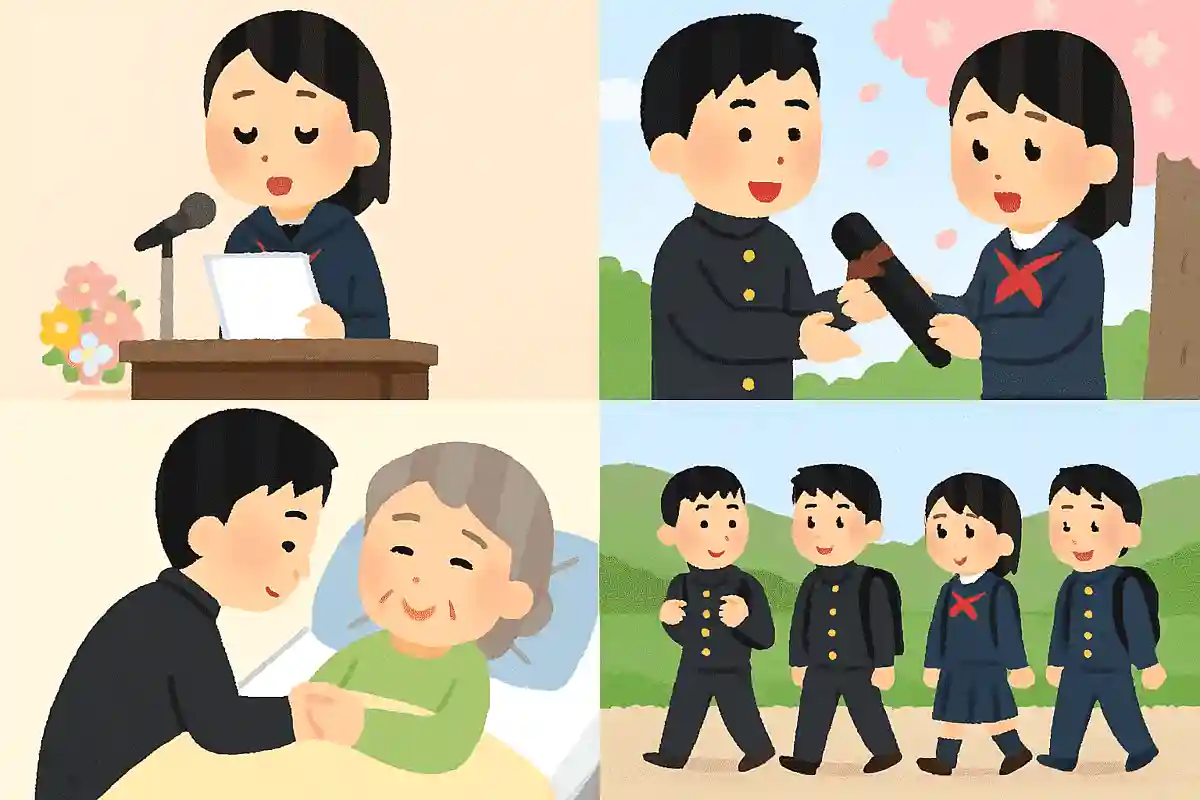
How about gathering and displaying your cherished photos? You could simply line them up as they are, but there are many ideas to try, such as cutting out just the people to make a collage, or arranging the photos in chronological order like a timeline.
Start by having everyone bring their favorite photos.
If you’re making a collage, you can also get creative by illustrating the background or adding speech bubbles with lines.
It will likely feel more lively than just sticking photos on their own.
Profile
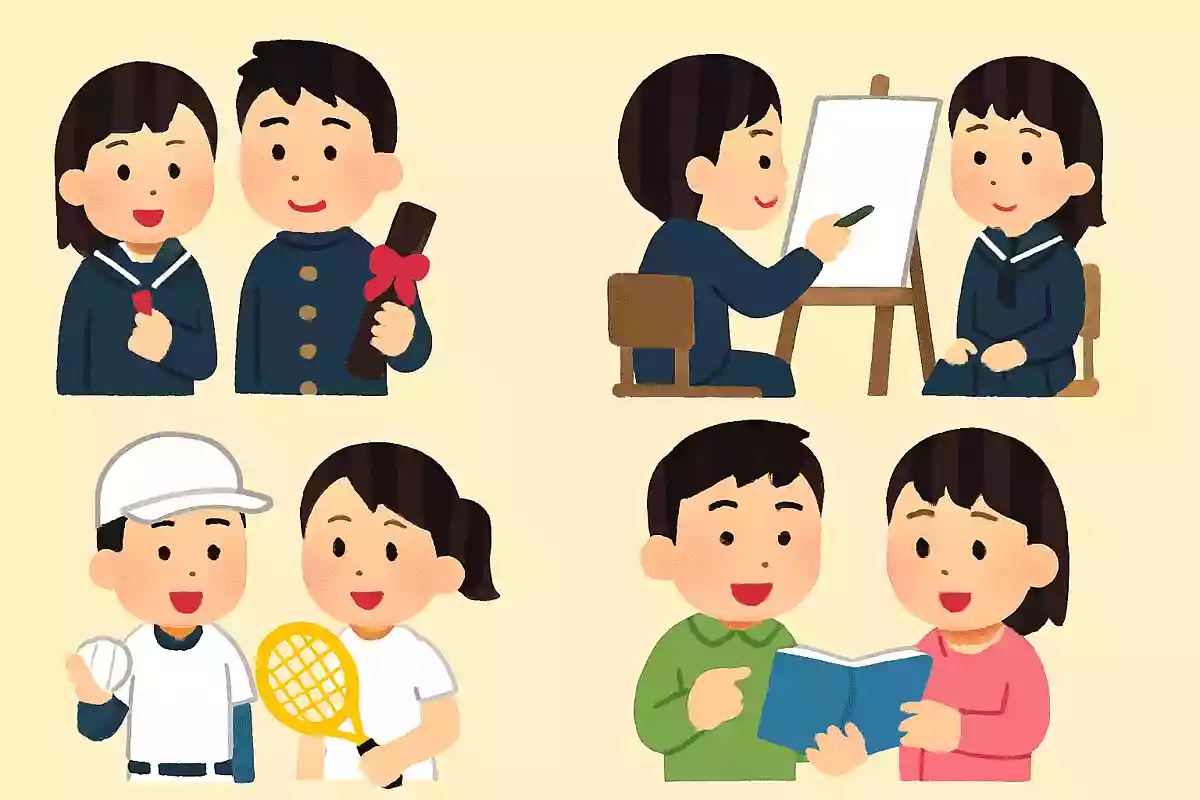
Including individual profiles in the graduation yearbook is also recommended.
You can write anything you like in the profile: your favorite sports, manga, or songs, or memories of close friends and school life.
That way, when you look back later, you’ll be able to remember what kind of elementary school student you were and who your classmates were.
As an added touch, it’s also nice to include a portrait or photo with each profile.
Introduction of others
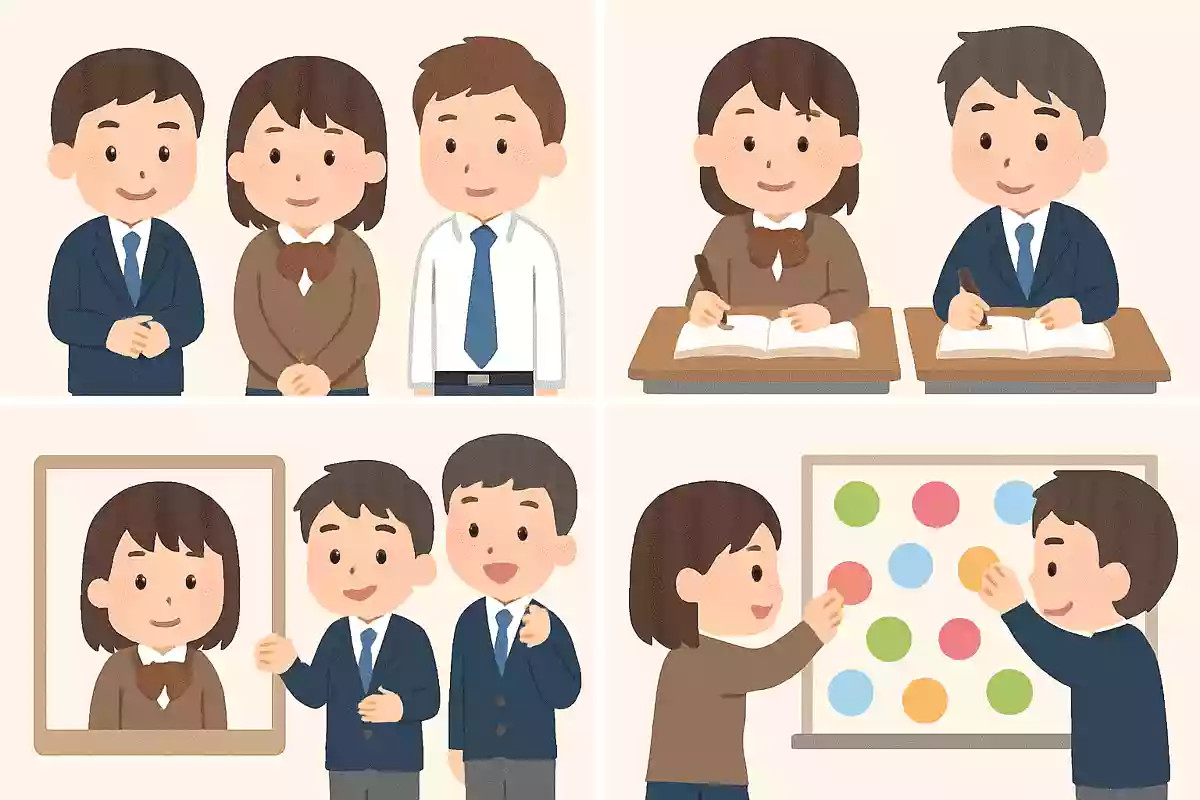
An introduction to others where you write profiles about friends and classmates.
Record a variety of details, from basics like special skills, hobbies, and club activities to more private matters.
Open your class page in the graduation yearbook and write about each other to preserve memories—later on, it can spark fun conversations when you look back.
In the final section of the introduction, it’s also recommended to write your honest feelings to your friend.
It’s a great idea to deepen the bonds with the important people who shared your school life.

The teacher’s report card

If you want to preserve memories about your teacher, a “Teacher’s Report Card” is also a great idea.
You can summarize the teacher’s usual demeanor, write a profile, introduce their catchphrases—lots of ideas come to mind.
It’s also a good opportunity to express the gratitude you haven’t been able to convey in everyday life.
You could even include a section for something drawn by the teacher.
And if you have a “Message from the Teacher,” it will make the graduation anthology even more memorable.