

[Western Music] Hardcore Punk Masterpieces and Popular Songs – Beginner’s Guide

Hardcore punk emerged in the late 1970s as an aggressive evolution of punk rock.
Many people might associate it with a barrage of ultra-fast tracks barely a minute or two long—relentlessly extreme and intense.
While that side is certainly one of hardcore punk’s defining characteristics and appeals, its depth—especially as it later fused with metal, rock, and more to spawn numerous subgenres—cannot be summed up in a single word.
In this piece, we’ve selected representative and classic tracks—focusing mainly on the 1980s—by pioneering bands of hardcore punk.
We hope this serves as a helpful introduction to the genre as well!
- [Western music] What is post-hardcore? — Summary of representative bands
- Classic hardcore punk tracks. Recommended popular songs.
- [Western Music] A classic of 90s emocore. One album I want you to listen to first.
- Summary of overseas bands representing thrash metal
- [For Beginners] Start Here! A Collection of Classic Thrash Metal Songs
- Legendary hard rock masterpieces and popular songs etched in the history of music
- [2026] The State of Western Hard Rock Today: A Roundup of Must-Listen Tracks
- [2026] Masterpieces of Melodic Hardcore: A roundup of popular tracks, old and new
- Masterpieces of death metal. Recommended popular songs.
- Fast and cool! A popular melodic hardcore band in Japan
- Classic youth punk songs from Western music. World-famous classics and popular tracks.
- Classic punk songs from Western music. Recommended popular tracks.
- [2026] Overseas Metal Bands You Absolutely Can’t Miss — From Veterans to Rising Stars
[Western Music] Hardcore Punk Classics & Popular Songs – Beginner’s Guide (11–20)
Vicious CircleZero Boys
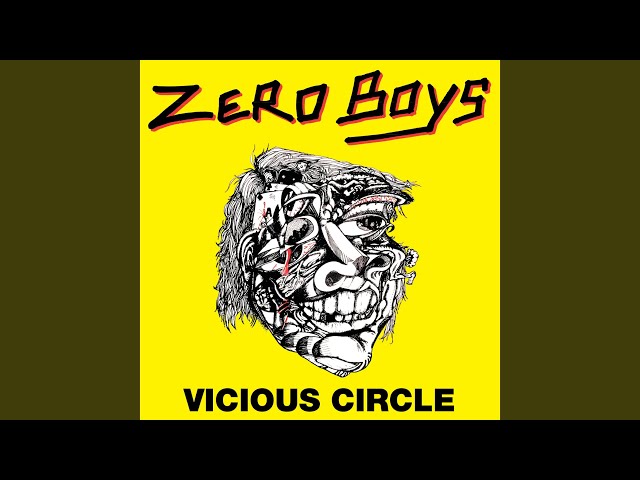
The title track from the album Vicious Circle, released in 1982, explores the complexities of love and relationships.
It portrays the anguish and breakdown of a relationship trapped in an endless loop, vividly depicting how the partners hurt each other.
Zero Boys are a hardcore punk band formed in Indianapolis in 1980.
This work was released in February 1981 and had a significant impact on the punk scene at the time.
While incorporating elements of blues rock, Zero Boys established their own hardcore punk style, making this a perfect song for those who resonate with the complexities and struggles of human relationships.
Don’t Want to Know If you are LonelyHüsker Dü

Among the U.S.
hardcore scene of the 1980s, many distinctive bands emerged that didn’t fit neatly within hardcore punk—like the Minutemen—and Hüsker Dü, the focus of this article, was very much one of them.
Releasing their first three albums on Black Flag’s Greg Ginn’s storied SST label firmly roots them in hardcore, yet they became renowned for evolving into a sound that would deeply influence alternative rock and post-hardcore from the ’90s onward.
If you want to hear them as a hardcore punk band, you should listen to their early work; however, this time I’m introducing Don’t Want to Know If You Are Lonely from their major-label debut album Candy Apple Grey, a record that marked their move away from hardcore toward a broader musical palette.
With its delicately introspective title, wistful melody, and guitar sound that bridges hardcore punk and alternative rock, listeners unfamiliar with the band may be surprised to discover that long before groups like Nirvana, there was already a band making music that sounded like this.
As an aside, Green Day has covered this song as well.

I’m Not a LoserDESCENDENTS

Featured on their 1982 debut album Milo Goes to College, this track is a classic that instantly captivated hardcore punk fans.
Its lyrics, which sing of a strong sense of self that refuses to bow to society’s judgments, brilliantly capture the struggles of youth.
With a furious sound, it spits out anger at being judged by appearances—low-slung pants, dirty clothes, and hole-ridden shoes.
Formed in 1977, the Descendents became pioneers of melodic hardcore with the album that includes this song.
Packed with defiance and self-assertion, it’s the perfect track for anyone who refuses to let others define their worth.
Victim In PainAgnostic Front
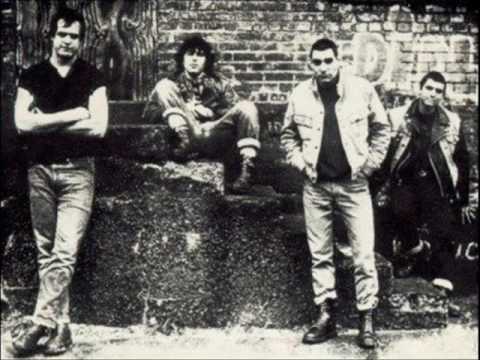
Even when we broadly talk about hardcore punk, it’s fascinating not only how the character of each band’s country of origin comes through, but also how strongly regional traits emerge.
Looking just at American hardcore punk, the East Coast and West Coast are completely different, and each has its own scene.
Formed in 1980, Agnostic Front are key figures in the North American hardcore scene and pioneers of what’s known as New York Hardcore.
Although they disbanded once in 1992, the band reunited in 1997 centered around original guitarist Vinnie Stigma and vocalist Roger Miret, and since then they’ve been actively releasing material and continuing to thrive as stalwarts of the scene.
Their landmark debut album’s title track “Victim In Pain,” released in 1984, is truly a classic anthem of New York Hardcore—NYHC for short.
Despite being under 50 seconds long, it’s a piece of primitive hardcore that races forward with deft shifts in intensity, and the inclusion of a memorable, catchy hook showcases their strong songwriting.
Wild in the StreetsCircle Jerks

The straightforward song title is just so cool and badass! This band was formed in Los Angeles, California, in 1979, centered around Keith Morris, the original vocalist of Black Flag, and Greg Hetson, the guitarist also known for his long-running work with Bad Religion.
After several breakups and reunions, they’re still active today in the 2020s—practically a living encyclopedia of West Coast punk.
They’re also known for influencing West Coast punk bands like The Offspring and Pennywise, who openly acknowledge their impact.
Their sound—short, fast, yet catchy—played a crucial role in shaping the basic style of the melodic hardcore scene.
The track featured here, Wild In The Streets, is the title track and opening number of their second album, released in 1982.
It’s actually not an original; it’s a cover of a song released in 1973 by Garland Jeffreys, a New York singer-songwriter with multicultural roots.
In that sense, they could be considered pioneers for taking a classic oldie and arranging it in a punk style—something many melodic hardcore bands would later embrace.
We Gotta KnowCro-Mags

Cro-Mags have remained a crucial presence in any discussion of hardcore punk history, especially New York hardcore.
While embodying the genre’s violent and menacing edge, they’re also known for the paradox that their original vocalist John Joseph is a Krishna devotee and a vegan.
The rift between him and fellow original member Harley Flanagan—the band’s bassist and vocalist—as well as the group’s split, are among the most famous topics in hardcore lore.
Gossip aside, their vicious, heavy crossover style, which fused elements of thrash metal, influenced countless bands; some even say that without them, the course of later hardcore punk would have been vastly different.
Their landmark debut album, The Age of Quarrel, released in 1986, is an undisputed classic and revered almost like scripture among hardcore fans.
With Joseph on vocals, it’s important to note that while metallic guitar parts are woven throughout, at this stage the music still leans more toward its hardcore roots.
The album’s opening track, We Gotta Know, serves as a definitive calling card for the band—an absolutely iconic song!
[Western Music] Hardcore Punk Masterpieces and Popular Songs – Beginner’s Guide (21–30)
kids Aren’t AlrightThe Offspring

It’s included on the album “Americana.” They’re one of the bands that helped push melodic hardcore into the mainstream.
In this song, a somewhat melancholic melody is layered with hard-edged guitars, and combined with the tragic lyrics, it really hits you in the heart.