

![[For K-pop beginners] Useful terms for addressing people, like “hyung”](https://media.ragnet.co.jp/img/1200__png__https://www.ragnet.co.jp/files/2024/02/64d7a03fe09da1850a836dbd9482218f.webp)

You’ve probably seen K-pop idols and Korean actors calling each other “hyung,” haven’t you?
Simply call him 'hyung,' or combine it with his name and say '___-hyung.'
There are many Korean names that include “Hyun,” such as Jun-hyun, Jae-hyun, and Hyun-seung, but the “hyun” in those names is different from the “hyun” we’re talking about this time.
The term “hyung” that we’re introducing this time is a word that means ‘older brother,’ but …OppaIt’s not a word that just anyone can use, like “.”
Along with how to use hyeong, I’d also like to introduce other ways to address people.
- [For K-POP beginners] You often hear “I’m a ___-pen,” but what does it mean?
- [For K-pop beginners] What is a comeback?
- K-POP Popularity Rankings [2026]
- [K-POP] Korean songs you’ll want to sing at karaoke: classic crowd-pleasers
- Songs Frequently Used in YouTube Shorts [Korea / K-POP Edition]
- [For Live Show Beginners] Who Are the People Called 'Live Kids'?
- [K-POP] A Special Feature on Korean Artists’ Debut Songs: Iconic Tracks That Marked Their Start
- The evolution still hasn’t stopped! K-pop tracks recommended for the Yutori generation
- K-pop to color your Instagram stories: recommended Korean songs
- [2026] A roundup of popular K-POP hits that were trending this year
- Introduction to Lyric Writing: Exploring K-POP Idol Songs Through Translation and Original Lyrics
- K-pop friendship songs: heartwarming Korean tracks about borderless bonds
- A bright, cheerful Korean friendship song. A roundup of K-pop songs about friends.
Words for addressing people that you must not get wrong
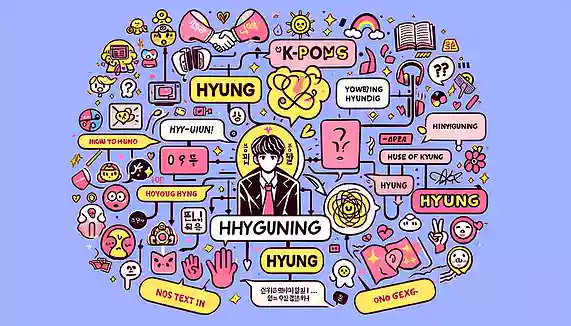
“Oppa” and other useful ways to address peopleAs I mentioned before, South Korea is a country with strong Confucian influences that places great importance on hierarchical relationships.
The way you address someone differs depending on your relationship with them.
So if you use the hyung I’m introducing this time incorrectly, it can come across as rude or leave people thinking, “???”.
I think there are many female fans of male K-pop idols, but unfortunately, women can’t use the cute-sounding word “hyung.”
What is hyung?
How to use hyung
Hyung is written in Hangul as “형.”
When a man addresses a close older brother figureI will use it.Translation
There are also many people who use hyung to address not only a blood-related older brother, but also a senior, a girlfriend’s or wife’s older brother—in other words, a brother-in-law.
Since this is a term used for someone close to you, suddenly calling an older man you’ve just met “hyung” would be considered rude.
Also, if a man calls someone “oppa,” it gets even more confusing... (Oppa is used by women to address an older brother or an older male they’re close to).
In Korean there are no long vowels, so pronouncing it with an extended sound like “Hyooon” isn’t originally a thing, but on Korean variety shows you often see younger idols stretching it out when they say it.
maknae (막내): the youngest memberThe way he cutely goes “Hyung!” and relies on the older members is probably a delightful sight not only for those being relied on but also for the fans watching.
I think it’s cute when the youngest calls someone hyung.
Anyway, hyung is a term used by younger males.Being called “hyung” = older person (older brother/older male)and the hierarchy becomes apparent.
While saying “hyung” and acting all affectionate draws your attention, you can also see him being considerate and behaving carefully because he’s the older brother.
Conversely,Sannamja (상남자: manly; a real man)It seems to be preferred, and you can also see older members taking the lead like true hyungs and helping the younger members.
By the way, Yong Jun-hyung, formerly of BEAST and now in HIGHLIGHT, to his beloved dogHyungnim (형님: an honorific way to say 'older brother' or 'big bro' to a male senior)We named it that, and the hierarchy got reversed so that the younger puppy was above the older one (lol).
A song with the theme of Hyung
This is a rock ballad by the Korean duo group NORAZO called “Hyung,” told from the older-brother’s point of view.namdongsaeng (남동생: younger brother)It’s a popular song with moving lyrics that sing, “Life is a series of trials and can be tough, but give it a try.”
It’s a track included on NORAZO’s 4th album “Hwan-gol Daldai” (2010), and there are also many videos on YouTube of young artists singing it in street performances.
Around 0:46, Hyung appears in the lyrics.
형도 그랬단다 죽고 싶었지만
I wanted to call Hyundo, but I couldn't.
You were the same, big brother—though you wanted to die.
NORAZO is an artist renowned for their vocal ability to sing in a variety of styles, and they are also popular as a 'happy virus' group—widely used in Korea to mean someone who gives you energy—known for their unique costumes.
'Hyung' is a ballad, but there are also many comic songs and the music videos are fun, so if you're interested, please look them up.
Hyung that comes up in conversation
Let’s take a look at him actually calling him “hyung.”
Hyun-only pattern
This is an interview with EXO’s Xiumin (born in 1990) and NCT’s Mark (born in 1999).
Younger Mark calls Xiumin hyung.
Xiumin and Mark aren’t blood-related brothers, but as senior and junior in the same SM Entertainment, they use the term “hyung.”
Name + hyung pattern
This is from NCT LIFE EP04, where Mark addresses the older members by their names plus “hyung.”
유타 형이랑 윙윙 향을 리스펙트!
Yuta HyungIranWin-win hyungIll Respect!
I amYutahyeonandWin Win-hyunI respect (you/him/her/them)!
Mark is the second lowest-ranking person among the members present, so he is speaking politely.
From around 19:40 in the latter half of this videoYaja Time (야자타임: a kind of game where people talk without honorifics or polite speech regardless of age)is doing
The maknae is calling his hyung the way you would call a small child.
Here, Haechan (born in 2000), who’s sitting on the far right, is the maknae, so he teases Taeil (born in 1994) on the far left a lot.
It might be precisely because hierarchical relationships are so strict that games like “yaja time” get so exciting.
It often appears in idol variety shows.
freebie
What do you call an older woman from a man's perspective?
The word “hyung” is used by males to address an older male. What do you call an older female when a male is addressing her?
It corresponds to the Japanese word “oneesan.”Nuna (older sister [as addressed by a man], Korean: 누나)It is.
Like hyung, noona is a term that can be used regardless of blood relation.
What about Dad and Uncle?
When calling your father in a polite wayAbuji (Korean: 아버지, meaning “father” or “dad” in Korean)。
A casual way to say it isAppa (Dad)It is.
This is a phrase that can be used regardless of gender.
The word for addressing an older man who isn’t a blood relative is “ajusshi” (아저씨). In places like shops, people sometimes call out “ajusshi” instead of using “jeogiyo” (저기요), which corresponds to “excuse me” in Japanese.
Please give it a try when you travel to Korea.
In conclusion
Today I introduced terms like “hyung,” which men use to address older men, and “noona,” which they use to address older women.
Please be careful, because if a woman uses it by mistake or if you use it with someone younger, it can lead to an awkward situation.
I think it’s something you end up hearing a lot when you like male K-pop idols.
Please make use of this when watching programs featuring your favorite idols or when actually speaking with people from Korea.