

[For Seniors] January Craft Ideas: Boost Your Luck with New Year Decorations and Good-Luck Charms


January marks the beginning of a new year.
If you want to give your room a seasonal touch, why not try some hands-on crafts? Create and enjoy pieces unique to January—such as pine decorations symbolizing longevity, camellias that shine in winter scenery, or festive cranes for the New Year.
Using familiar materials like construction paper, tissue paper, and origami, there’s a special joy in watching seasonal works take shape.
Shape with your fingers, choose colors, and get creative with embellishments—these moments will ease your mind and bring a smile.
How about enjoying a relaxed crafting time while sharing your New Year’s resolutions?
- For Seniors: Auspicious Handmade Zodiac Ornament Craft Ideas
- [For Seniors] January Craft Ideas for Day Service Activities
- [For Seniors] Let’s Make New Year Decorations by Hand! A Collection of Easy Ideas Using Everyday Materials
- [For Seniors] Recommended Wall Decorations and Crafts for January
- [For Seniors] Craft Ideas Recommended for New Year’s and the New Year
- Lucky Daruma: Craft ideas for decorating January wall displays for seniors
- [For Seniors] Recommended Origami for January
- [For Seniors] January Activities and Recreation Games
- [For Seniors] Decorate your January wall with rabbits! Packed with ideas like snowball fights, New Year’s festivities, and rice cake pounding
- [For Seniors] Enjoy the Cold Winter! Simple, Recommended Crafts
- [For Seniors] Perfect for winter events! Easy craft ideas
- [For Seniors] Heartwarming and Cozy: Perfect Wall Decoration Ideas for Winter in Care Facilities
- Recommended winter wall decorations for seniors: heartwarming ideas
[For Seniors] January Craft Ideas: Boost Your Luck with New Year Decorations and Good-Luck Charms (61–70)
Felt ema (votive plaque)
This project involves attaching decorations—such as zodiac animals and lucky charms made of felt—onto a felt base shaped like an ema plaque.
While ema are typically thought of as flat, using felt for both the base and the decorations creates a soft, three-dimensional effect.
A key point is to finish the decorations with a soft feel by adding stuffing inside or layering pieces when gluing them on.
If making each decoration from scratch is challenging, another recommended approach is to prepare the parts in advance and have participants arrange them to create their own design.

Temari hanging ornaments
Do you know Japan’s three major tsurushi decorations? There are various theories, but the famous ones are Sagemon from Yanagawa in Fukuoka Prefecture, Hina no Tsurushi Kazari from Inatori in Shizuoka Prefecture, and Kasafuku from Sakata in Yamagata Prefecture.
Though the items they hang differ, all are displayed with wishes for children’s growth and the prosperity of descendants.
How about trying your hand at decorating with these auspicious temari-hanging ornaments? Temari can be made in 3D or folded from chiyogami—both are great! If you’re enjoying this at a senior facility, it’s nice to have a variety of temari.
Be sure to add accents, such as the character for “fortune” (福) or illustrations of Otafuku (the good‑fortune mask), as decorative elements.
cardboard ema (votive tablet)
Cut cardboard into the shape of ema (votive plaques), then decorate them with New Year–themed illustrations such as the zodiac animals and with each person’s wishes.
By making use of the cardboard’s natural brown color, you can evoke the soft, wooden feel of real ema.
You can certainly have everyone draw their own design on the front, but if you prepare illustrations in advance and let participants choose from them, they can focus more on thinking about their wishes and writing the text.
Selecting an illustration that perfectly matches each wish is another enjoyable part of the process.
A life-sized ema made from A4 copy paper

This is an easy-to-make ema (votive plaque) using A4 copier paper that doesn’t even require scissors.
You trim both ends of a rectangle into roof-like shapes, fold it in half, and tuck it in, resulting in smooth finishes on both sides.
You will need small creases as guides for shaping, but to keep the final product looking neat, it’s best to make these guide creases as inconspicuous as possible.
If you insert a piece of cardstock while shaping, it will turn out sturdier and should also make it easier to write your wish.
Bunny Wreath

One animal that suits winter well might be the rabbit.
Its fluffy white fur is like snow and matches the season perfectly.
How about making a rabbit wreath using pom-poms made from yarn? Use a pom-pom maker sold at 100-yen shops to wrap the yarn and create fluffy balls.
Since wrapping the yarn uses fine motor skills, it’s also great for rehabilitation.
Once the balls are ready, attach ears made from precut fabric and felt.
Finish by gluing on ten rabbit heads with a hot glue gun.

Fukuwarai wall decoration of a rabbit daruma

Would you like to make a rabbit daruma decoration—an arrangement perfect for New Year’s that adds a cute twist to the traditional daruma and brightens up your wall décor? Use the template downloadable from YouTube to cut out each part.
For round pieces like the eyes, a circle punch is handy.
Once everything is cut out, glue the parts in place while referring to the template.
The expression will change depending on where you position the pieces, which is part of the fun.
Give it a try!
amulet
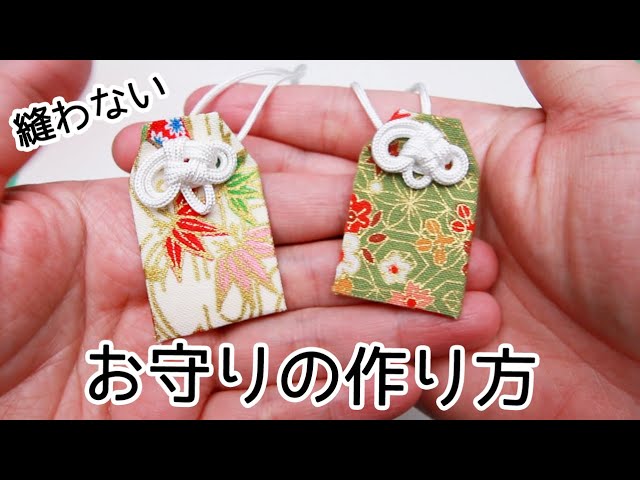
Many families go to their first shrine visit of the New Year (hatsumode) and receive protective charms (omamori).
However, some people can’t go for various reasons.
For those people, we recommend DIY omamori craft ideas.
If you search for how to make omamori, you’ll find many methods: making them with origami, using chirimen crepe fabric, or even no-sew options.
Why not try whichever method seems easiest for you? These days, you can even find chirimen fabric with adhesive backing at 100-yen shops, so be sure to make use of that as well.
