

Recommended Japanese jazz bands — from classic legends to rising young groups

Jazz has a wide range of subgenres—from so-called modern jazz to big band, fusion, and even free jazz—so many people may not know where to start listening.
In fact, jazz is a form of music that has influenced every genre, including the rock and pop, hip-hop, post-rock, and electronica you listen to every day.
In this article, we’ll guide you to the gateway of the vast world of jazz by carefully curating a selection of recommended Japanese jazz bands.
From classic, time-honored groups to up-and-coming artists who captivate with genre-defying styles beyond jazz, we’ve chosen a broad lineup.
- [2026] Discover Today's Jazz! A Roundup of the Latest Spotlight and Popular Tracks
- Recommendation of Wa-Jazz: A Masterpiece of Japanese Jazz—One Must-Listen Album
- Famous jazz musicians. Players who have graced the history of jazz.
- Classic swing jazz tunes. Recommended popular songs.
- [2026] Japanese jazz singer. A jazz vocalist representing Japan’s domestic jazz scene.
- Ranking of Popular Jazz Songs
- Great for karaoke too! Jazz classics you’ll want to sing at least once
- Today's Jazz: Tunes for today! A selection of timeless classics and contemporary jazz
- Start here first! Classic jazz-rock masterpieces. Recommended popular tracks.
- [2026] A Collection of Classic Japanese Ballads with a Jazz Flavor
- A roundup of famous jazz standards featured in the hugely popular jazz manga BLUE GIANT
- [Japanese R&B] Notable Classics & New Tracks, Representative Songs of Japanese R&B
- Welcome to the world of "Vocalo Jazz" [VOCAJAZZ]
Recommended Japanese Jazz Bands — From Classic Legends to Emerging Artists (11–20)
Septembernettai JAZZ gakudan
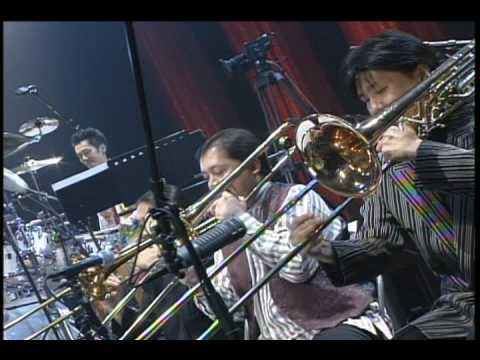
As the word “tropical” suggests, this is a large ensemble of highly skilled musicians whose foundation is so-called Latin jazz, incorporating Latin elements.
Centered around percussionist Carlos Kanno, a member of Orquesta de la Luz, the group was formed in 1995.
They have released works energetically and are well-known regulars at jazz festivals in Japan and abroad, beloved by jazz fans across generations.
In addition to original compositions, they have a strong reputation for their cover selections—ranging from jazz standards to famous songs from other genres—making their music easy to enjoy even for newcomers to Latin jazz.

Neon Sign StompEGO-WRAPPIN’

EGO-WRAPPIN’, known for their smash hit “Kuchibashi ni Cherry,” is a duo formed in Osaka in 1996.
Their indie mini-album Shikisai no Blues, released in 2000, drew significant attention, and they made their major-label debut in 2001.
That said, the fact that they launched their own label under Polydor to make their major debut is very EGO-WRAPPIN’-like in terms of stance.
Drawing on a wide range of musical roots—from Showa-era kayōkyoku and Black music to alternative rock—their sound feels both nostalgic and fresh, as if reinterpreting prewar jazz and cabaret music for today.
Jazz lovers, and anyone looking for something a bit different from typical J-pop, should definitely give them a listen!
SUNSETBlu-Swing

Formed in 2004, Blue Swing isn’t your typical instrumental band made up solely of so-called jazz musicians; it’s a five-piece that includes not only players but also a sound producer and a vocalist.
Yusuke Nakamura, the keyboardist who also handles composition, arrangement, and programming, is well-known for providing songs to other artists, creating game and commercial music, and working as a remixer and arranger.
The sound crafted by these five multitalented members is rooted in jazz yet has the appeal to be enjoyed as city pop, and vocalist Yuri Tanaka’s supple, unpretentious singing is simply a delight to the ears.
A highly recommended band for J-pop fans!
Distance to the LightDEZOLVE

A new-generation fusion band formed in 2014 by young musicians, all born in the 1990s.
Each member was exposed from childhood to a wide range of music and instruments across genres, and the four of them—brimming with talent—were already working professionally at an early stage.
Even without many words, just listening to their tracks makes it clear: their overwhelming musicianship and fresh, youthful musical sensibilities will impress even long-time jazz and fusion fans.
Many people may not realize that such young musicians are producing fusion sounds of this caliber.
In September 2020, they created a buzz with a collaboration with the idol group Philosophy no Dance.
Keep your eyes on DEZOLVE, who continue to thrive beyond the boundaries of fusion.
Song of Sally the WitchSonoda Kenichi to Dekishii Kingusu

There’s a jazz genre called “Dixieland Jazz” that developed in New Orleans in southern Louisiana, often called the birthplace of jazz.
As for what kind of style it is: it’s a classical form of jazz derived from brass bands, representing one of the earliest shapes of jazz, characterized by a light, lively sound built on cheerful, bustling rhythms.
Quite different from the image of modern jazz—listened to in a dark bar with a drink and a curl of smoke—Dixieland jazz has a completely different charm.
Bands that play this style exist in Japan as well, and the leading example is Kenichi Sonoda and the Dixie Kings.
Centered around trombonist Kenichi Sonoda, born in 1929, the group formed in 1960 and has continued for many years as Japan’s representative Dixieland jazz band.
Sadly, Mr.
Sonoda passed away in 2006, but his son, Tsutomu Nori Sonoda, joined the band, and they remain energetically active well into the 2020s.
The song “Mahōtsukai Sally no Uta,” which almost everyone has heard at least once, was also performed by Kenichi Sonoda and the Dixie Kings! If this piqued your interest, be sure to delve deeper with a compilation album or two.
Pentatonic LoveLast Electro

A four-piece formed in the summer of 2018, centered around Kan Sano—keyboardist and renowned music producer—and Ippei Sawamura, the drummer of the cutting-edge jazz-to-hip-hop band SANABAGUN who also supports other artists.
They debuted in 2019 with a 7-inch single and released the EP “closer” in January 2020, quickly drawing attention from sharp-eared music fans.
While their background is, of course, rooted in jazz, they are also musicians steeped in Black music—R&B, hip-hop, and soul—refining influences from club music into a uniquely distilled crossover sound that is both forward-thinking and cool.
If you want to discover the evolved, current form of jazz, we recommend checking out bands like theirs!
Recommended Japanese Jazz Bands — From Classic Legends to Young Artists (21–30)
Fishbowl TownLotus Land

Lotus Land is an instrumental jazz trio formed in 2013.
The sound crafted by its members conjures a gentle, imaginative world that feels like frolicking in nature, carrying you back to a nostalgic and joyful place of return.