

No worries if you're tone-deaf! Easy-to-sing J-pop songs for karaoke


Recently, with the K-pop boom, the difficulty level of Japanese music has risen sharply compared to before.
Songs that use whisper voice and mixed voice have become standard, and on top of that, advanced vocal techniques like riffs/ad-libs and hiccups are now being demanded.
In this situation, it can be quite difficult for people who aren’t confident singers to find songs that suit them and are easy to sing.
So this time, we’ve picked out tracks that even those who lack confidence in their singing or consider themselves tone-deaf can handle! Of course, we chose them with karaoke crowd-pleasing in mind, so please consider adding them to your repertoire!
- [Even If You're Tone-Deaf, It's Okay!] Easy-to-Sing Karaoke Songs and Practice Tracks
- Even karaoke beginners can relax! Easy-to-sing songs for men
- [Karaoke] A roundup of songs that are easy for women to sing!
- Even if you’re tone-deaf, it’s okay! Easy karaoke songs for women
- A must-see for low-voiced women! Popular songs that are easy to sing at karaoke
- Karaoke songs recommended for men with low voices or who are good at singing in a low register
- Even for those not confident in their singing! Easy-to-sing karaoke songs released in the Reiwa era
- Karaoke songs that are easy to sing even if you’re not confident in your pitch (for women in their 50s)
- No worries even if you’re not confident in your singing! Simple, easy-to-sing songs for karaoke.
- [For women] Songs with a narrow vocal range that are easy to adjust the key for!
- [Women in Their 40s] Even If You’re Tone-Deaf, You Can Sing! Karaoke Songs That Fit a Woman’s Vocal Range
- Karaoke songs for men in their 20s that are easy to sing even if you're tone-deaf
- Easy-to-sing songs even for those who aren’t good at singing. Karaoke songs recommended for middle school students.
Recommended for men (1–10)
Something like “happy”Sabasusutā

This song was released on New Year’s Day 2025 and was used in au’s commercial song for the “Santaro Series: Everyone, Let’s Happy!” segment.
You probably remember hearing it over the New Year.
As the title suggests, it’s a positive, emotional anthem that stands up to unfair kinds of happiness.
It’s a slightly up-tempo band track, so you’ll want to lock into the rhythm.
The vocal range shouldn’t be too high.
Even for those not used to karaoke, it’s in a key that many women will find easy to sing.
Above all, it’s all about feeling.
I recommend singing boldly without hesitation!

SUNHoshino Gen

Released in May 2015, this is Gen Hoshino’s eighth single.
The rhythm might be a bit tricky, but in terms of vocal range it should be relatively comfortable to sing.
If you focus on singing plainly and honestly like Gen Hoshino, it should turn out nicely.
Try not to think too much about “singing well”; instead, face the song straight on and give it a try.

swallowYOASOBI with Midorīzu

This song was released in 2021 as a digital-only single, and it was used as the theme song for NHK’s “Hirogare! Irotoridori” as well as the October–November 2021 selection on “Minna no Uta.” It’s a mid-tempo track around 100 BPM, easy to keep rhythm with, and you can sing it without overexerting yourself.
The vocal range is also set in a relatively comfortable key compared to other YOASOBI songs.
Since it was featured on NHK, it’s easy for children to sing, making it perfect for parent-child karaoke.
For the A melody, speaking-like delivery matches the mood, so you don’t need to worry too much about precise pitch.
For the chorus, singing lightly while swaying side to side should make it feel great to sing.
Recommended for men (11–20)
Yes, with pleasure.kocchi no kento

Hai Yorokonde was released as a digital-only single.
It’s a soul-stirring anthem that stands with people struggling in life, and because it’s rhythm-focused, it’s the kind of song you can sing along to by feel even if you can’t nail the pitch! Since Kento Kochinoke often performed it on TV, many of you might already know this track.
It’s just under three minutes long, and it feels like all its coolness is packed tightly into that short span.
The tempo is fast, so memorizing the lyrics might be a bit tough, but what matters most is to “keep time with the rhythm” and “ride the groove.” For the rapid-fire sections, you can get through them by enunciating the vowels clearly.
It also helps not to open your mouth too wide.
LemonYonezu Kenshi

Kenshi Yonezu’s eighth major-label single, released in February 2018.
Since it was also the theme song for the drama “Unnatural,” many of you have probably heard it.
It might seem like a somewhat difficult song, but Yonezu himself isn’t the type of singer who emphasizes technical virtuosity, so as long as you take care not to let your voice crack on the high notes in the chorus, most people should be able to sing it without too much trouble.
The key is how well you can switch into falsetto on the highest notes.
I think the most captivating part when singing this song is how much you can convey a sense of expansion as you move from the pre-chorus into the chorus—so put your heart into it and carry it through.
Goodbye ElegySuda Masaki
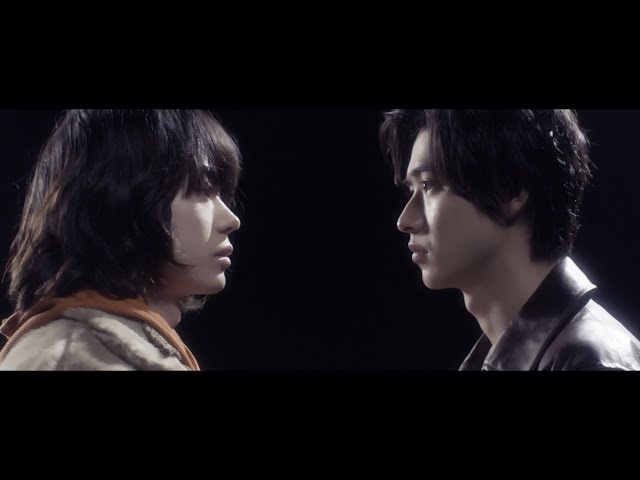
Among young actors, Masaki Suda stands out for his unique presence, showcasing talent not only in acting but also in the arts.
This is his third single, which was selected as the theme song for the TV drama “Kiss that Kills.” The song brilliantly fuses a voice that conveys the atmosphere and expressive power unique to an actor with a catchy, lyrical melody.
Although the melody moves a lot, the pitch range isn’t very wide, so it’s an approachable choice even for those who aren’t very confident in their singing.
It has a driving feel, making it a karaoke number that can get the crowd going—even if you power through it on momentum at first.

Don’t cheat on me.Koresawa

Koresawa is a female singer-songwriter who’s gained popularity with her catchy lyrics.
If you’re a woman in your teens to thirties, chances are you’ve heard one of her songs at least once.
Her track “Uwaki Shitara Akan de” (“Don’t You Dare Cheat”) features a poppy, adorable melody that leaves a strong impression.
The vocal range is on the narrower side, and unlike many of her other songs, it doesn’t use falsetto.
It’s a song that even those who struggle with higher parts should be able to sing without trouble.
