

[Childcare] A roundup of June quizzes about the rainy season and rain—have fun with your kids!


June brings more rainy days, and more days when kids can’t play outside.
It can be tough to keep children entertained in childcare during this time.
On such days, how about trying some indoor quizzes? Quizzes spark the fun of imagination and get everyone excited as they think together.
They can even help relieve the stress of not being able to play outside! Here, we’ve prepared quizzes related to June and the rainy season.
There might be things about rain and the rainy season that even adults don’t know.
Think them through with the children and enjoy a fun time together!
- [Childcare] Rainy days can be fun too! Recommended rainy-season craft ideas for June
- [Childcare] A Collection of Tricky Quizzes That Kids Will Love
- [Childcare] Summer Quiz Activities for Kids | Deepen Their Learning
- [Childcare] A collection of quizzes related to May! Let's think about them together with the children.
- [Childcare] True-or-False Quiz Questions for Kids! A Collection of Fun, Playful Learning Ideas
- [Childcare] Tanabata Trivia Compilation | Learn About the Festival
- [Kindergarten] Let’s Play with Quizzes! A Collection of Recommended Quizzes for Older Kindergarteners
- A childcare quiz to enjoy on Children's Day! Learn about traditions and customs
- August quizzes that liven up childcare
- [Childcare] Fun with kids in July! Quizzes about events and food education
- For toddlers and elementary schoolers! Fun quizzes and riddles to enjoy at a daycare farewell party
- [Childcare] Perfect for June! Indoor play ideas to incorporate into childcare
- [Childcare] Spring Quiz Collection | Fun for Adults and Kids Alike
[Childcare] A roundup of June quizzes about the rainy season and rain! Have fun with kids (11–20)
There is something that does not exist in June. Which of the following is it?
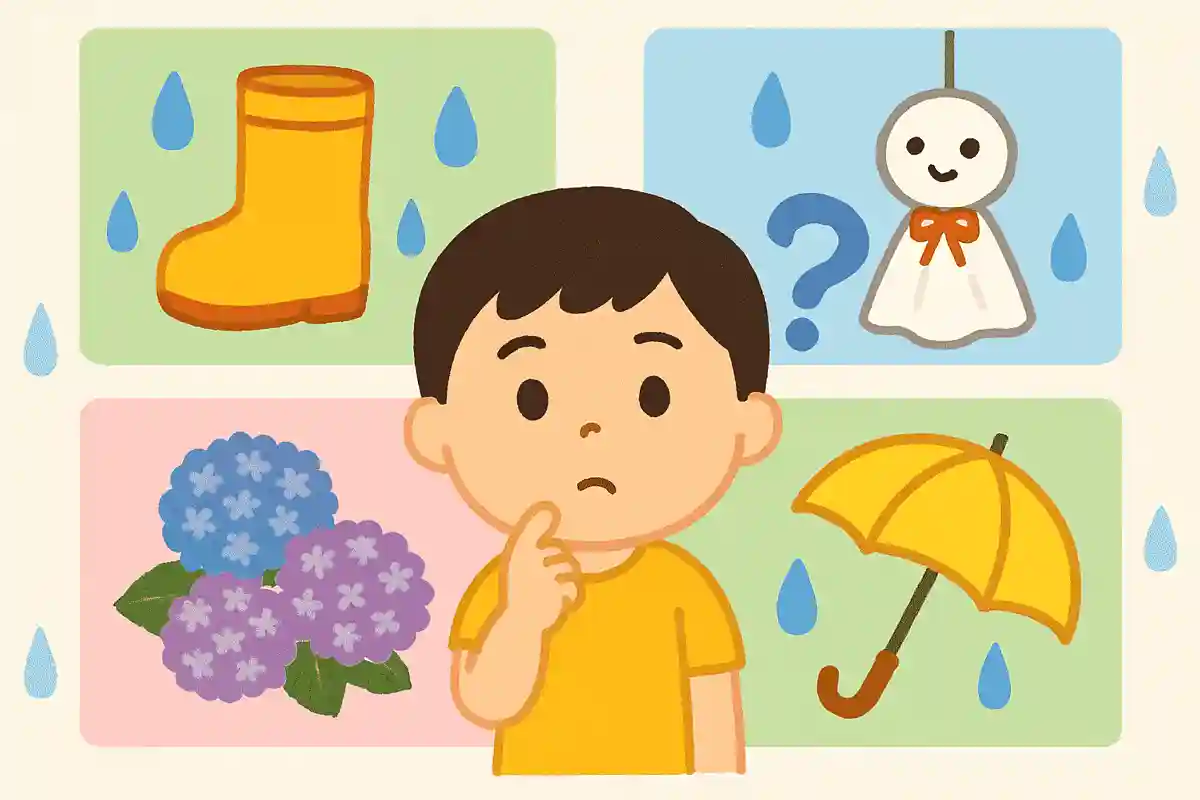
- Public holidays (days off other than Saturdays and Sundays)
- someone's birthday
- school lunch
See the answer
Public holidays (days off other than Saturdays and Sundays)
We call days off other than Saturdays and Sundays “public holidays.” Since there are no public holidays in June, you might feel like there are fewer days off. I hope you can have lots of fun playing at the preschool.

Which of the following do you make when you want it to be sunny on a rainy day?
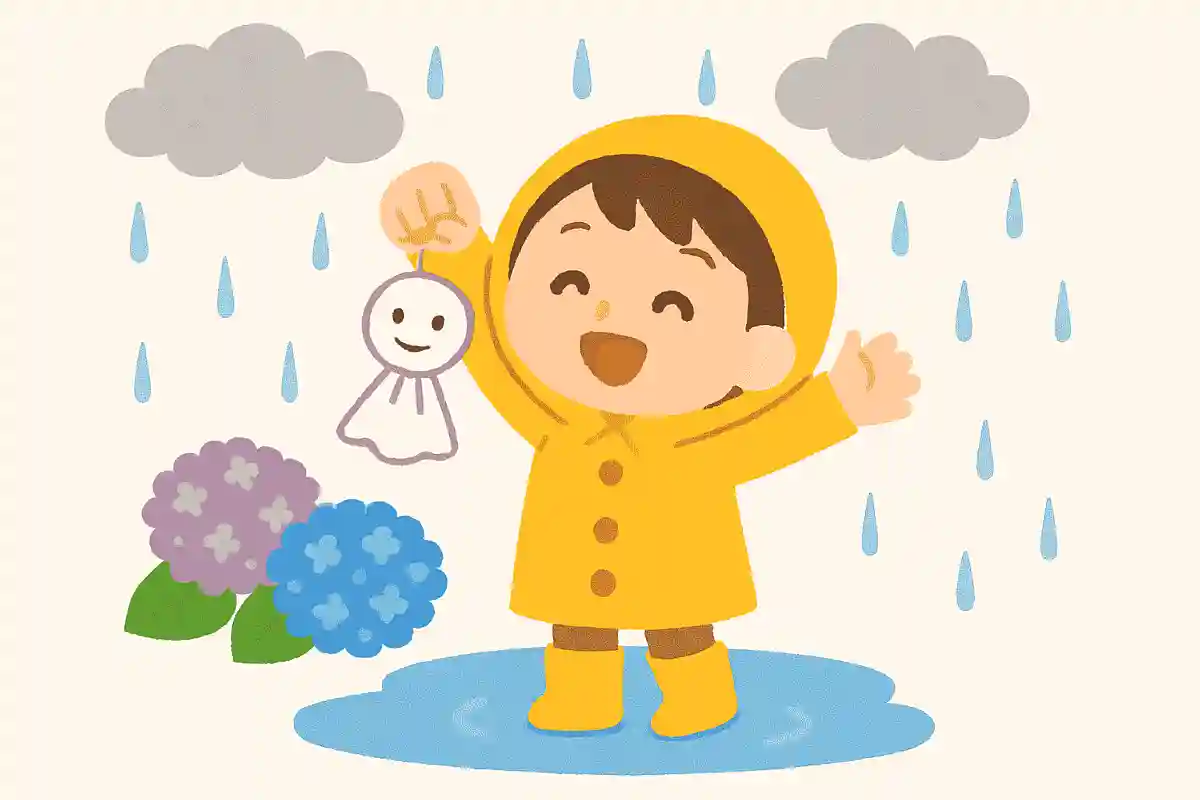
- Frog figurine
- teru teru bozu (a traditional Japanese handmade doll hung to wish for good weather)
- Umbrella ornament
See the answer
teru teru bozu (a traditional Japanese handmade doll hung to wish for good weather)
Originally, teru teru bozu are made without drawing a face, and you add the face after your wish comes true. But when making them with children, you want to draw the face and have fun, right? There are also various other beliefs, such as that hanging one upside down will bring rain, or that drawing a crying face will make it rain.
It stays closed when it’s sunny, but opens when it rains—what is it?
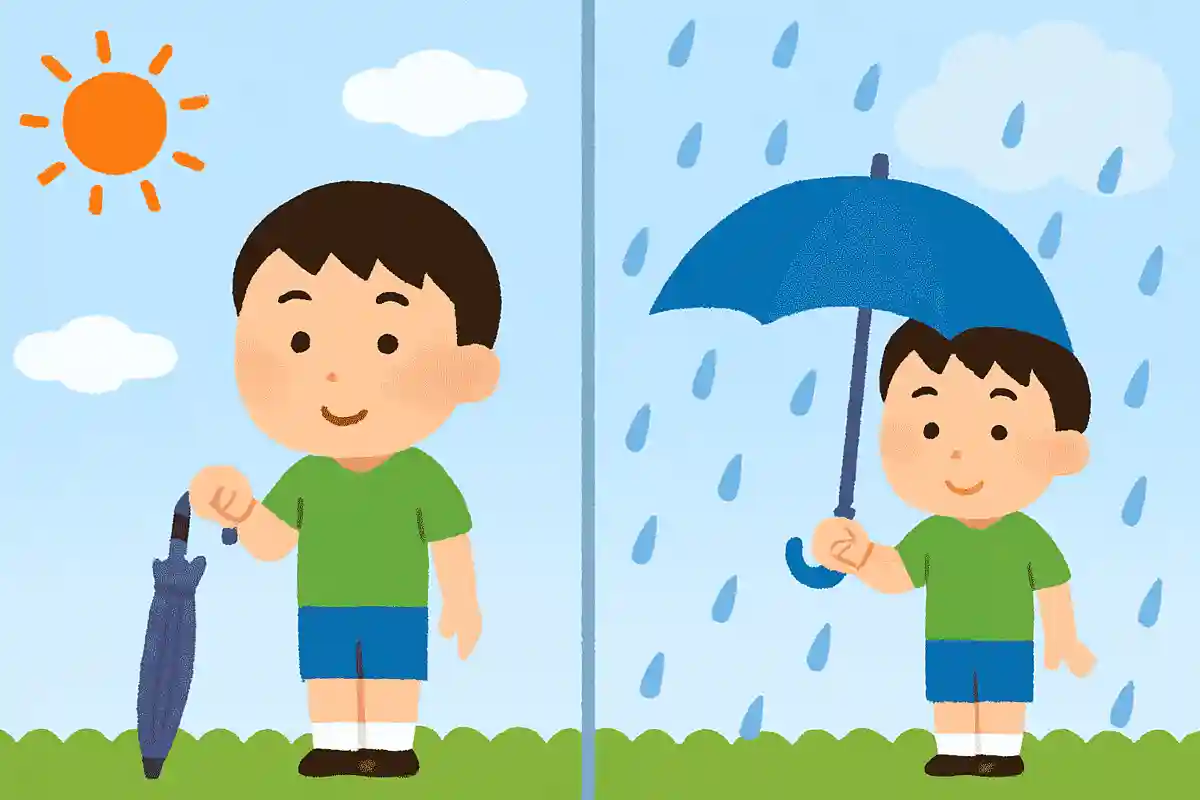
- umbrella
- hat
- towel
See the answer
umbrella
An item we often use on rainy days: the umbrella. On sunny days, everyone keeps their umbrellas closed and put away, but when it rains, we open them and use them. So the answer is 'umbrella.'

What is something in a car that goes back and forth when it rains?

- wiper
- tire
- door mirror
See the answer
wiper
When it rains, the wipers attach to the windshield and move left and right to clean the glass. Therefore, since they go back and forth in front of the car, the answer is “wipers.”
What is the bat that appears on rainy days?
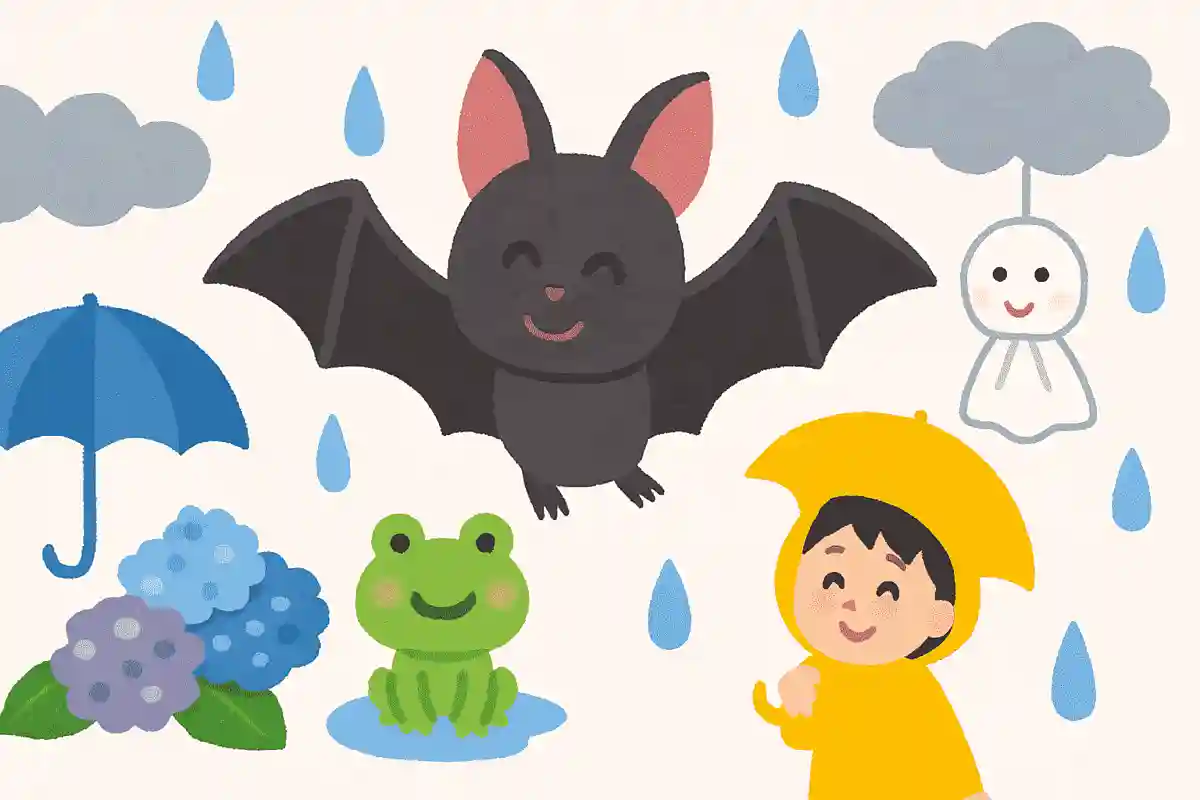
- umbrella
- forest
- kappa
See the answer
umbrella
The answer is “kasa” (umbrella). There’s a type called “kōmorigasa” because the shape of a closed umbrella resembles a bat, and people use umbrellas on rainy days.
What do you call the season, mainly in June, when it often rains?
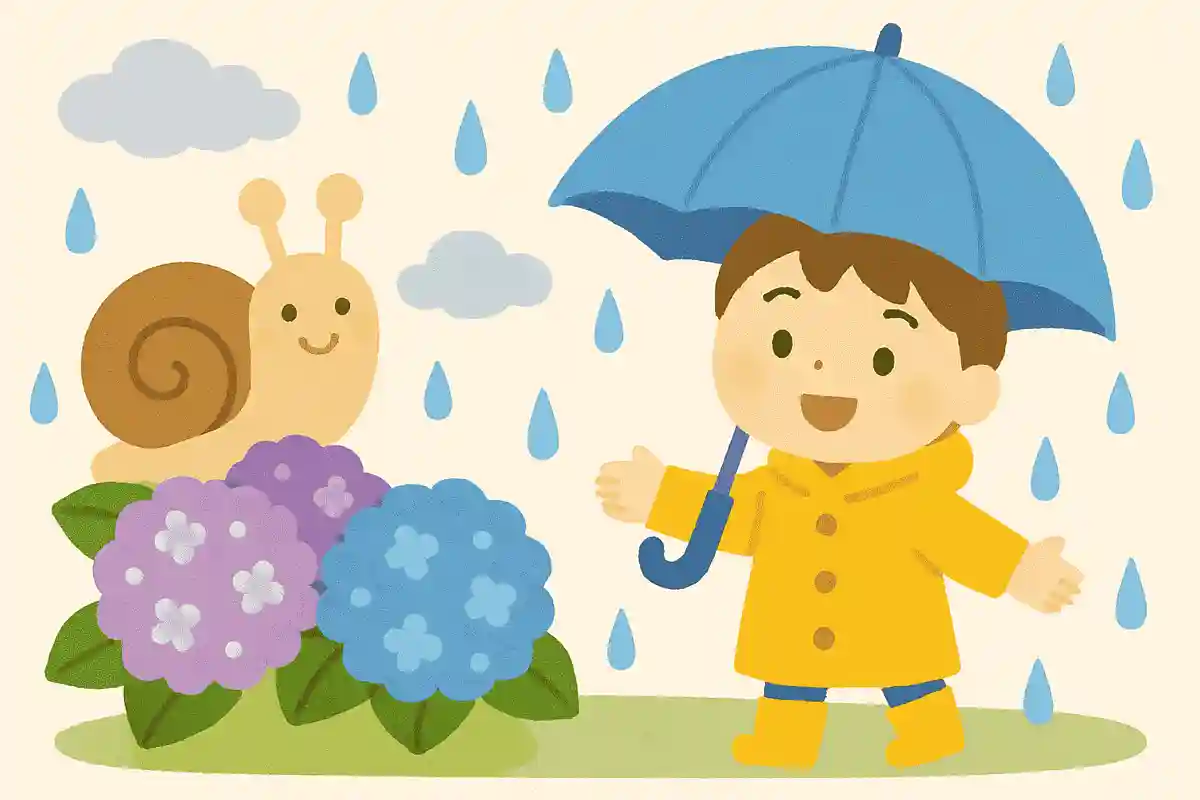
- early summer
- rainy season (tsuyu)
- midwinter
See the answer
rainy season (tsuyu)
Although the timing varies by region, June is the rainy season in the Tokyo metropolitan area. Because it rains a lot, there are fewer opportunities to play outside, but it’s a lovely season with hydrangeas in bloom and snails around, isn’t it?
[Childcare] A roundup of June quizzes about the rainy season and rain! Have fun with kids (21–30)
Why are hydrangea flowers different colors?
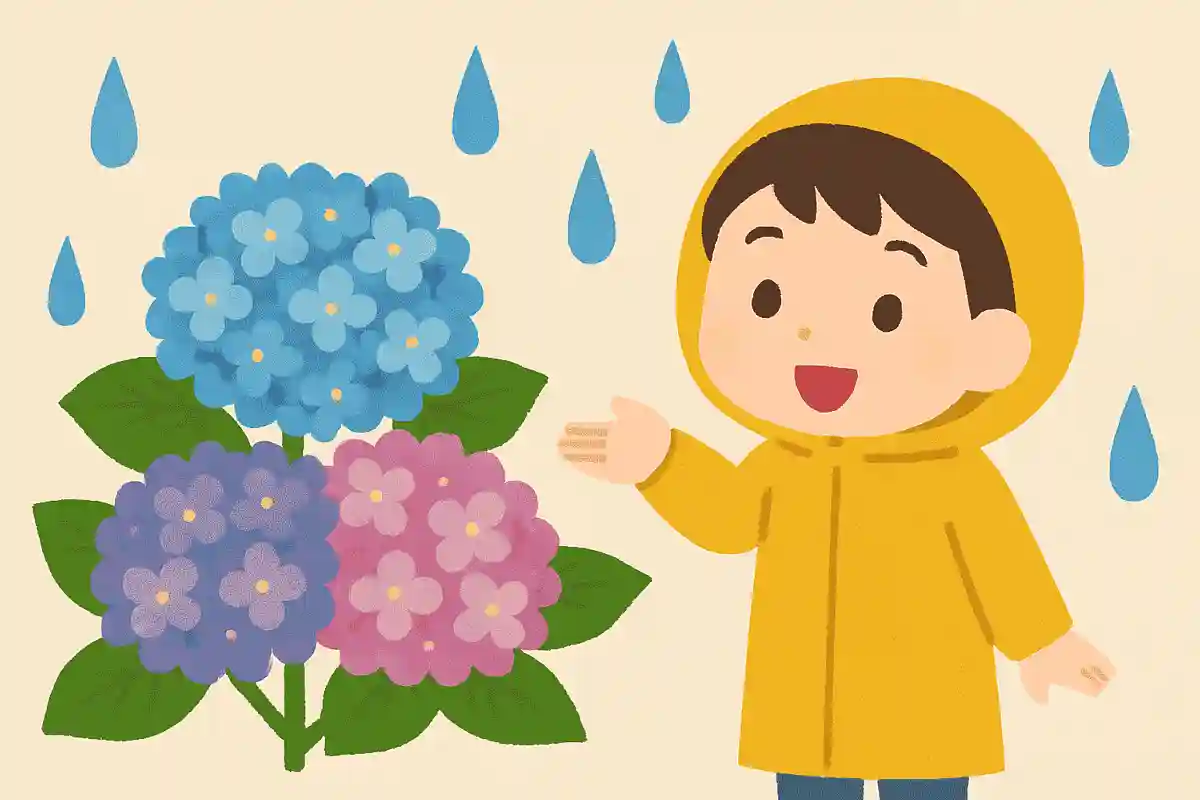
- Because the soil is different.
- Because the amount of time spent in the sun is different.
- Because the type of flower is different.
See the answer
Because the soil is different.
The color of flowers changes depending on whether the soil is acidic or alkaline. Since this is a difficult concept for children, how about having them imagine what it means for soils to be different while observing the flower colors?