

[January Childcare] Traditional New Year’s Games! A Collection of Ideas to Enjoy with Children


Are you wondering what kinds of activities to include in childcare in January? January is a perfect time for children to get familiar with Japanese culture through traditional games and seasonal recreation.
Here, we introduce New Year’s themed play ideas such as invisible-ink drawings (aburidashi), lion dance (shishimai), and shell matching (kai-awase).
Traditional games are full of elements that nurture children’s creativity and concentration.
They offer many ways to play—moving their bodies with friends, using their hands to make things, and more.
These ideas are also perfect for events in childcare settings, so please use them as a reference!
- From New Year’s games to winter crafts! A roundup of January recreation activities to enjoy in childcare
- Have fun in childcare! A collection of play ideas to liven up cold days in January
- Winter activities to enjoy at daycare! Outdoor play and nature play that warm the heart and body.
- Traditional Games: Fun Old-Time Play. Popular Activities Useful in Childcare
- Fun January Crafts! A Collection of Ideas You Can Make and Play With for 5-Year-Olds
- Ideas for Childcare Quizzes to Enjoy in January
- [For 3-year-olds] Perfect January Winter & New Year Crafts! A Collection of Fun, Hands-On Ideas
- Play activities recommended for childcare in February: ideas to enjoy seasonal events
- [January Crafts] Fun DIY Ideas for Kids: Perfect for Use in Childcare
- Origami to Enjoy January and Winter! A Collection of Simple Ideas to Use in Childcare
- [For 1-year-olds] Fun to make! A collection of winter craft activity ideas for use in childcare
- Useful for childcare! Today’s recommended recreational activities, including fingerplay and games!
- For 4-Year-Olds: January Crafts! A Collection of Fun Ideas with Winter and New Year Themes
Childcare in January: Traditional New Year’s Games! A Collection of Fun Ideas to Enjoy with Children (51–60)
Dice game

When it comes to New Year’s, it’s all about dice games! Here’s a rock-paper-scissors-style dice game you can enjoy with kids.
Play in pairs.
Each player holds a die and says, “Dice rock-paper-scissors—shoot!” then rolls.
The simple version is that the higher number wins, but you can make your own rules to keep it fun.
For example, if you decide that the lower number wins, even small rolls can be exciting, so it’s fun whether you win or lose.
Highly recommended!

Fingerplay song, um, the zodiac

As a January activity you can easily incorporate into childcare settings, we recommend a fingerplay song themed around the Chinese zodiac! The zodiac originated in ancient China.
Since it features many animals, children can enjoy learning about it.
The highlight of this fingerplay is that it includes imitations of the sounds made by all 12 animals! You can also sing while mimicking each animal, encouraging the children to copy along and get excited together.
For the final part, feel free to adapt it to suit the year or the occasion and have fun with it!

first calligraphy of the year

Enjoy the spirit of Wa (Japanese harmony) in January! Here’s an introduction to kakizome that you can enjoy with children.
If you have a calligraphy set, you can start right away, but if not, you can substitute with a brush, a container, and either liquid ink or even black paint.
Kakizome, writing characters or pictures at the beginning of the year, is said to carry the wish for improving one’s handwriting.
It’s also fun—and recommended—for kids to try writing the names of their favorite characters or animals.
Why not take this opportunity for adults to enjoy kakizome together with children?
Lion dance play

Fun to make with kids! Here’s a New Year’s craft featuring the shishimai (lion dance).
Although the shishimai can sometimes scare little children, it’s considered lucky—so why not try making one together by hand? Materials include newspaper, colored tape, colored plastic sheets, colored pens, colored construction paper, and cardboard for the lion’s face.
The most important thing is to enjoy creating with your children, so feel free to get creative with whatever you have at home.
It’s also great fun to have your child become the shishimai and celebrate the New Year, so we highly recommend it!
[January Childcare] Traditional New Year’s Games! A Collection of Ideas to Enjoy with Children (61–70)
Hyakunin Isshu
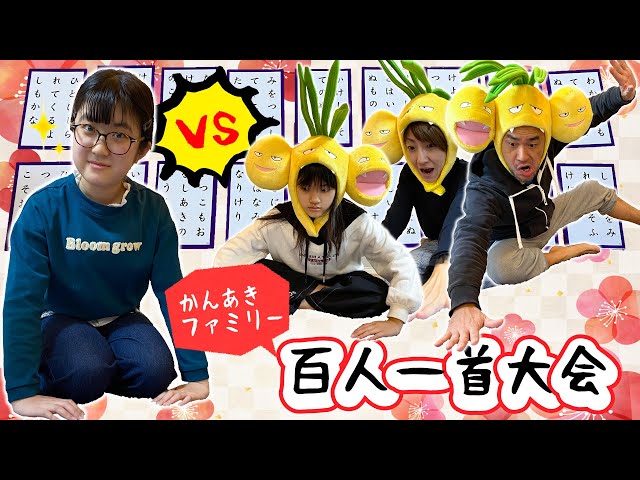
I’d love for you to play this with your kids over New Year! Let me introduce Hyakunin Isshu.
The rules are simple: one person reads the first half of a poem, and everyone else tries to grab the matching second half.
While the gameplay is simple, the depth is part of its appeal.
It’s also a great memory challenge—how quickly can you take the second half when the first half is read? There are apps that read the poems aloud, so it’s fun to listen, get into the reader’s rhythm, and memorize the Hyakunin Isshu.
Hanafuda

We’ll introduce simple Hanafuda rules for adults and kids who see it in games and wonder, “What is Hanafuda?” There are 48 cards in total.
Deal them into hands and to the table.
Play a card from your hand to the table; if there’s a card from the same month on the table, you capture it.
Next, draw one card from the deck and place it on the table.
If there’s no matching month, just leave it on the table.
Players take turns like this, and when someone forms a scoring combination with the cards they’ve captured, that round ends.
The points depend on the combination.
Decide the number of rounds in advance—the player with the higher total score at the end wins!
Shell matching

A perfect activity for January! Let me introduce “Kai-awase,” a craft that’s also fun to make with kids.
Kai-awase was a game played by nobles in the Heian period, similar to the modern card game Concentration (Memory).
You paint matching patterns on the insides of paired shells.
Turn them face down, mix them up, place one shell in the center, then arrange the remaining shells in a circle around it, and try to pick the one that matches the center shell.
Recommended shells include shijimi (corbicula), ark shells, clams, and abalone.
If you have leftover shells, remember this and give it a try!