

[For Elementary School Students] Brilliant, Showy Masterpieces That Sound Impressive at Piano Recitals


Choosing a piece to perform at a piano recital is something everyone struggles with.
It’s especially tricky when selecting a recital piece for an elementary school child, whose musical tastes are starting to become clearer—you can’t help but wonder which piece will really shine on stage.
With that in mind, we’ve picked out piano pieces that are perfect for elementary school kids to perform at a recital.
All of them are relatively easy and comfortable to play.
We also touch on each piece’s structure and performance tips, so please use this as a reference when choosing music for the upcoming recital!
- [Beginner] Recommended Piano Pieces to Play at a Recital
- [Intermediate Level] Cool Piano Pieces You Can Play [Great for Recitals Too]
- [Piano Recital] Carefully Selected Classical Pieces Recommended for Upper Elementary School Students
- Piano Masterpieces: Surprisingly Easy Despite Sounding Difficult!? A Curated Selection Perfect for Recitals
- [Piano Recital] Recommended for Boys! A Curated Selection of Cool, Impressive, and Popular Pieces
- [Piano Recital] Carefully Selected Classical Pieces Recommended for Upper Elementary School Students
- [For Piano Recitals] Simple yet Cool Classical Pieces
- Disney Classics on Piano: A Curated Selection of Easy Pieces, Perfect for Recitals
- Beginner to Intermediate: Chopin pieces with relatively low difficulty. Recommended works by Chopin.
- [Beginner] Also great for piano recitals! Classical pieces that look cool when you can play them
- For Preschoolers to Elementary School Children: Challenging Piano Pieces — A Curated Selection from Competition Repertoire
- [Piano Pieces] Easy for Children to Play! A Roundup of Simple Classical Works
- [Popular Piano] Capture the Audience’s Attention! Recommended Pop Songs That Shine at Piano Recitals
[For Elementary School Students] Brilliant, Crowd-Pleasing Piano Masterpieces for Recitals (11–20)
Holberg Suite (From Holberg’s Time), Op. 40: No. 1 “Prelude”Edvard Grieg

Edvard Grieg’s Holberg Suite, composed in 1884.
Also known by the title “From Holberg’s Time,” this collection of pieces follows the style of a Baroque suite, and even in the first movement, “Prelude,” one can sense a noble atmosphere reminiscent of Bach’s The Well-Tempered Clavier.
To play the rapid notes accurately, finger awareness and technical exercises are essential.
Practice carefully by isolating sections, and present a beautifully even, well-articulated performance at the recital!

Super Mario MedleyKoji Kondo

This is a medley that combines music from Nintendo’s popular Super Mario Bros.
series.
It brings together various tracks used throughout the games, including the bright and lively overworld theme, the mysterious underground theme, and the exhilarating invincibility theme.
Packed with the charm of video game music, this piece is recommended not only for game fans but also for music lovers.
At the 30th anniversary concert held in September 2015, the composer himself performed it live, drawing significant attention.
It’s a moving piece that conveys a passion for enriching the gaming experience through music.
Serenade of the BuglerFritz Spindler

Fritz Spindler’s “Serenade of the Bugler,” well known as a practice piece for beginning pianists.
It’s a lively piece that vividly conjures the image of a soldier confidently sounding his bugle.
Although categorized as a beginner-level work, to produce a crisp, trumpet-like effect, you must articulate each staccato clearly and take care that the left-hand pulses don’t become heavy.
It’s not enough just to play the written notes; refine your practice so the performance becomes more brilliant and worthy of the title.
Sonatina No. 9, First MovementMuzio Clementi

This piece features a simple, beautiful melody and rhythm that leave a strong impression.
Its light, vibrant energy brings a cheerful feeling to listeners.
It’s ideal for learning fundamental piano techniques and is also recommended for those encountering classical music for the first time.
With a performance time of about eight minutes, it’s easy to include in recitals.
Published in 1797, the piece remains beloved by many today.
It’s a must-listen not only for piano learners but also for anyone who wants to discover the appeal of classical music.
Burgmüller 25 Progressive Pieces, Op. 100, No. 2 “Arabesque”Johann Burgmüller

The German-born composer and pianist Johann Burgmüller, who spent most of his life in Paris, France, is well known in Japan as the composer of the classic piano method collection 25 Easy and Progressive Studies.
Among them, No.
2, Arabesque, is especially famous, and many children who have just started learning piano dream of being able to play it.
With march-like left-hand chords and a flowing right-hand melody—and a passage in the middle that features intricate left-hand fingering—it may seem difficult at first.
But once you can shape the dynamics and play it dramatically, your level as an elementary school pianist is sure to rise.

ParadeMaurice Ravel
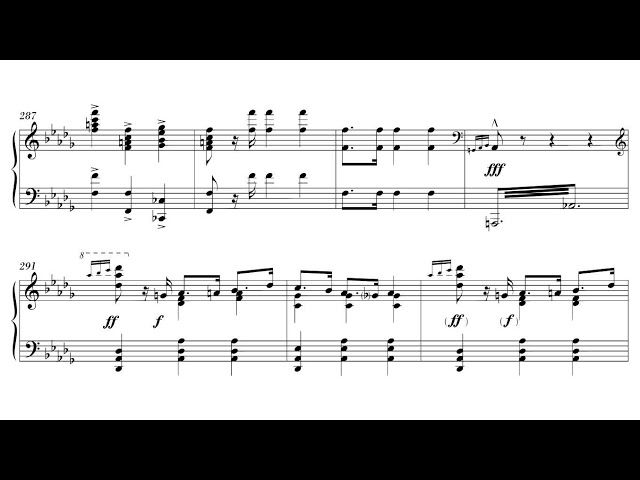
A piece whose powerful, dramatic sound stirs the listener’s heart, as if heralding the beginning of a grand tale.
It is a work by Toshio Horiuchi, who teaches in Hiroshima Prefecture and has composed numerous band pieces.
From the delicate interplay of sounds in the quiet sections to the breathtaking build toward a climax where the full ensemble charges forward as one, the piece offers a deeply immersive experience—like living through the prologue of a legend in music.
Composed in 2006 as a set piece for the All Japan Band Competition, it is featured in the album “Reference Performances of Set Pieces for the All Japan Band Competition 2005‑2008.” Demanding not only individual technique but the expressive power of the entire band, this masterpiece is one you’ll want to perform when you and your ensemble wish to weave a single, sweeping story together.
[For Elementary School Students] Dazzling Masterpieces That Shine at Piano Recitals (21–30)
severe thunderstormJohann Burgmüller

This is a dramatic and cool piece included in Johann Burgmüller’s study collection 18 Characteristic Studies, Op.
109.
Like a single film, it brilliantly depicts the arrival of a violent storm, the rumbling thunder, and its quiet passing.
The thunder expressed through octave tremolos is powerful and highly effective in performance! It’s not only about building strength and excitement; the challenge lies in gradually softening the sound as if the storm is receding, which makes it very rewarding to practice.
It’s the perfect piece for elementary and middle school students who want to greatly enhance their expressive power with a story-like work.
If performed with rich emotion at a recital, it will draw every listener into its world.