

The magical power of words that make people laugh! A collection of quotes that lighten the heart

You know those moments in everyday conversation when a single remark suddenly changes the mood of the room?Those spontaneous, laugh-inducing one-liners or surreal jokes have long been loved as words that make people laugh.In fact, many great figures who left their mark on history also left behind a wealth of witty quotes that can bring the house down.In this article, we’ve gathered amusing one-liners you’ll want to share with someone right away.From sharp, ironic quips to chuckle-worthy zingers, enjoy the depth of language as you read!
- What words make you happy to hear in the morning? Heartwarming phrases that can make you smile every day
- Witty quotes that make you chuckle without thinking
- Heartwarming words, a single phrase gently lights up your tomorrow.
- Words that gently illuminate a downcast heart—the kind that make you happy from that very moment.
- Healed in a single word… Words that blow away negative feelings and bring a smile.
- From surprising to cynical! Funny one-liners that make you laugh
- Live life positively! The importance of greetings and inspiring quotes as told by great figures
- Even a single word can save your heart! Uplifting, happy words that make you feel positive
- Maybe powerful words can give you strength? A collection of uplifting short quotes
- Witty quotes by great figures and celebrities where wordplay shines even in brevity
- Words of love that tug at your heart. A moving message that will surely convey your feelings.
- A list of comforting words to soothe a tired heart: giving you the strength to face tomorrow
- A prescription for a weary heart! What comforting words can support and reassure you?
The magic of words that make people laugh! A collection of quotes that lighten the heart (11–20)
When the wallet is light, the heart is heavy.Johann Wolfgang von Goethe

Known as a German playwright and poet, Goethe left behind numerous works such as The Sorrows of Young Werther and Faust.
These words, spoken by such a historical figure in German literature, express the balance between wealth and the heart.
They convey—through a humorous comparison of the weight of a wallet and the heart—that material wealth can lead to peace of mind.
To achieve good results, we should strive for a comfortable environment, beginning with financial stability, and allow our hearts to be at ease.

At first, you drink the alcohol. Then the alcohol drinks the alcohol, and in the end, the alcohol drinks you.Francis Scott Key Fitzgerald
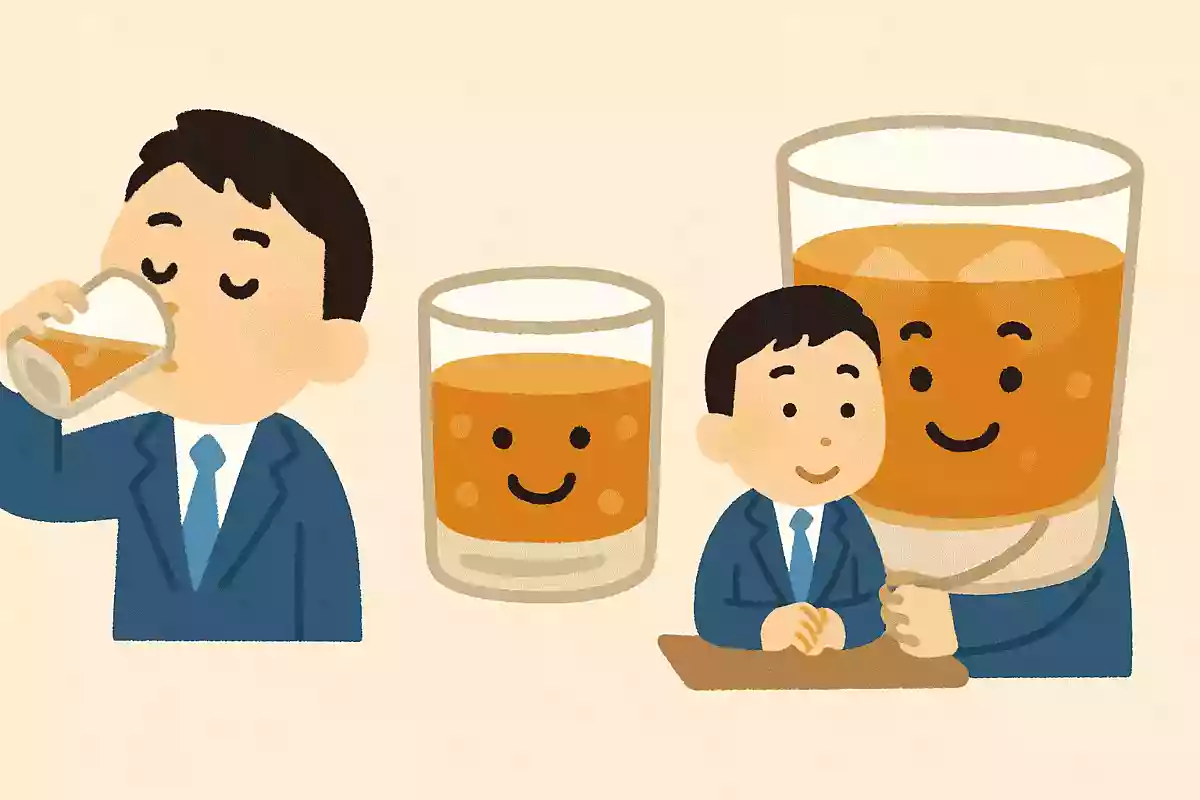
In Japan, the term “smart drinks,” commonly called “Suma-dori,” is gradually taking root.
There are fewer situations where people are forcibly made to drink alcohol.
That’s fine when it’s a fun occasion, but there are still some who turn into a different person when they drink, and if they start picking a fight with you, you’re left feeling, “Well, this is just depressing.” This quote from F.
Scott Fitzgerald, also famous as the author of The Great Gatsby, feels as if it shows, frame by frame, how people get consumed by alcohol.
If we’re going to drink, we’d rather do it in good spirits.
Love makes people blind, but marriage restores their sight.Georg Christoph Lichtenberg
Georg Christoph Lichtenberg, who was active in Germany as a scientist and satirist, came to be noted as an aphorist through notebooks discovered after his death.
The words left by this man—who wielded language from various angles, including satire and reflection—express his view on the difference between love and marriage.
He argues that although love and marriage may seem close, they are fundamentally different, and even vision blinded by love is restored by marriage.
Dreams alone cannot overcome the reality that is marriage; unlike love, marriage requires having one’s feet firmly on the ground.
It’s a remark that makes even the suffering come into view.
Friendship is a contract in which you do someone a small kindness and expect a great kindness in return.Charles de Montesquieu

Charles de Montesquieu, a French philosopher, is known for steadfastly upholding conservatism amid changing times.
These words, from a great thinker sometimes called the father of sociology, express his view on friendship.
He says that friendship is not necessarily something beautiful; we might show kindness to others in the hope that great kindness will be returned.
It is a thought-provoking reflection on human nature, suggesting that everyone unconsciously seeks something in return.
The length of a movie should be directly tied to how long a person’s bladder can hold out.Alfred Hitchcock

Alfred Hitchcock, a film director known as the “Master of Suspense” and even the “God of Thrillers,” was also famed for his innovative cinematic techniques.
The following is a remark attributed to this highly influential figure in film history that lays out his views on running time.
With humor, he suggests that even a high-quality film can become unbearable if it runs too long—because the bladder has its limits.
To keep audiences fully engaged to the end, he believed, films should be crafted at an appropriate length—one that the bladder can endure.
People who aren’t very smart criticize anything they can’t understand.François de La Rochefoucauld
La Rochefoucauld was a French nobleman and is also famous as a man of letters.
His Maxims—pronounced “Shingenshū” in Japanese—may be familiar to some of you.
I think people sometimes make judgments even about things they don’t really know.
For example, when asked, “Which do you like better, movies or kabuki?” many people might answer “movies” without knowing anything about kabuki.
The unknown is, in a sense, frightening; our self-preservation instincts can kick in, and we may become unintentionally aggressive.
It’s a humorous saying, but it also teaches us something important.
If you count your blessings, you can become happy right away.Arthur Schopenhauer

The German philosopher Arthur Schopenhauer, while unflinchingly confronting harsh realities, discovered the wisdom to live within profound thought.
His words offer a gentle insight to our hearts, which tend to assume that happiness lies somewhere far away.
People are prone to focus on dissatisfaction and lack, but when we notice the small happinesses we already possess, our hearts grow unexpectedly lighter.
It is a quote that, by slightly shifting our perspective, softens the heart and lets us feel how precious the everyday life we took for granted truly is.

Happiness is being healthy and having a bad memory.Albert Schweitzer
Do you tend to remember unpleasant things for a long time, or do you forget them quickly? Personally, if I had a memory-erasing device, there are plenty of bad memories I’d want to wipe out… Don’t you ever feel the same? It’s surprising that even a saintly figure like Dr.
Schweitzer, a Nobel Peace Prize laureate, left behind such a unique remark.
If anyone could just forget the unpleasant things, only the good memories would remain.
By the way, that famously controversial Japanese actress who even appeared on the variety show “Out × Deluxe” said something like, “The secret to happiness? Forget the unpleasant things.” For your reference!
A friend is someone who skillfully lets your secrets slip.Katherine Anne Porter

It seems we share secrets of different weight depending on how much we trust a friend.
From the way we think about sharing secrets—and spilling them—Katherine Anne Porter offers words that convey what a friend is.
Revealing a secret carries a strong negative image, but she also suggests that the unconscious way we speak and the timing that keeps it from turning into bad gossip can embody the trust between friends.
Ideally, we wouldn’t want our secrets revealed at all, but with that kind of consideration, the friendship might still be preserved.
If you smile, you’ll make friends. If you frown, you’ll make wrinkles.George Eliot

George Eliot, a British writer and a leading figure of the Victorian era, is also noted for her psychological portrayals.
This famous quote, in which the great author lightly expresses what keeping a smile can lead to, conveys first and foremost that making an effort to smile at those around you leads to being trusted and gaining more friends.
By contrast, she humorously illustrates through juxtaposition that if you keep scowling, it results only in wrinkles on your face and brings you nothing to gain.