

[Famous Songs of the World] A curated introduction to soul-stirring popular Latin mambo tracks

Born in Cuba in the 1940s, mambo has captivated the world with its passionate rhythms and dazzling sound.
Songs like “Bésame Mucho” by Mexico’s Consuelo Velázquez and “Mambo Italiano” by America’s Rosemary Clooney have continued to be loved by artists across borders.
With its powerful brass sections and lively percussion, and the innovative performance style of Tito Puente—known as the “King of the Timbales”—mambo remains as vibrant as ever, setting hearts dancing around the world.
- [Tango] Famous Tango Songs: Recommended Popular Tracks
- Classic salsa songs. Recommended popular tracks.
- Mexican Music | Energetic Latin Tunes Make an Appearance!
- [2026] Brazil’s National Music! A Collection of Iconic and Popular Samba Songs
- [2026] Enjoyable Exercise! A Compilation of Songs Used in Zumba
- Top Karaoke Songs That Get 20-Somethings Hyped [2026]
- Popular bossa nova songs: a roundup of recommended classic BGM
- Coming-of-age songs for your 50s: heart-thumping × heartwarming classics and popular tracks [2026]
- [For Beginners] A Collection of Gamelan Masterpieces [Introductory Guide]
- Recommended Latin Music | Introducing Stylish Masterpieces
- [30s] Karaoke Crowd-Pleasers Ranking [2026]
- [Nostalgic Collection] Classic oldies masterpieces. Recommended popular songs
- Masterpieces and history of folklore: An introduction to traditional music of the South American Andes
[World Masterpieces] A Curated Introduction to Stirring Latin Favorites: Top Mambo Tracks (21–30)
Mambo GosoonTito Puente

“Mambo Gozón” is a work by New York–born musician Tito Puente.
He was a musician known as both the “King of the Timbales” and the “King of Latin Music.” In particular, he elevated the relatively understated timbales to a star role by bringing them to the forefront.
Perhaps, Perhaps, Perhapsratenbando majōru

“Quizás, Quizás, Quizás” is a work by Cuban musician Osvaldo Farrés.
The title means “Perhaps, Perhaps, Perhaps.” The performance is by the Latin band Mayor from Imabari City, Ehime Prefecture.
This is from the “Tidal Current Moon-Viewing” concert held at Mount Karei on Oshima.
Mambo No. 5iwaki-shi chūgaku kōkō suisōgakubu gōdō

“Mambo No.
5″ is one of the best-known works representing Pérez Prado.
In Japan, it is also used in school education and is often performed by school wind bands.
This performance is by a joint ensemble of the junior high school and high school wind bands of Iwaki City.
Perfidiaebāgurīnzuoke

Perfidia is a piece by Mexican composer Alberto Domínguez.
While The Ventures’ performance is well known, Xavier Cugat’s rendition became a major hit.
It is also used in the flashback scenes of the film Casablanca.
Performed by the Evergreens Orchestra.
TequilaTsuisutāzu

“Tequila” is a piece by Daniel Flores, the saxophonist of the American rock ’n’ roll band The Champs.
It’s often performed by wind ensembles and the like.
The video features a performance by The Twisters at Matsuyama Kento’s, an oldies-style live house restaurant.
Quien SeraWatanabe Machiko & Peresu Purādo Ōkesutora
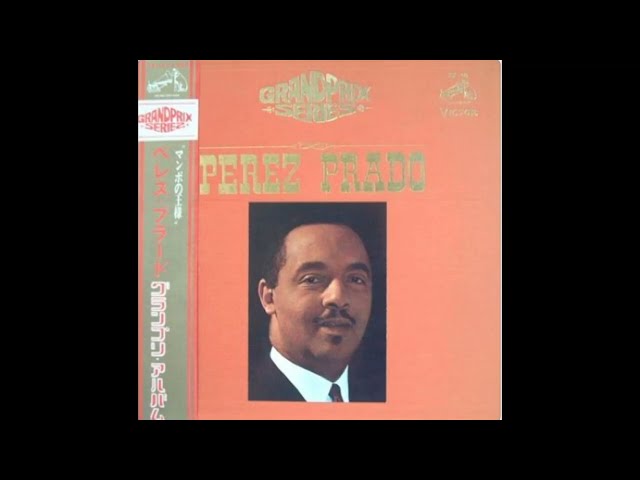
Quién será is a work by the Mexican musician Pablo Beltrán Ruiz, and its title in Spanish means “Who could it be?” The song became a worldwide hit through the performance by Trio Los Panchos.
This rendition is performed by Machiko Watanabe and the Pérez Prado Orchestra.
TabooŌno Yūji & Rupantikku 7

“Tabú” is a work by Cuban musician Margarita Lecuona.
Many musicians have performed it in various arrangements.
This rendition is by Yuji Ohno & Lupintic Six.
Yuji Ohno has composed numerous theme songs, including for “Lupin the Third.”