



A special feature on the theme song and insert songs from the film “When Marnie Was There,” directed by Hiromasa Yonebayashi, who also helmed “The Secret World of Arrietty.”
It tells the story of the protagonist, Anna Sasaki, and the mysterious girl Marnie, who come to cherish each other after their fateful meeting.
Their delicate relationship—at times fragile, at times colliding—shows how they grow stronger at heart, resonating with both adults and children.
Enjoy both the film and the music to your heart’s content!
- Songs from From Up on Poppy Hill. Theme song and insert songs.
- The song from Ponyo on the Cliff by the Sea. Theme song and insert song.
- Songs from Spirited Away: theme song and insert songs
- The Wind Rises songs: theme song and insert songs
- Song(s) from The Tale of the Princess Kaguya. Theme song and insert song(s).
- Songs from Whisper of the Heart: theme song and insert songs
- The song from My Neighbor Totoro. Theme song and insert song.
- Theme and insert songs of 'Your Name'
- Songs from Kiki's Delivery Service. Anime theme and insert songs. Ghibli classics.
- Song(s) from Princess Mononoke. Theme song and insert song(s).
- Songs from Howl's Moving Castle: theme song and insert songs
- The Anthem of the Heart Main Theme and Insert Songs | A Comprehensive Introduction to the Music That Colored the Film
- Songs from Nausicaä of the Valley of the Wind. Main theme and insert songs.
Songs from When Marnie Was There: Theme and Insert Songs (1–10)
Hisako’s Story (1)Muramatsu Takatsugu
In When Marnie Was There, Hisako, who appears as a street painter, is also an indispensable character in telling the story.
This piece was used as the background music for the unforgettable, tear-jerking scene where Marnie’s past and personality are recounted.
Overlapping with Marnie’s tragic history, the music enriches the episode’s emotional depth.
Every time I listen to this piece, I feel as if I can hear Hisako’s gentle, storytelling voice.

While cutting a tomatoMuramatsu Takatsugu

The wetlands of Kushiro in Hokkaido, which Anna visited to recuperate from asthma, were a place rich in nature and filled with kind people.
Staying with the Oiwa family, who welcomed her, Anna learned many things.
Moving from a dark apartment room to living with the Oiwas, she reflects on her past, and the way her personality and expressions gradually change is reflected in this simply titled song as well.
Two people on a boatMuramatsu Takatsugu

The “Wet Marsh House” stands where, when the tide comes in, the path is swallowed by the sea.
The mansion where Marnie and Anna met and formed a bond is like a magical place that, as time passes, leaves you unable to return.
This arrangement of “Marnie,” used in the scene on the small boat that connected the two, is also a wonderful theme song—gentle and unhurried, yet imbued with a sense of mystery.
Anna (Piano Version)Muramatsu Takatsugu

Anna, the other protagonist of this work, lives in contemporary Japan and goes through her days carrying a personal struggle.
She has vulnerable, shadowed sides, and her meeting with Marnie changes her.
This is a powerful piano arrangement of Anna’s theme song.
It seems to express both the delicate parts deep in Anna’s heart and her hope for the future.
Hisako’s Story (2)Muramatsu Takatsugu

This is also a piece used in the scene where Hisako talks to Anna about Marnie, but whereas that version had a quiet, slightly shadowy arrangement, this one has a grand, expansive feel.
It serves as the perfect highlight during the climax of When Marnie Was There, in the scene where all the stories Anna has experienced come together.
Memories of the AlhambraFuranshisuko Tarega
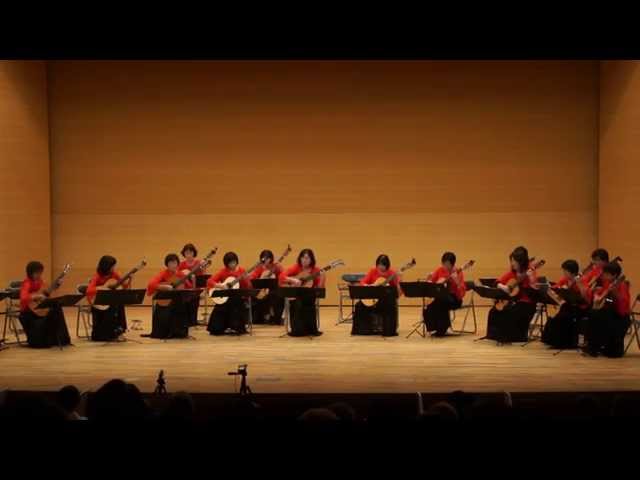
This is an insert song from “When Marnie Was There.” The original piece is a character miniature by the Spanish composer and guitarist Francisco Tárrega.
It is also renowned as a work that employs the advanced tremolo technique, in which the melody is produced by rapidly repeating strokes on a single string with the right hand’s ring, middle, and index fingers.

Fine On The OutsidePurishira Aan

The theme song for the 2014 film When Marnie Was There.
Priscilla Ahn had long been a huge Studio Ghibli fan, and her love for Japanese music—evident in projects like her album covering J-pop—led to her being selected to perform the theme.
Her husky voice, the sound of the acoustic guitar, and the relaxed tempo gently wrap around you.