

Also great as café music! Introducing famous tunes to savor the charm of musette

Musette, the popular music born in France.
Played in cafés and dance halls since the late 19th century, this music has soothed the hearts of Parisians and, with the graceful timbre of the accordion, is loved around the world.
Though it began as the music of the working class, it evolved while incorporating elements of waltz and jazz.
We invite you into the world of musette masterpieces, where melodies full of nostalgia and warmth interweave with a nostalgic rhythm, carrying you along with the elegant air of Paris.
- [Classics] Famous waltzes: recommended popular pieces
- Chanson masterpieces. Recommended popular songs.
- Everything is stylish! Popular music in France
- [Celtic Music] Masterpieces of Celtic music. Recommended Irish music
- [Tango] Famous Tango Songs: Recommended Popular Tracks
- Summary of French music genres
- Popular French bands. Recommended groups.
- [Famous Songs of the World] A curated introduction to soul-stirring popular Latin mambo tracks
- Flamenco masterpieces. Recommended popular songs.
- [2026] Brazil’s National Music! A Collection of Iconic and Popular Samba Songs
- [2026] A Guide to Bossa Nova: From Classic Standards to the Latest Hits!
- Perfect for café BGM! A stylish roundup of classic bossa nova songs [2026]
- [2026] A Roundup of Recommended Western Songs for Jam Sessions
Also Great as Cafe Music! Masterpieces to Savor the Charm of Musette (11–20)
My Lover of Saint-JeanÉmile Carrara

Guided by the graceful melody of the accordion, this piece invites you to a dance hall in the suburbs of Paris in 1942.
Composed by Émile Carrara, this waltz tells a poignant love story from the perspective of a young woman.
It paints sweet moments with a lover met at a nighttime dance, and the looming sense of parting that follows, all carried by the characteristically wistful tones of musette.
Featured in François Truffaut’s film “The Last Metro,” it remains a beloved standard across generations.
Perfect for a leisurely afternoon in a café or when you want to bask in nostalgia, it brings a gentle warmth to the heart with the sound of the accordion.
Domino / DominoLouis Ferrari

The world of musette, whose accordion’s gentle timbre evokes scenes of Parisian cafés.
Louis Ferrari, an accordionist of Italian descent who made his mark in France, was a craftsman-like artist active from the 1930s onward.
Released in 1950, this work featured a French version sung by André Claveau; the following year, the English version was covered by big names such as Tony Martin and Bing Crosby, becoming a major hit that spent 12 weeks on the Billboard charts.
Its waltz-time melody is filled with nostalgia and warmth, making it perfect for a leisurely afternoon in a café or for those who want to relax while reading.
Lovely MusetteKumasaka Ritoko & Isobe Maiko

“Uruwashi no Musette” is an original composition by Rutsuko Kumasaka, an accordionist from Saitama Prefecture.
It is performed by Rutsuko Kumasaka and violinist Maiko Isobe.
From the “Haruyo Koi Koi Ohigan Live ~ Tanabota” at La Cana.
Waltz of the HedgehogJo Abbott&Andy Price&Bryan Karahasan

“Hedgehog Waltz (La valse des niglos)” is a piece by Gousti Malla.
The title refers to hedgehog soup, a favorite dish among the Manouche.
Performance credits: Accordion – Jo Abbott, Bass – Andy Price, Guitar – Bryan Karahasan.
A young lady from ParisRichādo Noeru
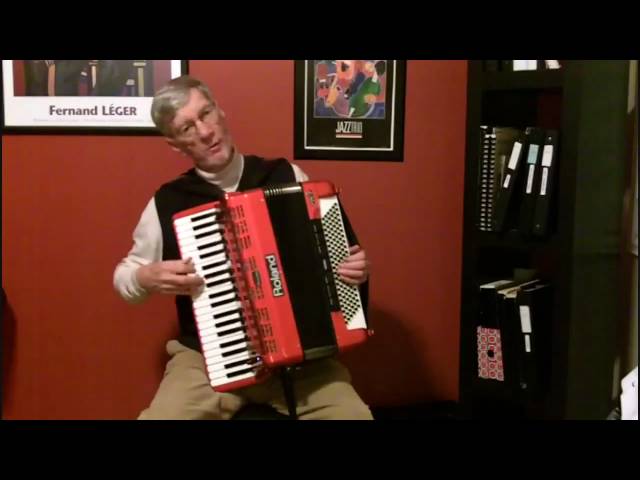
“Mademoiselle de Paris” is a work by Paul Durand.
It was performed as an insert song in the French film “Scandale aux Champs-Elysées” (Scandal on the Champs-Élysées).
The accordion is played by Richard Noel.
Melancholy MusetteKuwayama Tetsuya & Koyumiko

“Melancholic Musette” is a composition by accordionist Tetsuya Kuwayama.
The performance features Kuwayama on accordion and the band Koyumiko: members include Yumiko Orishige on piano and claviola, along with violin, guitar, bass, and drums.
Also great as café music! Introducing classic musette masterpieces to savor (21–30)
Waltz of MargauxRishāru Gariāno & Sebasuchan Surel

“La Valse à Margaux” is a work by accordion and bandoneon player-composer Richard Galliano.
It is performed by Galliano and violinist Sébastien Surel, from the concert “Piazzolla Forever.”