

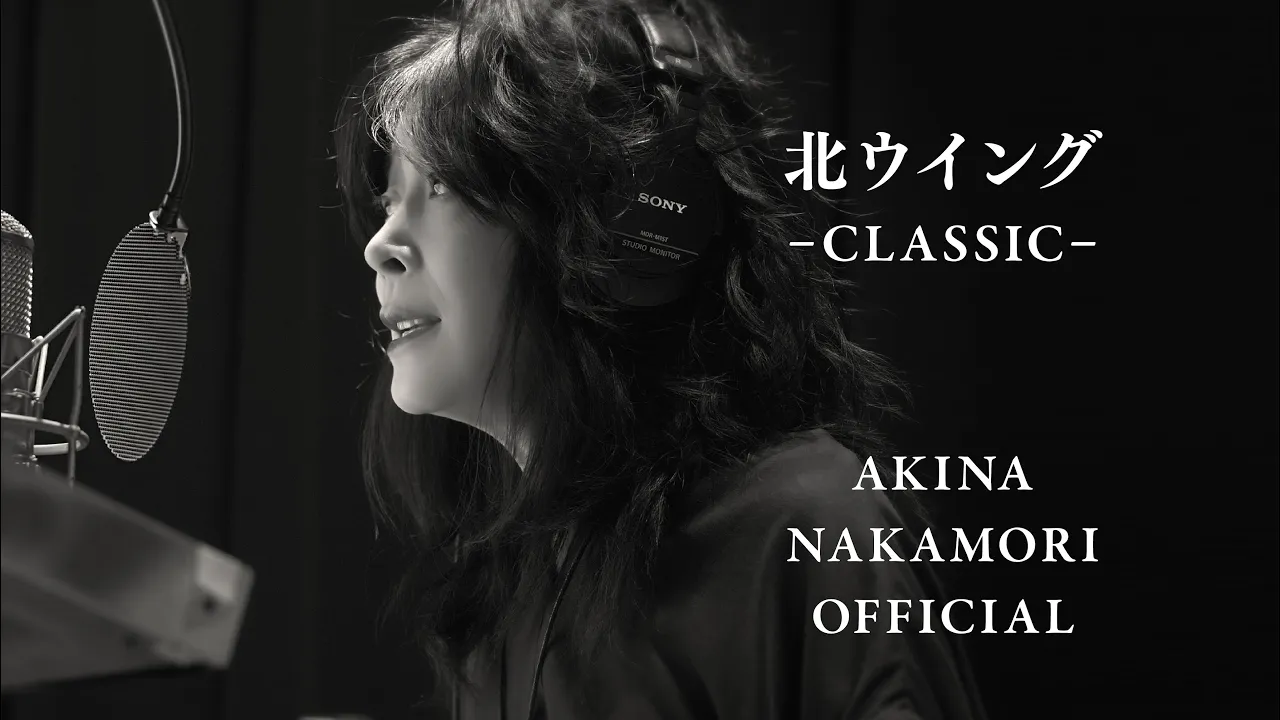

We would like to introduce songs by Akina Nakamori, a female singer who debuted in 1982.
Akina Nakamori made her debut with the song “Slow Motion” in 1981 after appearing on the popular TV show “Star Tanjō!” which produced many stars at the time.
She received high acclaim not only as a singer—winning the Japan Record Award—but also as an actress, starring in television dramas.
Just before her debut, when discussion arose about what stage name to use, her agency reportedly suggested the name “Mori Asuna.” However, she declined, saying she wanted to sing under her real name, which her parents had given her.
Now please enjoy the songs of Akina Nakamori, who was immensely popular in the 1980s.
- Akina Nakamori Popular Songs Ranking [2026]
- [Diva] Easy-to-sing Akina Nakamori songs, even for those who struggle with low notes
- Akina Nakamori’s classic and popular songs
- Akina Nakamori’s Most Popular Karaoke Songs Ranking [2026]
- Debut songs by female artists from the 1980s
- Miki Imai’s classic and popular songs
- From City Pop to Ballads!! Mariya Takeuchi’s Easy-to-Sing Songs
- Cool songs from the Showa era. Masterpieces from Showa that shine with sensuality, passion, and rugged charm.
- Emotional songs from the Heisei era. Nostalgic tracks that really hit you.
- [Popular and Crowd-Pleasing!] Stylish Song Selections and Karaoke Tracks
- [1980s] A roundup of debut songs by enka singers
- Debut single becomes a smash hit and social phenomenon! Ranking of Akiko Kobayashi’s popular songs
- Famous and popular songs performed by actresses
Akina Nakamori’s Greatest and Most Popular Songs (1–10)
Nakamori Akina

Akina Nakamori, who dominated the music scene of the 1980s.
After her debut in 1982, she quickly rose to stardom with classics like “Shojo A” and “Second Love.” Her greatest charm lies in her overwhelming expressive power—shifting her vocal color and aura with each song.
Many were captivated by the strength and sultriness hidden behind her sweet smile.
Her delicate acting as an actress, as seen in the drama “Sugao no Mama de,” was also deeply impressive.
She continues to work at her own pace today, releasing projects like jazz-arranged self-covers.
Be sure to revisit her profound world, which continues to be loved across generations!
AL-MAUJ (Al-Māj)Nakamori Akina

A signature song of the late 1980s’ more assertive style, it captivated many fans with its unique worldview.
True to its title, which means “wave” in Arabic, it’s a mysterious track characterized by an exotic, foreign-inspired atmosphere and a bittersweet vocal delivery with an adult mood.
The melody comes in solidly right from the start, and compared to other songs, the range isn’t excessively low.
It feels like you should sing each phrase with care and intention.
If you let your whole mouth resonate and produce a fuller, thicker tone, you should achieve a presence in your voice similar to Nakamori’s.
Keep that in mind as you sing.

I MISSED “THE SHOCK”Nakamori Akina

It’s a song with a dark worldview that sings about the end of love and the loss of emotion.
It’s a classic that was also performed at the 39th NHK Kouhaku Uta Gassen, known for its gothic fashion costumes and expressive contrasts between stillness and movement.
Starting with a quiet A-melody and shifting to a chorus where emotions burst forth, the track stands out for its sharp dynamics, so I think the key is how coolly you can deliver the chorus.
Also, being mindful of where to cut phrases makes it land very stylishly, so rather than letting the melody line flow too much, it’s best to sing crisply and clearly.
LA BOHEMENakamori Akina

“LA BOHEME” is a song characterized by melodious yet powerful rhythms, showcasing Akina Nakamori’s impressive vocal ability.
It portrays an urban, fleeting, and passionate worldview, referring to people who love art and freedom and live carefree lives.
The overall vocal range is E3 to A4: the A section sits quite low, then gradually rises around the B section.
Since even the chorus doesn’t reach particularly high notes, it should be easier for singers who are comfortable with lower registers.
Be careful not to let the low notes sound muffled.
Because the chest naturally resonates when you project your voice, try focusing on head resonance as well to achieve a balanced sound.
Raise your hand and try singing.
Your portraitNakamori Akina

A refined, gently flowing pop song crafted by the songwriting duo Takao Kisugi and Etsuko.
In stark contrast to the hard-edged style of “Shoujo A,” it highlights her idol-like charm and is an early, under-the-radar gem beloved by fans.
The overall vocal range spans F#3 to A#4, which might be on the higher side among Akina’s songs.
While the track has a smooth, almost understated feel, be careful not to let it become too uniform.
When singing, emphasize the start of each phrase firmly to avoid flatness and add definition.
Clearly enunciating the words may also work well.
Futari Shizuka – from The Tenkawa Legend Murder CaseNakamori Akina

It’s a masterpiece with a mysterious aura that emerged after their return from the 1989 hiatus.
It was written specifically as the theme song for the film “The Murders of the Tenkawa Legend,” with lyrics by Takashi Matsumoto and music by Makoto Sekiguchi.
The sound of the Chinese instrument erhu is striking, giving it a Japanese-style, ethnic-flavored ballad feel.
The song itself doesn’t sit too low in range, so it should be relatively easy for most women to sing.
If it still feels low, you can adjust the key, or try mastering some low-register techniques.
People tend to sing low notes from the throat, so you need to engage the vocal cords and turn them into a resonant singing voice.
Try placing your hand on your larynx to feel the vibration as you sing.
The key is to project the voice forward, right in front of you.
caressNakamori Akina

Composed and arranged by Tetsuya Komuro, this song blends cutting-edge sounds of the time with Akina Nakamori’s vocals and is considered a signature masterpiece of her 1990s work.
Takashi Matsumoto’s poetic and sensuous lyrics, along with Akina’s distinctive expressiveness, are highly praised.
The overall vocal range spans D3 to G4, making it relatively easy to sing, and the climactic points are very clear.
With its mature vibe, it’s highly recommended for those who want to sing with a cool edge.
For the low notes in the A section, if you project your voice firmly into the mic as if pushing it out, it should resonate beautifully!