

[Brilliance of Youth] A masterpiece of neo-acoustic. The essential go-to album for neo-acoustic!

If you’re fairly knowledgeable about Western music, you’ve probably heard of a genre called neo-acoustic.
Some of you may have learned about it because a favorite Japanese artist cited it as an influence.
In early-1980s Britain, many bands emerged on several indie labels that would later be considered prestigious, each expressing a distinctive musical approach centered on acoustic sounds.
Japanese music media collectively dubbed this movement “neo-acoustic,” or “neo-aco” for short, and that’s said to be where it all began.
In this article, we’re spotlighting a must-hear classic as your first step into neo-aco.
As a foundation, we’ll mainly be introducing British bands this time!
- [2026] The Wonderful Irish: Popular Bands from Ireland
- [2026] The Beautiful World of Ambient: A Curated Collection of Must-Listen Masterpieces
- Classic youth punk songs from Western music. World-famous classics and popular tracks.
- [2026] A roundup of the best UK bands, featuring many up-and-coming acts!
- Classic Western albums: must-listen recommendations you should hear at least once
- Stylish Western music: Chic hidden gems that only the in-the-know recognize make an appearance!
- [Chill Track] A Classic of Hawaiian Music
- [2026] Masterpieces of UK Rock: A roundup of must-listen recommended albums
- [Western Music] A classic of 90s emocore. One album I want you to listen to first.
- Great as an introduction to Western music! A best-of album loved around the world.
- A classic tribute album of Western music. A highly recommended pick.
- Emotional Western Music Special | Handpicked from All Generations
- [2026] Moving Western songs that touch the heart: A roundup of recommended classics
The Radiance of Youth: A neo-acoustic masterpiece. The essential neo-acoustic album! (1–10)
WallflowerThe Monochrome Set

While they’re often called indispensable to any discussion of neo-acoustic and guitar pop, The Monochrome Set have also etched their name into the history of British indie rock as a singular band with a distinctly British, quirky sensibility and high-level musicality.
Their appeal isn’t something you can grasp from just one album, but from the neo-acoustic angle, the album I’d recommend is their fifth, The Lost Weekend, released in 1985.
Unfortunately, it wasn’t a commercial success, and the band actually broke up once after releasing it, but it’s a record where frontman Bid’s pop instincts really shine, making it an exceptionally accessible listen.
Beyond the sparkling pop killers—like Wallflower, a perennial pick on neo-acoustic/guitar-pop compilations, and Jacob’s Ladder, said to be the source for Flipper’s Guitar’s Hello—the album also features wonderful, wistful acoustic slow numbers.
Because it was made after the departure of guitarist Lester Square, who was key in their early production, the record has drawn mixed reviews; still, starting your journey into their world with this album is by no means a bad choice!

Nothing to be doneThe Pastels
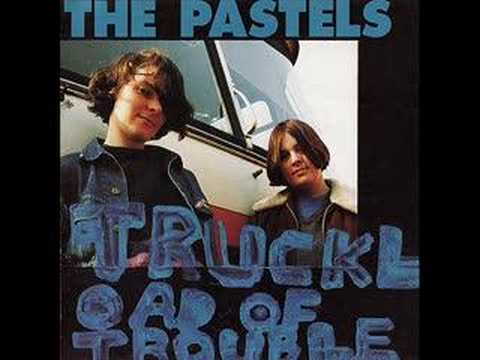
Not limited to neo-acoustic, there are quite a few bands within 1980s UK indie rock that were loved for a unique flavor despite being poor singers and players, and in fact many fans specifically prefer those kinds of bands.
The Pastels, from Scotland and boasting a cult following, are precisely a band that makes their own music in a direction entirely apart from debates over technical prowess.
Over a decidedly laid-back career they’ve released five albums to date, and the one I’m introducing here is their second, Sittin’ Pretty, released in 1989.
Starting with the classic Nothing to Be Done—whose contrast between acoustic rhythm guitar and distorted tones creates a singular sense of momentum and pop appeal—the record is a masterpiece whose endlessly loose, shambling sound somehow carries melodies that feel warmly familiar and deeply flavorful.
If anything, it leans more toward an alternative rock or guitar-pop texture, but listen for how the acoustic guitar tones are woven throughout even the heavier electric parts.
As for The Pastels’ standing, their 1998 remix album Illuminati features contributions from none other than My Bloody Valentine, Stereolab, and Kid Loco—clear proof of just how beloved they are.
You Didn’t Love Me ThenThe Hit Parade

That refreshingly innocent album cover seems to tell you exactly what the music sounds like—this is a neo-acoustic classic! The Hit Parade is a band formed in London in 1984 around songwriter Julian Henry, and, surprisingly, one of the founding members was Raymond Watts, who would later become known for industrial rock projects like PIG.
Let me introduce their signature work and a landmark of neo-acoustic music, their 1988 debut With Love From The Hit Parade.
Made in a DIY spirit, the production is by no means polished, and the sound is full of homemade simplicity—but it’s precisely because the songwriting is so outstanding that the album continues to be loved even now, in the 2020s.
From “You Didn’t Love Me Then,” famous as the source for Flipper’s Guitar’s classic “Camera Full Of Kisses/全ての言葉はさよなら,” to every other track, the album is packed with short, beautiful songs that sparkle with youthful radiance.
It was reissued in 2007 by Japan’s VINYL JAPAN with a ton of bonus tracks in a paper-sleeve edition, so if you spot it at a record shop, don’t hesitate—grab it!
The Brilliance of Youth: A neo-acoustic masterpiece. A fundamental neo-acoustic album! (11–20)
North Marine DriveBen Watt

Ben Watt is a British musician best known as one half of the duo Everything But The Girl with Tracey Thorn.
Thanks to the group’s global success from the mid-1990s onward, when they embraced a more electronic sound, many people may at least recognize the name.
The album introduced here, North Marine Drive, is Watt’s solo debut, released in 1983 before he formed Everything But The Girl.
Until his second solo album, Hendra, arrived in 2014, it had taken on a semi-legendary status as his sole solo work.
The record is said to have had a major impact on the neo-acoustic boom.
Its restrained, tranquil world—centered on lightly effected acoustic guitar—sets it apart from the breezy neo-acoustic and guitar-pop that vividly expresses the sparkle of youth.
Across its nine tracks, some songs bring in tones like piano and alto saxophone, but because the core is essentially just Watt’s slightly wistful voice and guitar, the quality of the songwriting stands out all the more, allowing listeners to savor the album’s unique sonic world as a work of art.
Do give an ear to Watt’s guitar—folky yet informed by jazz and bossa nova—and to his vocals.
Happy HourThe House Martins

Including neo-acoustic, I think one of the unique pleasures of being a later-generation listener is digging into classic albums and bands—especially in genres dominated by indie acts—and discovering that a musician who later became famous in a completely different direction was once a member.
Formed in the UK in 1983, The Housemartins are a highly popular band in the neo-acoustic scene, and they’re also known for having featured Paul Heaton, who would go on to front the beloved British band The Beautiful South, and Norman Cook—aka Fatboy Slim—who later achieved global fame with his big beat sound.
The Housemartins, who produced such great musicians, released their debut album London 0 Hull 4 in 1986.
It’s an irresistibly fresh, poppy, and catchy record, a landmark of neo-acoustic and guitar pop that remains a favorite.
From the killer opening track Happy Hour and four hit singles of the time, to gems like Get Up Off Our Knees—with its piano-rock ensemble that’s both poppy and wistful—the album is packed with great songs.
The relatively unadorned sound makes it extremely easy to listen to, and it’s a happy record that just puts you in a good mood.
Favourite Shirt (Boy Meets Girl)Haircut 100

With their distinctive, eye-catching name, Haircut 100 were a band that gained popularity not only in the UK but also in Japan in the early 1980s during the New Wave era.
Formed in 1980 around Nick Heyward—who would later find success as a solo artist—they paired sharp fashion sense and good looks with a funky, cutting guitar sound, and their debut single “Favourite Shirt (Boy Meets Girl)” shot straight to No.
4 on the UK charts.
In Japan, the song’s quirky localized title, “Favourite Shirt (Suki Suki Shirts),” hints at their idol-like appeal.
Their 1982 debut album Pelican West is notable not only for its sparkling, youthful melodies but also for a musical style dubbed “Funca-Latina,” their unique take on funk, Latin, and disco.
With blaring horns and Latin-flavored guitars, their sound stands apart from other neo-acoustic acts and remains genuinely intriguing on re-listen.
Featuring many fan favorites—like “Love Plus One,” known in Japan by its localized title that highlights the impactful “Ayayay-ya-ya” chorus—this album is highly recommended both as a neo-acoustic classic and as a quintessential work of ’80s British music for anyone who hasn’t heard it yet.
Gentle TuesdayPrimal Scream

Primal Scream, one of Britain’s most celebrated bands, are also known for being musical chameleons.
But if your image of them comes only from landmark releases like Screamadelica, which sent their popularity soaring, or the dub-infused Vanishing Point, you’ll be in for a surprise when you hear their 1987 debut, Sonic Flower Groove.
The shimmering 12-string guitar work by early member Jim Beattie and Bobby Gillespie’s delicate, naïve vocals are sweet and beautiful—so much so that it’s hard to imagine the same band going on to create songs like Loaded or Rocks just a few years later.
There are many gorgeous tracks born from a sparkling, dreamy sound influenced by ’60s bands like The Byrds, such as Gentle Tuesday and Imperial, and I personally love how the young Bobby’s fragile, lyrical sensitivity shines through.
That said, the band members themselves don’t seem particularly fond of their sound from this era, and the songs from this album are almost never performed live.
As an aside, if you want to hear more of Primal Scream’s neo-acoustic side, check out Velocity Girl, a classic from their earliest days that didn’t make it onto the album.
An official music video featuring the current Bobby was released in 2019.