

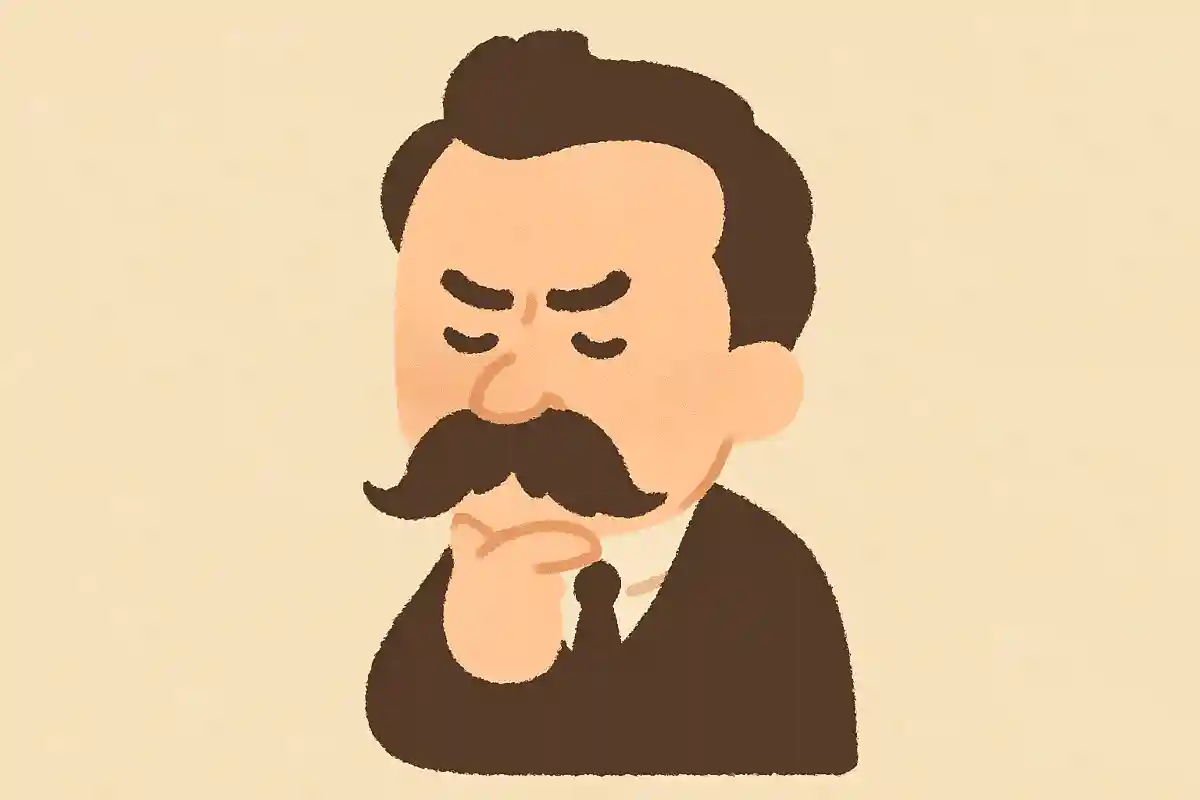

Friedrich Nietzsche, a German philosopher who sparked a revolution in Western thought in the late 19th century.
As the famous phrase “God is dead” suggests, he is also known for his critiques of existing moral and religious views.
Here, we present some of Friedrich Nietzsche’s notable quotations.
Each one offers a strikingly sharp perspective.
He left behind more memorable sayings than we can share here, so if you’re interested, why not delve deeper?
- Witty quotes by great figures and celebrities where wordplay shines even in brevity
- Words from famous people that I’d like to adopt as my motto. Inspiring quotes that convey the power of words.
- A quote by Albert Einstein, the greatest physicist of the 20th century
- [Short Love Quotes] A collection of recommended love quotes inspired by the words of philosophers, writers, and famous figures
- Life’s guideposts illuminated by sayings from the Analects: Confucius’s teachings that move the heart.
- Enriching Sayings of Mencius: A Collection of Words to Guide Your Life
- Famous quotes from Frieren: Beyond Journey’s End that depict fantasy and a view of life
- Famous quotes by philosophers around the world, originating in ancient Greece
- You can see philosophy and a way of life through words. Short famous quotes by historical figures.
- Recommended as life tips! A collection of short, memorable quotes from great figures
- A dark fantasy that was also adapted into a live-action film! Famous quotes from Attack on Titan
- Famous quotes everyone knows, including words from great figures and characters
- A collection of quotes to make your motto—brief words from great figures that can change your life
Famous quotes (1–10) by the philosopher Friedrich Nietzsche, known for the phrase “God is dead.”
What is evil? Everything that arises from weakness.Friedrich Nietzsche
These words frankly point out the inherent weakness of human beings and ask what evil truly is.
Weakness gives rise to anxiety and dependency, which in turn produce evil.
Acts such as blaming others or evading responsibility when one cannot accept one’s own limits can be seen as manifestations of human weakness.
He argued that true strength lies in the will to face one’s weaknesses and strive to overcome them.
He also taught that many of the conflicts and disputes that occur in society stem from human weakness, and that abandoning personal growth fosters evil.
This memorable quote reminds us that strength is not merely physical, but resides above all in mental maturity.

There are no facts; there are only interpretations.Friedrich Nietzsche

These words express the idea that there are no absolute facts or fixed truths and that everything can be interpreted differently depending on the human perspective.
In his philosophy, the world is constituted by each person’s subjective perception.
History, morality, and values also change with time and culture, shaped by people’s interpretations.
It is a way of thinking that urges us to question so-called objective facts and to value having our own perspective.
Rather than following traditional values, he argued that the essence of being human lies in understanding the world by one’s own will and creating new values.
It is a profound, philosophical saying that prompts us to reconsider how we grasp reality.
You can tell a person’s character by what they make the object of their laughter.Friedrich Nietzsche

These are the words of Friedrich Nietzsche, who believed that what a person laughs at reflects their inner self and values.
People often try to find reassurance by laughing at those they can feel superior to or at the weak.
However, this reveals a kind of psychological immaturity and the nature of their relationships with others.
Those who can share laughter grounded in intelligence and humor can be considered emotionally mature.
Laughter is not merely entertainment; it is like a mirror that reflects one’s humanity.
This famous saying reflects Nietzsche’s thought, which, unbound by superficial morality, continually examined the fundamental nature of human beings.
The worst enemy you will ever encounter will always be yourself.Friedrich Nietzsche

Friedrich Nietzsche, a philosopher who delved deeply into the nature of the human mind, believed that the greatest enemy in life is not something external, but something within ourselves.
When striving for success, self-doubt becomes the greatest obstacle.
To overcome hardships and create new values, we must confront our own weaknesses and uncertainties.
The weight of the idea that what we should measure ourselves against is not others but our own inner selves comes through clearly.
It is a thought-provoking quotation that teaches the importance of facing oneself.
In the light of day, how could one know the depth of the night’s darkness?Friedrich Nietzsche

These words express a truth about the world: those who live in bright places cannot understand the suffering of darkness.
It is difficult to truly grasp pain and hardship that we have not experienced ourselves.
Yet this also proves that by knowing deep suffering, the value of joy and success can be felt more vividly.
Rather than viewing life’s suffering negatively, the idea is that new perspectives and values emerge precisely after we overcome it.
It is a quote that conveys how light and darkness, happiness and anguish are inseparable, and that by contrasting them, we can understand the meaning of life more deeply.
There isn’t a single interesting person in heaven.Friedrich Nietzsche

These words convey traditional values and morals from a unique perspective.
They emphasize the importance of focusing on the living rather than those who are no longer in this world.
In his thought, human beings grow through trials and conflicts, creating their own distinct value.
Instead of living with belief in God or heaven, what stands out is the idea of centering on people in the here and now.
It’s a memorable quote that challenges our values, infused with his characteristic viewpoint that prizes human diversity and a free spirit.
Lonely one, you walk the path of the creator.Friedrich Nietzsche
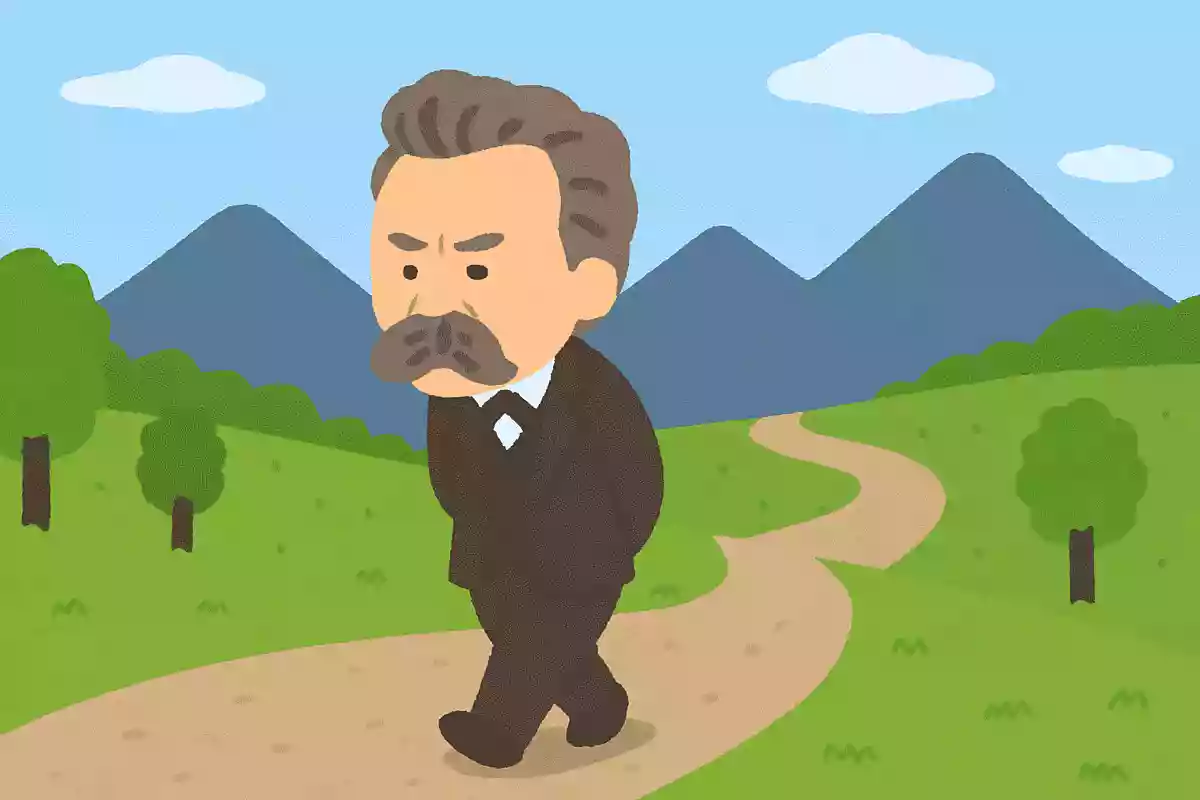
Friedrich Nietzsche, the philosopher who regarded solitude as the source of creation.
Throughout his life, he held fast to his unique ideas and spread his thought to the world.
Life often presents moments of loneliness, but Nietzsche saw it as something necessary to generate new values.
He believed that bringing something into being should not be swayed by others’ expectations or society’s judgments, but should arise from one’s own inner feelings.
The reason great artists and thinkers were able to carve out their own paths—even in isolation—is that they did not fear solitude but made it their sustenance.
This quote offers a chance to see solitude not as mere loneliness, but as an opportunity to transform it into creative power.