

Put a penalty on the line! A roundup of party games that get everyone hyped

In recent years, board games have become a boom, and getting together to play has been really taking off.
It’s even being featured on TV shows, so I bet many of you who came here are interested.
In this article, I’m going to introduce some exciting party games that let you decide who has to take the punishment!
We’ll cover a wide range—from games you can play without any props to the latest board games.
Hope you find it helpful!
- A simple punishment game you can do anywhere without any props—even at school or outdoors.
- A party forfeit that gets everyone hyped
- [Punishment Game] A collection of romance-themed prompts. Punishment games that get men and women excited
- Simple but intense! A quick-and-easy penalty game that hypes everyone up
- Party games that get everyone excited at school
- With friends or couples! A set of questions perfect for penalty games
- A fun, everyone-joins-in game that gets everyone excited!
- [For Kids] Popular party games. Fun games that get everyone excited
- [Punishment Game] Embarrassing Lines: A Collection of Material That Will Make You Blush
- A fun punishment game recommended for women
- A party game that gets everyone excited at home. A fun recreational game.
- A fun penalty game recommended for men
- Punishment games that amp up the fun at year-end parties—from hilariously gross to super embarrassing!
Bet a penalty game! A roundup of party games that get everyone excited (1–10)
KY game

Participants take turns suggesting a prompt, and everyone simultaneously strikes a pose inspired by that prompt in this “KY game.” Anyone whose pose doesn’t match with anyone else receives a minus point; in the end, the person with the most minus points is deemed “KY,” meaning they failed to read the room.
The more participants there are, the more complex it becomes and the more clearly KY tendencies stand out, making it a lively party game.
Since it requires no equipment, you can start it right away even at an outdoor gathering.
Give it a try!

Biri-Biri Russian Roulette
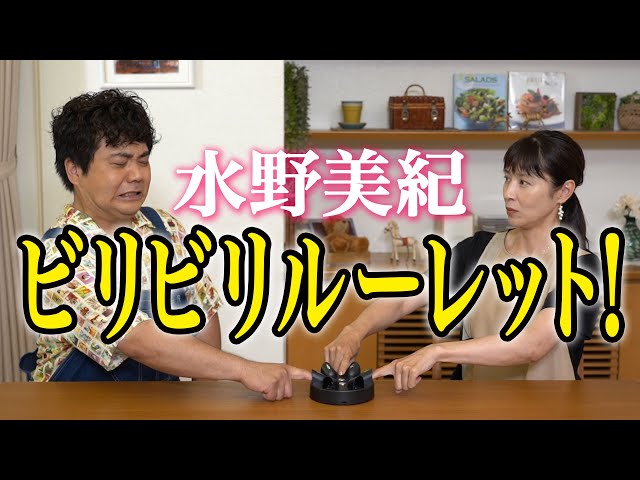
Originally, Russian roulette is a game where you load a single live round into a revolver, spin the cylinder at random, and pull the trigger.
With almost the same rules, this electric “shocking” Russian roulette has each player insert their index finger into the device; the roulette spins, and the unlucky person it lands on gets a zap on the finger as a penalty.
Everyone knows the stingy “zap” pain of static electricity.
The tense, suspenseful thrill of this game is sure to get everyone excited.
Pop-up Pirate

Since its release in 1975, Pop-up Pirate has been a long-selling hit, spawning numerous variations.
Players take turns sticking swords into a barrel with a pirate figure, and whoever triggers the randomly determined “bad slot” that makes the figure pop loses—a thrilling rule set that many people across generations have played at least once.
In recent years, versions with more figures that pop or with stronger popping force have increased the impact of the decisive moment, making it exciting even for adults.
It’s a classic game you’ll want to have ready when a large group gathers at home.
Bet a punishment game! A roundup of party games that will liven things up (11–20)
Painful crocodile
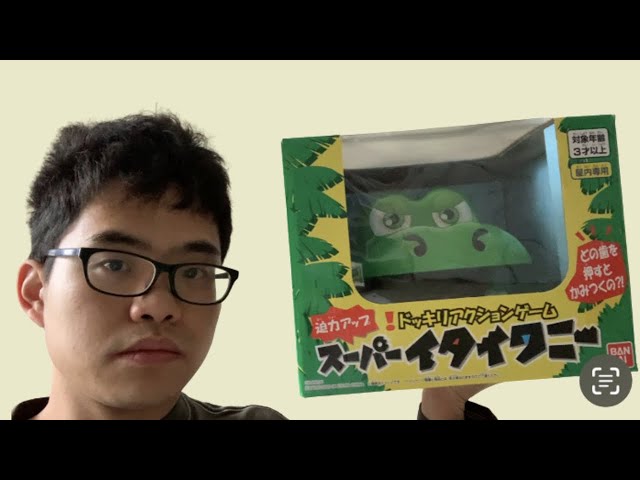
Itaiwani is a thrilling game where you press the teeth lined up inside an open crocodile’s mouth one by one, and if you hit the unlucky one, the mouth snaps shut.
It’s known as a hit product that delivers the same heart-pounding suspense as the classic toy “Pop-up Pirate.” Because the losing tooth changes randomly each time you start a new game, you can play under the same conditions over and over.
The original is large and mostly for playing at home, but in recent years pocket-sized versions have appeared, making it a party game you can bring along and enjoy when meeting up outside.
Bobu Jiten

Bobu Jiten is a no-katakana game where you must describe prompts written on cards—like “coffee” or “subculture”—using only Japanese, and when the guesser gets it right, both players earn points.
If the clue-giver is sharp, you get precise Japanese; if not, some goofy hints might fly out—but either way, it’s fun to play.
In a time when katakana words are overflowing in everyday conversation, our vocabulary is being put to the test.
Bamboo shoot, bamboo shoot, nyokki-ki!

Start with the chant: Take-no-ko, Take-no-ko, Nyokkikki! Everyone stands by in a circle, and then pops up like a sprouting bamboo shoot, calling out “1-nyokki,” “2-nyokki,” and so on.
If two people speak at the same time, they’re out! The rules are simple, but timing your voice while reading the room can be pretty nerve-racking.
The more players there are, the harder the game gets, so why not try it when you have a big group? You might need plenty of penalties ready!

UNO

UNO stands alongside playing cards as a classic card game! From the 7 cards in your hand, play a card that matches the color or the number of the card in the center.
If you can’t play, you must draw one card from the central deck.
When you’re down to your last card, declare “UNO,” and the player who runs out of cards first wins! That’s the basic framework, but there are many small rule variations depending on the region, so it might be a good idea to align on the rules at the start.