


“I want to sing cool while playing the piano!” For piano and singing lovers, the admired performance style is called “hikigatari” (singing while accompanying yourself).
There are mainly two ways to do hikigatari: playing while reading sheet music with written accompaniment, and playing while looking at chord symbols indicated by letters.
This time, we’ll introduce recommended songs and sheet music with chords that let you enjoy hikigatari using the latter method—playing while reading chords.
Once you can read chords, even if you can’t read standard notation, you’ll be able to enjoy hikigatari for various songs by understanding keyboard positions and how they sound.
Some of the scores we introduce even include the specific keys to press, so be sure to use them to help with your chord studies.
- [Piano Beginners] J-POP That Looks Hard but Is Surprisingly Playable [2026]
- How to play piano accompaniment using simple chords
- [Super Easy] Piano Sheet Music Beginners Can Play | Available for Immediate Download!
- [Piano Accompaniment Score] A curated selection of recommended sheet music for popular sing-and-play songs!
- [Piano/vocal] Super cool! Recommended songs you can breeze through
- [For Piano Beginners] Let's learn useful chords!
- [Beginner] Recommended for adult piano beginners! Beautiful & stylish piano pieces
- [Children’s Song] Easy Even for Piano Beginners! Introducing Nursery Rhymes with Simple Chords
- Even beginners can play them easily on the piano! A curated selection of popular and latest J-POP songs.
- [Western Music] Challenge Yourself with Piano and Vocals! Introducing Unforgettable Classics with Sheet Music
- [Piano Etudes] Recommended for Beginners! A Curated Selection of Easy, Playable Pieces
- [Piano Sheet Music] Free downloads available! A roundup of easy-to-play pieces
- [Beginner] Start Here: Classic Practice Pieces Recommended for Adult Piano Beginners
A must-see for anyone who wants to try piano-and-vocal performances with code! A roundup from nostalgic hits to the latest tracks (1–10)
catDISH//

A song by the rock band DISH//, written and composed by singer-songwriter Aimyon.
With lyrics and a melody that delicately portray the pain of heartbreak, it leaves a strong impression and resonates with many listeners.
The acoustic version performed on the YouTube channel THE FIRST TAKE in April 2020 drew major attention, surpassing 500 million streams.
With its charmingly simple vibe, this piece shines best when kept straightforward on the piano.
Playing with chords makes it approachable even for beginners, and once you get the hang of it, you can enjoy adding your own arrangements.
Marigoldaimyon


One of Aimyon’s signature songs that captures the hearts of many.
Its beautiful lyrics, like a snapshot from a page of youth, convey a strong resolve: no matter how close or far apart we are, I’ll never let go.
Released in August 2018, the song reached No.
12 on the Oricon Digital Singles Chart and has maintained lasting popularity.
Sung in Aimyon’s unadorned voice, the message—“If you love someone, you have to keep thinking of them single-mindedly no matter the situation!”—sinks gently into the heart.
With a simple, easy-to-remember chord progression, it’s a great choice for those who want to try piano-and-vocal performances.
I love youback number

A heartwarming love song by back number, the popular three-piece band formed in 2004.
Its gently embracing melody and lyrics interwoven with everyday scenes are captivating.
Through familiar motifs like fallen leaves in the park, cats, and “the candy you gave me,” it expresses deep affection.
It also drew attention as the theme song for the NHK morning drama series Maiagare! When performing it as a piano-and-vocal piece, playing at a relaxed tempo brings out the song’s warmth even more.
Using chords makes it relatively easy to learn, so why not perform it with your feelings for someone special in mind?
Thank youikimonogakari

Ikimono-gakari’s heartwarming song overflows with gratitude for those we hold dear.
Written as the theme for the NHK morning drama Gegege no Nyobo, it has also become widely beloved as a graduation song and was included as a choral piece in high school music textbooks for the 2013 school year.
Its simple, gentle melody pairs beautifully with the piano.
With sheet music available in a variety of levels and arrangements, it’s easy to find the version that suits you best.
Start with one that has fewer chords and less complex rhythms, and once you’ve got the hang of it, try tackling intermediate or advanced arrangements.
I can’t put it into wordsofukōsu

Off Course’s classic 1982 release “Kotoba ni Dekinai” (Can’t Put Into Words) is a staple song that’s played in all kinds of moving moments, like graduation ceremonies and weddings.
Kazumasa Oda’s crystal-clear voice that soars endlessly is something you want to imitate, but it’s not easy… The chord changes are a bit detailed, but because many sections repeat the same progression, once you learn it your hands should move naturally.
While the original key probably feels the most fitting, the high notes are very challenging, so try mastering the chord movement in a comfortable key for you.

White LoversKuwata Keisuke
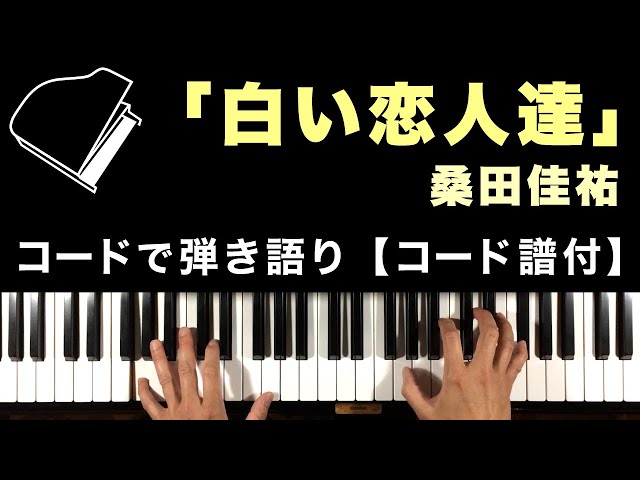

A song by Keisuke Kuwata that poignantly sings of wintertime love.
Known as the leader of Southern All Stars, this is one of Kuwata’s solo works, released in October 2001.
Chosen for a Coca-Cola commercial, it topped the Oricon weekly chart.
Set to gentle piano tones, the lyrics tenderly reminisce about a past love, leaving a deep impression.
Don’t miss the music video, featuring a passionate performance against snowy scenery.
On a cold winter night, why not try singing it yourself while playing the piano in a warm room? It’s sure to become a memorable, heartwarming moment.
I was looking at the moon.Yonezu Kenshi


A song written in June 2023 by the popular artist Kenshi Yonezu as the theme for the hit game FINAL FANTASY XVI.
Created with a deep understanding of the game’s world, the production focused on crafting music for the story.
Throughout the lyrics, it portrays feelings for a precious person who has been lost and a strong bond with a “you” who is far away.
The piano offers a wide expressive range, starting with an intro where emotions slowly build, and featuring dynamic string interventions that feel like more than mere accompaniment.
It’s recommended not only for fans of the game, but also for anyone who wants to be moved by a song that conveys profound love and bittersweet longing.