

Alexander Borodin Popular Song Ranking [2026]

While making a living as a scientist, he also continued his work as a composer, where his extraordinary talent blossomed.
The pieces he composed had a significant impact on later classical music, ensuring his name would be remembered by posterity.
This time, we’ll be focusing on him.
We’ve compiled a ranked list of his most popular tracks based on YouTube play counts to date.
Whether you’re a longtime fan or new to his work, please take a look if you’re interested.
- A masterpiece by Alexander Borodin. Popular classical music.
- Pyotr Tchaikovsky Popular Song Rankings [2026]
- Mily Balakirev Popular Songs Ranking [2026]
- Modest Mussorgsky Popular Song Rankings [2026]
- Igor Stravinsky Popular Songs Ranking [2026]
- Peter Ilyich Tchaikovsky Popular Songs Ranking [2026]
- Alexander Scriabin Popular Songs Ranking [2026]
- Rimsky-Korsakov Popular Songs Ranking [2026]
- Aram Khachaturian Popular Song Rankings [2026]
- Antonín Dvořák Popular Songs Ranking [2026]
- Sergei Rachmaninov Popular Songs Ranking [2026]
- Frederic Chopin Popular Songs Ranking [2026]
- Bedřich Smetana Popular Songs Ranking [2026]
Alexander Borodin Popular Song Ranking [2026] (41–50)
String Quartet No. 1 in A major, Second Movement: Andante con moto.Alexander Borodin43rank/position

Aleksandr Borodin, regarded as one of the Russian Five, was a composer with an unusual background: his main profession was chemistry.
Born in 1833, Borodin graduated at the top of his class from the Faculty of Medicine at the University of St.
Petersburg and later served there as a professor.
He approached music as a hobby, even calling himself a “Sunday composer.” This piece was composed between 1874 and 1879, and while it shows the influence of Beethoven, it stands out for Borodin’s characteristically rich melodicism.
Lyrical and serene in atmosphere, it is notable for its structure in which the instruments pass melodies back and forth in a conversational manner.
Blending Russian folk elements with Western classical forms, this work is recommended not only for classical music enthusiasts but also for anyone seeking comfort amid a busy life.
String Quartet No. 1 in A major, Movement III: Scherzo – Prestissimo.Alexander Borodin44rank/position

Alexander Borodin, a leading 19th-century Russian musician with the unusual background of being a chemist by profession.
This early work by Borodin is a string quartet composed solely for strings, with the third movement in particular written in the lighthearted scherzo form.
It is performed at a very fast tempo and is characterized by rapidly shifting rhythms among the string instruments.
While placing importance on Western classical forms, Borodin also brings out his distinctive melodic sensibility.
Completed in August 1879 and premiered in St.
Petersburg in December of the following year, this piece is recommended not only for classical music enthusiasts but also for anyone wishing to discover the appeal of the string quartet.
String Quartet No. 1 in A major, Movement IV: Andante – Allegro risolutoAlexander Borodin45rank/position

Here is a masterpiece of chamber music by Alexander Borodin, one of the leading Russian composers of the 19th century.
While gaining renown as a chemist, Borodin also pursued his musical career, and this ambitious work was completed in 1879.
Consisting of four movements, the piece skillfully weaves elements of Russian folk music into a harmonious balance with the formal beauty of Western classical tradition.
Opening with a tranquil introduction and developing with powerful momentum, it is a work that shines with Borodin’s characteristic lyricism and rich harmonies.
This composition is recommended not only for classical music enthusiasts but also for anyone interested in Russian music.
Polovtsian Dances from the opera Prince IgorAlexander Borodin46rank/position

This is the signature masterpiece by Alexander Borodin, one of the members of the Russian Five.
The term “Dattan” in the title refers to the people known as the Tatars—an ethnic group speaking Turkic languages—rendered in Japan using the Chinese-derived characters for Dattan; hence the titles “Dance of the Dattans” or “Polovtsian Dances.” The piece appears in Act II of the opera Prince Igor and is Borodin’s most famous work; if you know this piece well, it’s one that should lead you to know the composer Borodin himself.
It is frequently performed independently of the opera at orchestral concerts.
At the Tokyu Silvester Concert, it was chosen as the New Year’s countdown piece starting in 2016 and achieved great success under the baton of Naoto Otomo with the Tokyo Philharmonic Orchestra.

Polovtsian Dances from the opera Prince IgorAlexander Borodin47rank/position

Alexander Borodin’s Polovtsian Dances from the opera Prince Igor is a famous classical piece often heard in commercials and elsewhere.
Its striking melody, passed from oboe to clarinet, also makes for a brilliantly colorful piano four-hands arrangement.
Though it makes a strong impression in performance, it doesn’t demand overly complex technique and is approachable for intermediate players, making it a great choice for recitals.
Enjoy the seamless ensemble that two performers can bring to this work.
Overture to the opera Prince IgorAlexander Borodin48rank/position

Alexander Borodin, one of the “Mighty Handful” (the group of five Russian composers centered around Mily Balakirev) in the 19th century, was a singular composer who pursued music while maintaining his primary career as a chemist.
Born in 1833, Borodin graduated at the top of his class from the Faculty of Medicine at the University of St.
Petersburg and went on to distinguish himself as a professor of chemistry.
The work in question is the result of 18 years of composition.
Set in 12th-century Russia, its grand narrative—depicting Prince Igor’s campaign, captivity, and escape—strongly reflects Russian national identity.
Interweaving themes of love, honor, and loyalty, the opera made a significant contribution to the development of Russian music.
Showcasing Borodin’s remarkable ability to balance chemistry and music, this work is highly recommended for anyone interested in Russian music.
seaAlexander Borodin49rank/position
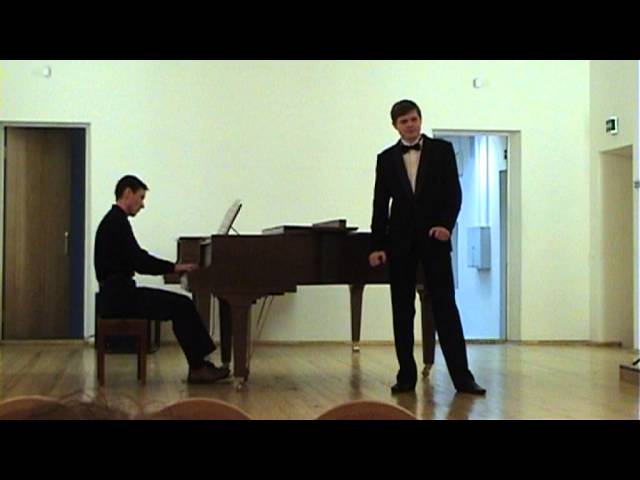
Alexander Borodin is well known for his orchestral and string works, such as the String Quartet No.
2 in D major and the Polovtsian Dances from the opera Prince Igor, but he also left behind wonderful songs.
Borodin, a Russian chemist as well as a composer, wrote the song The Sea in 1870.
This piece is a solo song with piano accompaniment that expresses the vastness and profundity of the sea.
Its richly emotional melodies, characteristic of Romantic music, are striking and quietly move the listener.
This work is a valuable piece that offers a glimpse into Borodin’s inner emotions and his view of nature.
It is a highly recommended piece for those who wish to become familiar with classical music or experience the beauty of nature through music.