

Mari Amachi's Most Popular Songs Ranking [2026]

When it comes to iconic idols of the early 1970s, Mari Amachi stands out.
In 1971, she rose to fame with an appearance on the TBS drama series “Jikan Desu yo,” debuted as a singer with “Mizuiro no Koi,” and quickly became a national idol.
After that, the songs she released went on to dominate the top of the hit charts one after another.
- Mari Amachi's famous and popular songs
- Debut song of a 1970s idol
- Mari Iijima Popular Songs Ranking [2026]
- Popular Love Song Rankings [2026]
- [Teens] Popular Songs Ranking by Generation [2026]
- Miki Imai’s Most Popular Songs Ranking [2026]
- Nostalgic Japanese hit songs from the 1970s: the golden age of idols and kayōkyoku (Japanese pop songs)
- Kiyoko Suizenji’s Popular Songs Ranking [2026]
- Hiromi Iwasaki Popular Songs Ranking [2026]
- 1970s Female Singer-Songwriters: Popular Songs Ranking [2026]
- Mariko Nagai's Most Popular Songs Ranking [2026]
- Chiyoko Shimakura’s Most Popular Songs Ranking [2026]
- Miki Imai’s Most Popular Karaoke Songs Ranking [2026]
Mari Amachi Popular Song Rankings [2026] (1–10)
Our Sunday for Twotenchi mari8rank/position

So nostalgic.
This is a hit song by Mari Amachi, the quintessential idol of that era.
I’ve heard that Keisuke Kuwata from Southern All Stars was also a huge fan of Mari-chan.
She made a comeback after quite a number of years away at one point, but because there were variety show segments where she had to put herself on the line, Kuwata supposedly lamented, saying, “Please, don’t ruin the image.”
Alone in Kyototenchi mari9rank/position

The song “Kyoto de Hitori” is the B-side of Mari Amachi’s 13th single, “Ai no Album.” Amachi is known for her big hits “Koi Suru Natsu no Hi” and “Hitorijanai no.” The song tells the story of setting off alone to Kyoto after much thought, only to realize she’ll return to you in the end.
It continues the musical direction aimed at moving beyond her idol image.

A Summer Day in Lovetenchi mari10rank/position
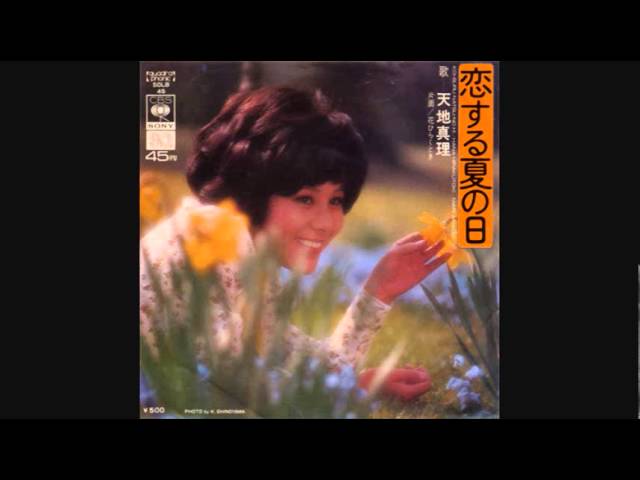
Among the summer songs sung by the national idol Mari Amachi, this piece is one of the first masterpieces that comes to mind.
It portrays the sweet, fluttering scenes of first love—waiting for someone you like on the tennis court—and just listening makes your heart skip a beat.
Released in July 1973, the song spent six consecutive weeks at No.
1 on the Oricon charts.
Beyond her adorable appearance singing in white tennis wear on that year’s Kōhaku Uta Gassen, her crystal-clear voice and breezy melody evoke the very essence of youth in summer.
It’s the perfect track for when you want to let your heart drift back to days gone by.
Mari Amachi Popular Songs Ranking [2026] (11–20)
The traveler heads to the Land of Windtenchi mari11rank/position

This is Mari Amachi’s debut song, which portrays dreams, hopes, and a longing for travel.
Her clear, translucent voice beautifully captures the yearning for freedom and the anticipation of the unknown through the figure of a traveler heading to the Land of the Wind.
Released in 1971, the piece held an important place in the early ’70s music scene.
Its lyrics, reflecting the feelings of the younger generation and the social backdrop of the time, resonated with many and continue to be loved without losing their luster.
It’s a song I recommend to those about to take a new step or standing at a crossroads in life.
mothertenchi mari12rank/position

A heartwarming classic that sings of eternal love and gratitude.
Released in September 1972, this song is Mari Amachi’s sixth single.
The lyrics, filled with deep affection for a mother, harmonize beautifully with the gentle melody.
Amachi’s clear, pure voice exquisitely conveys feelings of gratitude toward her mother.
Listening to this song reminds us of a mother’s love and the importance of family bonds.
It’s a wonderful piece that brings back our sense of appreciation for our mothers, even as we’re caught up in daily life.
You’ll want to send it along with a Mother’s Day gift.
Midwinter Datetenchi mari13rank/position
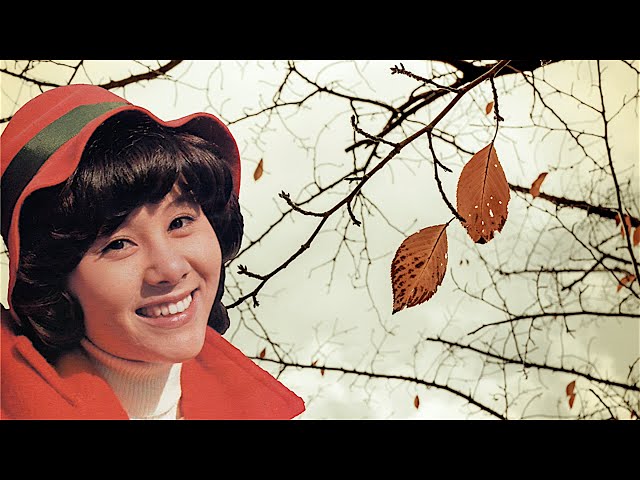
Mari Amachi, who was a national idol in the early 1970s.
This song, included as the B-side of the single “Futari no Nichiyoubi,” released in December 1972, warmly depicts lovers intertwining their fingers and snuggling close as a wintry, leafless avenue is swept by a cold wind.
The lyrics are by Michio Yamagami, the music by Masayuki Hirao, and the arrangement by Shunichi Makaino.
The words, which sing of love nurtured in the cold season, combine with Amachi’s clear, transparent voice to evoke a sense of hope amid the poignancy.
Featured on a single that sold about 440,000 copies at the time, the track was also included on the album “Ashita e no Melody” and has continued to be loved by fans.
Give it a listen while imagining a moment spent with someone special on a chilly day.
youtenchi mari14rank/position

A warm love story sung by Mari Amachi, an iconic idol singer of the 1970s.
This piece is characterized by its gentle, tranquil melody and her clear, translucent vocals.
Amachi’s soft singing carefully weaves her feelings for the one she loves.
Released in 2006, this work is a cover of Akiko Kosaka’s celebrated song.
Amachi beautifully conveys the original’s delicate emotional expression with her signature refreshingly pure vocals.
The lyrics, filled with thoughts for someone precious, will resonate across generations.
It’s a heartwarming track you’ll want to listen to during special moments with a partner or family.