

Yumi Arai Popular Song Rankings [2026]

Yumi Arai made her debut with the album “Hikōkigumo,” and, alongside Takuro Yoshida, Yosui Inoue, and Miyuki Nakajima, helped energize Japanese pop music.
Her songs—marked by distinctive chord progressions and a floating, airy feel—have captivated countless listeners.
This time, we’ve compiled a ranking of Yumi Arai’s most popular songs!
Please enjoy these timeless masterpieces that have never lost their luster!
- Arai Yumi’s Most Popular Karaoke Songs Ranking [2026]
- Yumi Arai’s Graduation Songs, Entrance Ceremony Songs, and Popular Songs Ranking [2026]
- [2026 Edition] Songs Loved by People in Their 60s: Classic Hits from Their Youth
- Miyuki Nakajima’s Tearjerkers: Best Crying Songs and Popular Tracks Ranking [2026]
- Yumi Matsutoya Popular Songs Ranking [2026]
- Miki Imai’s Most Popular Songs Ranking [2026]
- Miyuki Nakajima’s Moving Songs and Popular Tracks Ranking [2026]
- Yumi Matsutoya Popular Songs Ranking [2026]
- Yumi Matsutoya Ballad Songs: Popular Song Rankings [2026]
- Top Inoue Yosui Songs Ranking [2026]
- Popularity Ranking of Songs by Generation: 60s [2026]
- Miyuki Nakajima’s Most Popular Songs Ranking [2026]
- Popular Winter Songs Ranking [2026]
Yumi Arai’s Most Popular Songs Ranking [2026] (11–20)
No reply needed.Arai Yumi11rank/position

This is the memorable debut single by Yumi Arai, known as Yuming, who would go on to lead the later J-POP scene.
Produced by Hiroshi Kamayatsu, with illustrious musicians like Yukihiro Takahashi participating, it’s an astonishingly polished track for a debut.
Its light, American rock-style sound pairs perfectly with her urbane, slightly cool vocals.
The lyrics, in which she senses the end of a romance and draws the curtain herself by saying “I don’t need an answer,” also feel like a brave front masking held-back loneliness.
That precocious sensibility may well have been the glimmer of the talent that would later give rise to countless masterpieces.
The Fourteenth MoonArai Yumi (Matsutoya Yumi)12rank/position

It’s a track included on Yumi’s fourth album.
When we think of the moon, a full moon usually comes to mind first, but these unusual lyrics are inspired by the 14th-day moon—the day before the full moon.
It has a rock feel and is a staple at live shows.
The rock band Spitz has also covered it.

If I’m wrapped in kindnessArai Yumi (Matsutoya Yumi)13rank/position

Yumi Arai’s song “Yasashisa ni Tsutsumareta nara,” also famous as the theme song for Studio Ghibli’s Kiki’s Delivery Service, is a classic from the period when Yumi Matsutoya—affectionately known as Yuming—was performing under the name Yumi Arai.
What makes this song so easy to sing is, above all, its widespread recognition.
Since people of all ages know it, it’s a reliable choice for karaoke when a wide range of generations are gathered.
If you’ve never sung it before, take this opportunity to add it to your repertoire.
The melody is easy to remember, and it’s a very gentle, soothing song.
Graduation PhotoArai Yumi (Matsutoya Yumi)14rank/position

This song, one of the signature works by Yumi Matsutoya, who has led the J-POP scene for many years, was released in 1975.
Loved by countless listeners as a graduation song, it remains a timeless classic even today.
The lyrics depict an adult looking back at their yearbook and reflecting on their school days, and for many, listening to this song rekindles memories of youth and stirs the heart.
It’s also an anthem that encourages you to carry the burning passion of your youth and keep moving forward.

If I’m wrapped in kindnessArai Yumi (gen: Matsutoya Yumi)15rank/position

Since her debut in 1972, singer-songwriter Yumi Matsutoya has continued to release numerous hit songs.
Her third single, “Yasashisa ni Tsutsumareta Nara” (“Wrapped in Gentleness”), became widely known across generations after its album version was used as the ending theme for the 1989 film Kiki’s Delivery Service, 15 years after the original release.
Its airy, gentle melody overflows with a timeless charm that transcends eras.
With its soothing acoustic sound, it remains a beloved classic cherished by listeners of all ages.

I want to go back to that dayArai Yumi (Matsutoya Yumi)16rank/position

Yumi Matsutoya, who is still active as a singer, had the maiden name Arai before marriage.
A pioneer among female artists in the New Music genre, her song “Ano Hi ni Kaeritai” was released under the name Yumi Arai in October 1975 and became a major hit, reaching No.
1 on the Oricon chart and selling over 600,000 copies.
Chinese soupArai Yumi (Matsutoya Yumi)17rank/position

It’s one of Arai Yumi’s (Yumi Matsutoya’s maiden name) popular songs, in which she looks back on a former lover by comparing him to a pea.
Depending on how you interpret it, the lyrics can seem to reveal a darker side of a woman, but it’s ultimately a song that cheers on women in love.
If I’m wrapped in kindnessArai Yumi (Matsutoya Yumi)18rank/position

It’s a song filled with kindness and hope, carrying a message that cherishes childlike innocence.
Released in 1974 as Yumi Arai’s third single, it was also included on the album “MISSLIM.” In 1989, it was chosen as the ending theme for the film “Kiki’s Delivery Service,” resonating with even more listeners.
It’s a piece you’ll want to hear at life’s milestones and on special days.
Perfect for a wedding reception welcome scene, it will envelop the couple and guests in a warm atmosphere.
It’s a heartwarming song that will also stay close to your everyday life after marriage.
COBALT HOURArai Yumi19rank/position

A light, fusion-tinged track.
The word “cobalt” gives the song a stylish flair, and its vibrant, dynamic sound still feels fresh today.
It was included on the self-titled album released in 1975.
The star-studded lineup—Haruomi Hosono on bass, Shigeru Suzuki on guitar, and backing vocals by Tatsuro Yamashita, Minako Yoshida, and Hi-Fi Set—also drew attention.
Late Summer (A Season for One)Arai Yumi20rank/position
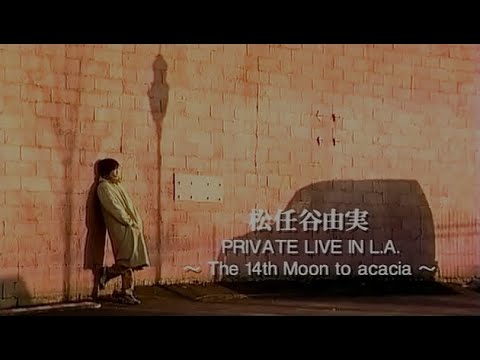
This is a song by Yumi Arai that overlays the changing seasonal scenery with the end of a romance and the beginning of time alone.
The sight of leaves blazing with color and delicate flowers swaying in the wind seems to reflect the protagonist’s loneliness.
The song was included on the album “The 14th Moon,” released under the name Yumi Arai in November 1976, and it also served as the theme song for the NHK dramas “Natsu no Furusato” and “Maboroshi no Budōen.” Its poignant melody—mingling a lingering affection for the summer that has passed with a quiet resolve for the seasons to come—resonates deeply with listeners.
Whether you play it on a drive while reminiscing about summer or during a slightly chilly evening stroll, it will gently keep you company.