

![THE BLUE HEARTS Popular Song Ranking [2026]](https://i.ytimg.com/vi/RYC71PAuIKE/sddefault.jpg)

The Blue Hearts’ songs have many appealing qualities: they’re simple and easy to play when you’re starting a band, their lyrics carry a strong message, and they’re easy to sing at karaoke.
This time, we’ll introduce a ranking of their most popular songs from The Blue Hearts’ catalog.
- The Blue Hearts Love Songs and Popular Tracks Ranking [2026]
- Masterpieces and Popular Songs by THE BLUE HEARTS
- Cheering Songs and Popular Song Rankings of THE BLUE HEARTS [2026]
- Karaoke Popular Song Rankings of THE BLUE HEARTS [2026]
- THE BLUE HEARTS' Energetic Songs and Popular Tracks Ranking [2026]
- [Karaoke] A collection of easy-to-sing songs by THE BLUE HEARTS
- The Cro-Magnons Popular Song Rankings [2026]
- A classic song by The Cro-Magnons. Recommended track.
- THE HIGH-LOWS Popular Songs Ranking [2026]
- BLUE ENCOUNT Popular Song Ranking [2026]
- Magokoro Brothers Popular Songs Ranking [2026]
- LINDBERG Popular Song Ranking [2026]
- Hysteric Blue Popular Song Ranking [2026]
THE BLUE HEARTS Popular Song Ranking [2026] (1–10)
Linda LindaTHE BLUE HEARTS1rank/position
THE BLUE HEARTS, the legendary band that shook Japan’s punk rock scene.
Their landmark major-label debut single bursts with a driving beat and lyrics that question true beauty, continuing to stir listeners’ souls.
Released in May 1987, it has a different version included on the album “THE BLUE HEARTS.” Beyond being performed in the film “Linda Linda Linda,” it was also featured in an Airbnb commercial in 2024, proving its timeless appeal.
Many people have probably played it as a staple at school festivals or graduation gigs.
Belt it out like a shout, and the fiery feelings of your youth will come vividly rushing back.
Rose of PassionTHE BLUE HEARTS2rank/position

Released on July 25, 1990, this signature song—written and composed by vocalist Hiroto Kōmoto—became the band’s first to reach No.
1 on the Oricon chart.
It was used as the theme song for the TBS drama “High School Graffiti 2” and in commercials, and its driving punk rock sound and upbeat lyrics have continued to be loved across generations.
A distinctive feature is that the chorus appears only once in the latter half of the song, which I think really hits listeners hard.
I want to sing solidly building up to that chorus.
By the way, I always thought the beginning was the chorus, so I was surprised when I realized it wasn’t…! The opening is also very important, and it seems best to sing it clearly and crisply.

blue skyTHE BLUE HEARTS3rank/position

This is a song filled with sharp criticism of social issues and a sense of hope.
It speaks for those suffering from discrimination and prejudice, calling for the importance of living equally under the blue sky.
Released at the time of their indie debut in 1987, it became a stepping stone to their major-label debut.
It was also used as the ending theme for the animated film “Colorful,” and is loved by people across generations.
It’s a song for anyone who questions the distortions of society or feels on the verge of losing hope.
Listening to it will surely give you the courage to look forward and take your next step.
TRAIN-TRAINTHE BLUE HEARTS4rank/position

A powerful portrayal of relentlessly sprinting toward one’s goals, this signature work by THE BLUE HEARTS is set in the real world—not a utopia or a hell—and boldly declares that life itself has meaning even if we can’t be perfect.
Released in November 1988, this track, which lends its name to the album TRAIN-TRAIN, uses piano for the first time in the band’s history to create a sense of exhilarating momentum and reached No.
5 on the Oricon singles chart.
In 1989, it was also chosen as the theme song for the TBS drama “High School Rakugaki.” For those standing at a crossroads in life, this is a song that will be a powerful ally.
When you’re torn about a decision, let it be a source of courage that gives you a push forward.
Be kind to othersTHE BLUE HEARTS5rank/position

“Show them your true grit” is a catchphrase that powerfully pushes exam takers forward in this commercial.
It portrays students steadily working toward their exams while wrestling with various emotions and inner conflicts.
This CM, which depicts their hard-fought struggle, features “Be Kind to People,” a single released by THE BLUE HEARTS in 1988.
Instead of the original track, a choral version sung by the exam takers is used, delivering each word of the lyrics with striking clarity.

The Never-Ending SongTHE BLUE HEARTS6rank/position

One of the signature tracks from THE BLUE HEARTS’ debut album, THE BLUE HEARTS, which left a major mark on Japan’s punk rock scene.
It’s an anthem that delivers a powerful declaration to keep singing for oneself and for kindred spirits, set to a straightforward and catchy melody.
In 2002 it was used as an insert song in the Fuji TV drama ‘Hito ni Yasashiku’ (Be Nice to People), and in 2011 it was featured in a JRA commercial.
The repeated phrase in the chorus is structured to make you hum along naturally, creating a sense of unity that transcends generations.
It’s the perfect song for linking arms and getting fired up together at year-end or New Year parties.
Love letterTHE BLUE HEARTS7rank/position
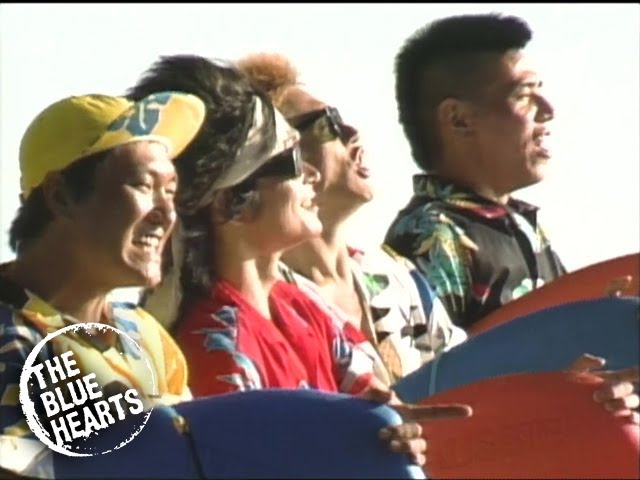
This is a song that expresses a bittersweet feeling with letters as its theme.
Released in February 1989 as THE BLUE HEARTS’ fourth single, it’s one of the tracks included on the album TRAIN-TRAIN.
Written and composed by Hiroto Kōmoto, this ballad is characterized by its effective use of falsetto chorus and strings.
In 2004, it was featured in a KDDI (au) commercial, and in 2006 it was used as an insert song in the film Love Letter: Aoi Renga.
Singing of lingering feelings for an unfulfilled love and a pure wish for the other person’s happiness, this song is recommended for those who want to entrust their feelings for someone special to a letter.