

Claude Debussy Popular Songs Ranking [2026]

Claude Debussy, a French composer sometimes referred to as an Impressionist due to his distinctive compositional techniques seen in notable works such as La mer and Nocturnes.
This time, we’re focusing on his music.
We’ve compiled a ranked list of his most popular pieces based on the highest play counts on YouTube to date.
Whether you’re a long-time fan or discovering him for the first time, please take a look if you’re interested.
- Debussy’s masterpiece. Popular classical music.
- Jacques Ibert Popular Song Ranking [2026]
- [Impressionism] A Curated Selection of Colorful Piano Masterpieces — Debussy & Ravel
- Frederic Chopin Popular Songs Ranking [2026]
- Franz Liszt Popular Song Ranking [2026]
- Maurice Ravel Popular Songs Ranking [2026]
- [Elementary School Students] Popular Song Rankings by Generation [2026]
- Erik Satie Popular Songs Ranking [2026]
- Cécile Chaminade Popular Song Rankings [2026]
- Camille Saint-Saëns Popular Songs Ranking [2026]
- Gabriel Fauré Popular Songs Ranking [2026]
- Emmanuel Chabrier Popular Song Rankings [2026]
- Alexander Scriabin Popular Songs Ranking [2026]
Claude Debussy Popular Song Ranking [2026] (21–30)
Children’s Corner No. 2: Lullaby of the ElephantClaude Debussy22rank/position

The second piece of Claude Debussy’s suite Children’s Corner, dedicated to his beloved daughter Emma, is “Jimbo’s Lullaby.” The “elephant” here refers to Emma’s favorite stuffed toy.
This piece charmingly depicts how, while singing a lullaby to the toy, Emma herself grows sleepy.
As you play its exotic, mysterious melody, you might find yourself getting drowsy too! Every so often, why not savor your piano playing with a relaxed piece like this?

Prélude to the Afternoon of a FaunClaude Debussy23rank/position
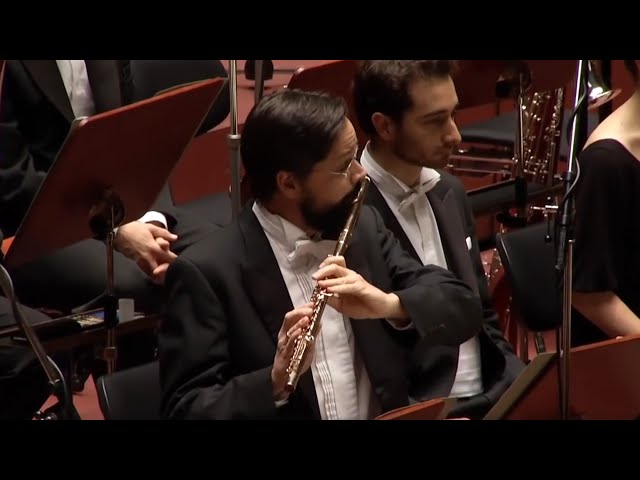
Claude Debussy, known as a pioneer of Impressionist music.
The orchestral work he composed between 1892 and 1894 can truly be called a masterpiece in which his talent blossomed.
Inspired by a poem by Mallarmé, the piece depicts the reverie of a faun on a summer afternoon.
Opening with a flute solo, with the harp heightening the mood, it evokes the feeling of a drowsy, sultry afternoon.
His skillful use of the flute’s middle register to convey a languid atmosphere was innovative for its time.
At its premiere in December 1894, it was so well received that it was encored twice, and it became a masterpiece that exerted a major influence on modern music.
Children’s Corner No. 5: The Little ShepherdClaude Debussy24rank/position

The fifth piece from the piano suite Children’s Corner, which Claude Debussy composed for his beloved daughter Emma.
It is a work marked by a quiet melody with dotted rhythms.
The key to this piece lies in its exquisite sense of timing and space.
Rather than reproducing the notated rhythm exactly as written, it’s important to play while cherishing the moments of silence.
That said, for those who haven’t had much exposure to Debussy’s music, it can be difficult to grasp the feel.
Studying the phrasing and timing by listening to renowned pianists’ performances may help you acquire Debussy’s distinctive style more quickly.
Forgotten Images: No. 2, “Memories of the Louvre”Claude Debussy25rank/position

Comprising three pieces, “Images oubliées” was published roughly 55 years after the death of Claude Debussy.
The second piece, “Souvenir du Louvre,” is a very beautiful work that combines gravity and elegance.
The instruction, “with the feeling of a slightly time-worn portrait commemorating a memory of the Louvre,” indicates that the piece evokes an artwork whose sense of grandeur deepens over time.
It would be wonderful to perform it while savoring the many expressions packed into the piece—its delicacy, brilliance, and melancholy.
Bergamasque Suite No. 4 “Passepied”Claude Debussy26rank/position

Among the pieces in Claude Debussy’s Suite bergamasque, “Passepied” is distinguished by its atmosphere that combines lightness with elegance.
Begun in 1890 and revised and published in 1905, the suite is based on a dance originating in Brittany.
It contains passages that demand both delicate touch and bold expression, such as the left hand’s continuous eighth‑note accompaniment and 3‑against‑4 polyrhythms, making it a perfect work for piano students aiming to improve their skills.
Cherish the lively, airy mood, and perform it with expressive nuance!
Children’s Corner No. 4: “The Snow Is Dancing”Claude Debussy27rank/position

This piece evokes the pure gaze of children quietly watching snow pile up by the window.
The continuous sixteenth-note patterns intricately depict the fluttering snowflakes.
The alternating passages played with both hands are like countless snow crystals drifting down from the sky.
Composed in 1908 for the composer’s beloved three-year-old daughter, the work delicately expresses a world shaped by a child’s rich imagination.
Through the contrast of staccato and legato, as well as nuanced pedal work, one can sense both the hush of falling snow and the life concealed within it.
It is a recommended piece for those wishing to become familiar with classical music or to step away from daily life and spend a moment in quiet serenity.
Little Suite No. 1: En bateauClaude Debussy28rank/position

Claude Debussy’s Petite Suite is well known as a piece suitable for intermediate players.
This time, I’d like to introduce the especially famous first movement, En bateau.
In terms of difficulty, it sits right in the middle of the intermediate range.
Set in G major and 6/8 time, the piece is characterized by a melody that rides over wave-like broken chords, creating a sound that is both brilliant and refreshingly light.
It’s a staple for recitals, so be sure to give it a listen.
