

Dmitri Shostakovich Popular Songs Ranking [2026]

Dmitri Shostakovich was an artist active in the fields of symphonies and string quartets, and is counted worldwide among the greatest composers of art music in the 20th century.
While he was highly acclaimed as a symphonic composer, he also released a fair number of popular pieces.
He is also known as a composer who struggled during the Soviet era with the gap between the music he wanted to create and the music demanded by the regime.
This time, we present a ranking of Dmitri Shostakovich’s most popular works!
- Dmitri Kabalevsky Popular Song Rankings [2026]
- [Quartet] Masterpieces and Popular Pieces for String Quartet
- François Couperin Popular Songs Ranking [2026]
- Bartók Béla Popular Song Ranking [2026]
- Alexander Scriabin Popular Songs Ranking [2026]
- Arnold Schönberg Popular Songs Ranking [2026]
- Jean Sibelius Popular Songs Ranking [2026]
- Bedřich Smetana Popular Songs Ranking [2026]
- Yamada Kōsaku Popular Song Rankings [2026]
- Mily Balakirev Popular Songs Ranking [2026]
- Stravinsky’s masterpiece. Popular classical music.
- Francis Poulenc Popular Songs Ranking [2026]
- Scott Joplin Popular Song Rankings [2026]
Dmitri Shostakovich Popular Songs Ranking [2026] (1–10)
24 Preludes and Fugues, Op. 87: No. 15 in D-flat majorDmitri Shostakovich8rank/position

Dmitri Shostakovich’s 24 Preludes and Fugues, Op.
87 is an ambitious work inspired by Bach’s The Well-Tempered Clavier.
The D-flat major No.
15 is considered one of the most challenging pieces in both technical demands and expressive breadth.
After the tranquil prelude, the fugue pivots to a gripping drama woven from interlacing, complex tone rows.
Throughout the work, one senses Shostakovich’s characteristic depth of introspection and insight; it is a monumental piece best suited to seasoned pianists.
Suite for Two Pianos in F-sharp minor, Op. 6Dmitri Shostakovich9rank/position

The piano suite for two pianos in F-sharp minor, Op.
6, composed by the Russian composer Dmitri Shostakovich when he was 16, is highly regarded as an early work that showcased his precocious talent.
Technically demanding, the suite consists of four movements—Prelude, Fantastic Dance, Nocturne, and Finale—each brimming with Shostakovich’s distinctive, innovative musicality.
The second movement, in particular, stands out for its rhythmic passages and unique harmonies.
Its sharp contrasts and grotesque elements—hallmarks of his style—are on full display.
This masterpiece is highly recommended for advanced players looking to take on a piano duo challenge!
Three Fantastic Dances, Op. 5Dmitri Shostakovich10rank/position

Three Fantastic Dances, Op.
5, composed by Dmitri Shostakovich—one of the great composers of the 20th century—during his student years, is a charming miniature brimming with humor and lightness that fully showcases the young genius’s talent.
The three dances—March, Waltz, and Polka—each display a distinctive character while forming a tightly knit whole.
It’s a quintessential Shostakovich work, marked by youthful drive and richly original musicality.
Highly recommended for those who want to enjoy learning the piano!
Dmitri Shostakovich Popular Songs Ranking [2026] (11–20)
Children’s Album, Op. 69: No. 1 ‘March’Dmitri Shostakovich11rank/position

Dmitri Shostakovich, the renowned Russian composer, left significant works especially in the fields of symphonies, chamber music, and concertos.
While struggling between political pressure and personal expression, he forged a complex and multifaceted style.
Among his compositions from 1944–45 is the piano miniatures collection Children’s Notebook, Op.
69.
Opening the set is March, notable for its bright, accessible melody.
This piece, which also conveys Shostakovich’s affection for his own child, overflows with positive feeling, uplifting and encouraging its listeners.
Cello Sonata in D minor, Op. 40Dmitri Shostakovich12rank/position
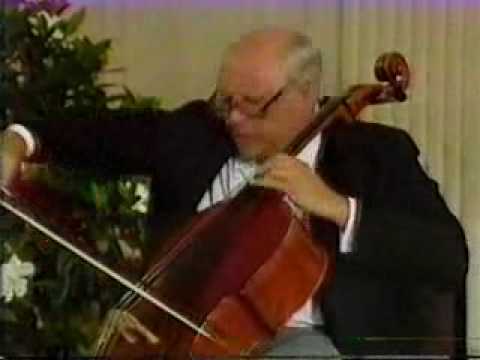
It is the Cello Sonata in D minor, Op.
40, composed by Dmitri Shostakovich.
He began composing the piece at the suggestion of Viktor Lvovich Kubatsky, former principal cellist of the Bolshoi Theatre.
The premiere took place in 1934 in the small hall of the Leningrad Conservatory (formerly the St.
Petersburg Conservatory), with Viktor Lvovich Kubatsky as the cello soloist and the composer himself at the piano.
Piano Sonata No. 1, Op. 12Dmitri Shostakovich13rank/position

Dmitri Shostakovich, a great composer representative of the Soviet era.
While many of his piano works are weighty pieces reminiscent of his symphonies, the Piano Sonata No.
1, Op.
12, is one of his early, innovative works.
Composed in 1926, this sonata features an experimental structure that alternates fast and slow sections.
Its strikingly intense dissonances and rhythmic elements, influenced by modernism and expressionism, mark it as an ambitious piece characteristic of the young Shostakovich.
This challenging work also showcases his exceptional pianistic skills.
It is especially recommended for those interested in contemporary music!
Piano Sonata No. 2, Op. 61Dmitri Shostakovich14rank/position

Among Dmitri Shostakovich’s piano works, the Piano Sonata No.
2, Op.
61 is especially popular.
Composed in 1943 during the war, this sonata captivates with its weighty atmosphere and profound emotional expression, as if reflecting his inner world.
The second movement, in particular, is imbued with a mournful character as a tribute to his late piano teacher.
By contrast, the driving first movement and the finale, whose scale evokes a symphony, offer strikingly different moods.
It’s a highly recommended piece for anyone wishing to experience the essence of one of the 20th century’s foremost composers.