

Edward Elgar Popular Song Rankings [2026]

Edward Elgar (1857–1934) was the British composer and conductor of the march Pomp and Circumstance, who was also awarded a baronetcy.
Throughout his life, Elgar left behind an enormous number of works.
Here, we present a best-of style ranking of his pieces.
- Elgar’s masterpiece. Popular classical music.
- Edvard Grieg Popular Song Rankings [2026]
- [Masterpiece Classics] A special showcase of gem-like masterpieces so beautiful they’ll move you to tears
- A Collection of Piano Works by Edward Elgar, the National Composer of Britain
- Gustav Holst Popular Song Rankings [2026]
- Déodat de Séverac Popular Song Rankings [2026]
- Jules Massenet Popular Song Rankings [2026]
- Jacques Ibert Popular Song Ranking [2026]
- William Walton Popular Songs Ranking [2026]
- Gustav Mahler Popular Songs Ranking [2026]
- Jean Sibelius Popular Songs Ranking [2026]
- Camille Saint-Saëns Popular Songs Ranking [2026]
- Richard Wagner Popular Songs Ranking [2026]
Edward Elgar Popular Songs Ranking [2026] (51–60)
Thought Dance (Rosemary)Edward Elgar57rank/position

A hidden gem known to those in the know, “Chanson de Matin.” Composed by the British composer Edward Elgar, it was originally written for violin and piano, but later arranged for orchestra, which further boosted its popularity.
Its delicate, poetic melody expresses the freshness and brightness of morning, evoking calm, hope-filled scenes.
The simple yet striking tune is especially appealing and is often interpreted as symbolizing the start of a new day and its possibilities.
It’s a recommended piece not only for classical music fans but also for anyone who wants to spend a leisurely morning.
Greeting of Love, Salut d’AmourEdward Elgar58rank/position

This is the famous piece Salut d’Amour by the British composer Edward Elgar, renowned for Pomp and Circumstance.
Composed in 1888 as an engagement gift for Caroline Alice Roberts, it exists in various arrangements; while it’s best known on violin, it also makes a lovely flute study.
By playing the well-known phrase from the first half of the piece with a stable tone, you can improve your flute skills.
The original is in E major with four sharps, but try practicing it in D major with two sharps—like the violin version—and once you’ve leveled up, challenge yourself with the original key.
Salut d’Amour, Op. 12Edward Elgar59rank/position

A piece given in 1888 to commemorate his engagement to Caroline Alice Roberts, who would later become his wife.
Their marriage faced much opposition—partly because she was older—and the path to wedlock was a difficult one.
Edward Elgar enjoyed strong sales of the score and left several versions, including for solo piano and for piano and violin; it is performed not only on the violin but also on viola, cello, and other instruments.
Its sweet, lyrical melody has captivated many listeners, and among Elgar’s works it ranks as one of the most popular, alongside Pomp and Circumstance and the Enigma Variations.
SingEdward Elgar60rank/position

Edward Elgar, the beloved national composer born in Britain, is known for masterpieces such as “Pomp and Circumstance.” Among his early choral works is a piece titled “Sing, Bird.” Set to a poem by his wife, the song entrusts a message for a lover to a bird flying westward.
Its lyrics evoke the ache of parting, overlaid with Elgar’s characteristically lyrical and beautiful melodies, reaching deeply into the listener’s heart.
Frequently performed at choral concerts, it’s a popular piece, and it’s also recommended for anyone wishing to recall the stirrings of youthful love.
A gem that richly reflects Elgar’s sensibility.
Edward Elgar Popular Songs Ranking [2026] (61–70)
Allegro for Concert PerformanceEdward Elgar61rank/position

Edward Elgar, known for masterpieces such as Pomp and Circumstance and Land of Hope and Glory, actually wrote relatively few works for piano.
However, among his limited piano pieces is a unique work titled Concert Allegro.
Composed in 1901 at the request of pianist Fanny Davies, this piece is Elgar’s only concert work for solo piano.
Written in a Romantic style, it gives an impression of a fusion between Bach and Liszt.
With its emotionally rich melodies and intricate pianistic techniques, it’s a compelling piece that makes you want to take on the challenge.
Variations on an Original Theme for Orchestra (Enigma Variations)Edward Elgar62rank/position
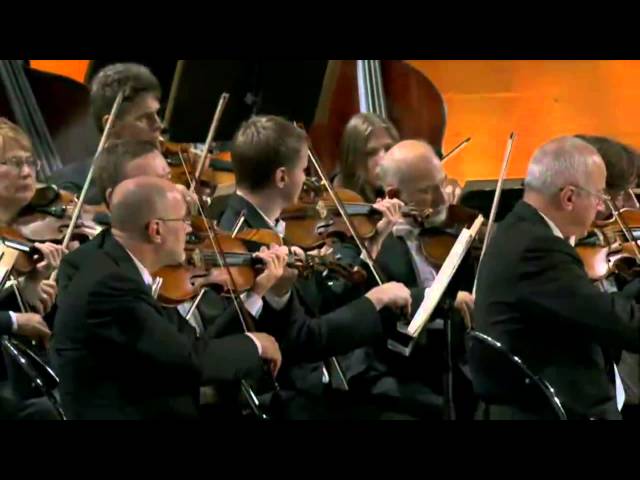
“Enigma Variations” is an orchestral work composed in 1898 and premiered in London in 1899.
Following the theme, it consists of 14 variations, from Variation I to Variation XIV.
Because arrangements for wind band have also been published, many school and community wind ensembles may have performed it as a classic repertoire piece.
Edward Elgar gained international fame through the success of this work, and it has continued to be loved by the public alongside “Pomp and Circumstance March No.
1,” composed in 1901.
Pomp and Circumstance March No. 3 in C minorEdward Elgar63rank/position

Edward Elgar, one of Britain’s most representative composers, wrote six Pomp and Circumstance Marches.
Here we present March No.
3.
Its key of C minor and powerful rhythms are striking, creating a majestic atmosphere.
Born in 1857, Elgar rose to fame rapidly in his forties.
His music is characterized by lyrical melodic gifts, delicate harmonies, and richly colored orchestration.
Although this piece has no lyrics, a full orchestral performance captivates listeners with its sheer impact.
It is recommended not only for those interested in classical music but also for anyone who enjoys grand, expansive sound.