

![Johann Pachelbel Popular Song Rankings [2026]](https://i.ytimg.com/vi_webp/esBkFrwm4aI/maxresdefault.webp)

Johann Pachelbel (1653–1706) was a composer and organist born in what was then the Holy Roman Empire, now Germany.
Does “Pachelbel’s Canon” ring a bell?
This time, we’ll introduce pieces composed by this key figure who supported Baroque music.
- J.S. Bach Popular Songs Ranking [2026]
- Arcangelo Corelli Popular Song Rankings [2026]
- Joe Hisaishi’s Wedding Songs: Popular Song Rankings [2026]
- Georg Philipp Telemann Popular Songs Ranking [2026]
- Antonio Vivaldi Popular Song Ranking [2026]
- Georg Friedrich Handel Popular Songs Ranking [2026]
- Domenico Scarlatti Popular Songs Ranking [2026]
- Handel Popular Songs Ranking [2026]
- Johann Burgmüller Popular Song Rankings [2026]
- George Frideric Handel Popular Songs Ranking [2026]
- Wolfgang Amadeus Mozart Popular Song Rankings [2026]
- [J-Pop] List of Popular and Famous Songs That Use the Canon Progression [2026]
- Claudio Monteverdi Popular Songs Ranking [2026]
Johann Pachelbel Popular Songs Ranking [2026] (1–10)
CanonJohann Pachelbel1rank/position

A masterpiece whose name recognition ranks among the highest in classical music—surely everyone has heard it at least once.
Composed by Johann Pachelbel, this work was originally chamber music from the Baroque era, yet today it’s beloved as a piano solo staple.
Its harmonic flow, known as the “canon progression,” has also become the foundation of many famous songs, including in J-pop.
The melodies that intertwine gracefully over the repeating bass evoke a gentle spring breeze.
The key to performing it is to keep a steady pace with the left hand while letting the right hand sing the melody.
It’s perfect for life’s milestone moments, such as weddings and graduation ceremonies, so consider adding it to your repertoire.
Pachelbel’s CanonJohann Pachelbel2rank/position

This is a work by Johann Pachelbel in which three violins play as if chasing a beautiful melody.
Its hallmark is the way the lines are layered upon one another.
Although there are no lyrics, the gentle, harmonious sonorities feel like a tender conversation, softly enveloping the listener’s heart.
Composed in the late 17th century, it became internationally famous after a June 1968 recording conducted by Jean-François Paillard.
It also gained wider recognition through its use in the 1980 film Ordinary People, and it’s now well known as wedding background music.
Its soothing, steady rhythm and seemingly endless, beautiful melody make it perfect for focusing on work or study.
It may be just the piece for those who want to clear their minds and approach things with calmness.
CanonJohann Pachelbel3rank/position
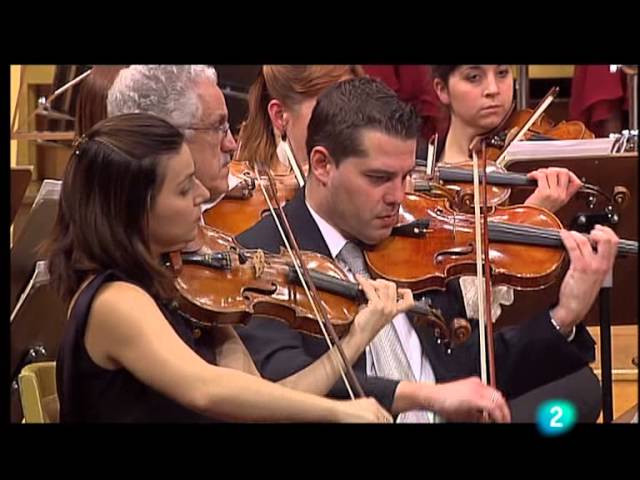
A classic masterpiece and a timeless staple that has historically graced weddings.
Pop arrangements are great, but you can’t skip the classics.
A truly fitting piece to adorn a sacred wedding—guaranteed to make for an elegant reception.
Canon (arr. Toms Mucenieks)Johann Pachelbel4rank/position

Johann Pachelbel, a Baroque-era composer, made significant contributions to the development of church music and, through his pupils, influenced Johann Sebastian Bach.
In this piano solo arrangement of his masterpiece Canon, the original beauty is preserved while new charm is drawn out through contemporary sensibilities and technique.
Its gentle, blessed melody symbolizes timeless value and enhances life’s important moments.
We also recommend comparing it with a more faithful arrangement to the original, either by playing or listening.
Canon and Gigue in D major for Three Violins and Basso ContinuoJohann Pachelbel5rank/position

This work, which could be called a jewel of Baroque music, is known as Pachelbel’s Canon.
Showcasing Johann Pachelbel’s delicate sensibility, it’s a piece that is friendly even to classical music beginners.
The beautiful melodies woven by three violins seep into the heart like the murmuring of a brook.
In the 1970s, when it was broadcast by a San Francisco radio station, it reportedly received a flood of listener requests.
It’s well known as a wedding standard, but it’s also recommended for a relaxing listen on a quiet night.
It is performed in orchestral arrangements as well as in piano-and-cello duos, and in any instrumentation it remains a calming, beautiful work.
Canon and Gigue in D major, P.37 No. 1: CanonJohann Pachelbel6rank/position
Johann Pachelbel’s masterpiece, Canon and Gigue in D major for three violins and basso continuo, features the first half—the Canon—which almost everyone has heard at least once, and it’s especially famous in Japan as one of the most beloved chord progressions.
Among its versions, I particularly recommend Canon and Gigue in D major, P.37, No.
1: Canon.
While it includes the familiar phrases from the commonly known Canon, this performance is played with a light touch rather than a dramatic one.
It truly feels like chamber music, making it a perfect piece for a quiet morning.

Canon (arr. Dietmar Steinhauer)Johann Pachelbel7rank/position

Johann Pachelbel, a great composer of the German Baroque era.
His Canon is one of his signature pieces, and its soothing harmony—woven from a simple chord progression and a beautiful melody—continues to captivate countless listeners.
This arrangement is for solo piano and evokes the expansive expressiveness of an orchestra.
Sprinkled with pop elements, this version beautifully fuses old and new sounds, making it highly recommended for a wide range of listeners—from classical music beginners to seasoned veterans.