

![Rumiko Koyanagi Popular Songs Ranking [2026]](https://i.ytimg.com/vi_webp/uI5oaMWDc0o/maxresdefault.webp)

Thanks to the massive hits of her debut song “Watashi no Jokamachi” and “Seto no Hanayome,” she quickly rose to stardom and became one of the iconic idols of the 1970s, known as one of the Three Girls alongside Mari Amachi and Saori Minami.
Recently, as an avid soccer fan, she has been appearing frequently on television, and her passion shows no sign of slowing down.
This time, we’ll introduce her most popular numbers in a ranked format.
- Yuki Koyanagi Popular Songs Ranking [2026]
- Sachiko Kobayashi Popular Songs Ranking [2026]
- Momoe Yamaguchi’s Most Popular Songs Ranking [2026]
- Ranking of Popular Nostalgic Songs and Classics [2026]
- Yuki Koyanagi’s Most Popular Karaoke Songs Ranking [2026]
- Miyuki Nakajima Love Songs: Popular Song Ranking [2026]
- Masako Mori Popular Songs Ranking [2026]
- Ryoko Hirosue’s Most Popular Songs Ranking [2026]
- Kumiko Ōsugi’s Most Popular Songs Ranking [2026]
- A ranking of popular songs by Saori Minami, whom many celebrities publicly declare themselves fans of
- Kiyoko Suizenji’s Popular Songs Ranking [2026]
- Miyuki Nakajima Wedding Songs: Popular Song Ranking [2026]
- Masterpieces that sing about brides. Recommended popular songs.
Rumiko Koyanagi’s Most Popular Songs Ranking [2026] (1–10)
The Bride of SetoKoyanagi Rumiko1rank/position

Released in April 1972, this work became a memorable classic for many, with its clear, translucent vocals and lyrical lyrics.
It is a song deeply rooted in society, having won awards at the Japan Kayō Awards and being used as a departure melody at JR stations.
Set against the beautiful scenery of the Seto Inland Sea, it sings of a young woman’s pure love and her hopes for a new beginning.
It is a piece we especially recommend to seniors who may be feeling the parting from a loved one or anticipating a new chapter in life.
Along with nostalgic memories, it will bring a heartwarming moment.
My castle townKoyanagi Rumiko2rank/position

It’s the debut song of Rumiko Koyanagi, often described as “Wakon Yōsai,” where the refinement of Western music is blended with Japanese sentiment.
She sings tenderly of scenes that bring back memories—an old castle town at dusk, the nostalgic view through lattice doors, and a faint, hidden love stirring in the heart.
Released in April 1971, the song won the Japan Record Award for Best New Artist and found widespread affection in step with the national railway’s “Discover Japan” campaign.
It is also included on the album “My Twelve Songs – A Collection of Japanese Lyric Songs.” It’s the perfect piece for those moments when you want to drift back to days gone by and savor a song at an unhurried pace.
Its gentle melody is sure to be comfortable to sing.
The arrival of springKoyanagi Rumiko3rank/position

This song, which evokes the arrival of spring, is captivating for Rumiko Koyanagi’s clear, translucent singing voice.
It begins with a scene of walking along the seaside with a lover, and the lyrics depicting warm interactions with family are deeply moving.
Released in February 1973, it was a popular hit that reached No.
4 on the Oricon charts.
Its gentle melody and richly scenic lyrics are sure to stir up nostalgic memories.
How about spending a spring afternoon listening by the window and reflecting on memories with someone precious? It will surely be a heartwarming, wonderful time.
Star SandKoyanagi Rumiko4rank/position
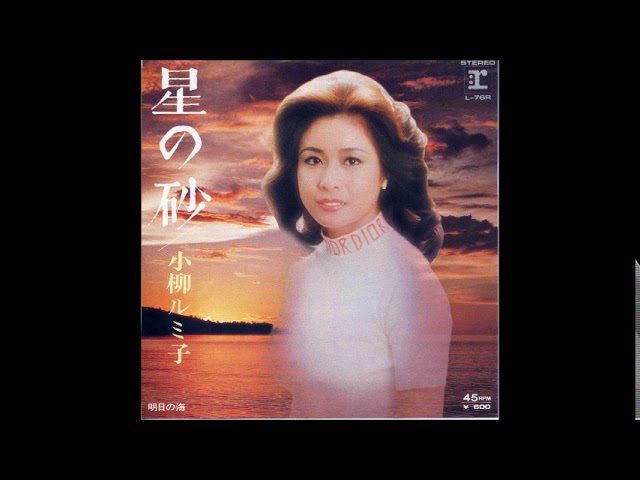
This song was reportedly turned into a record after Rumiko liked a version sung by someone else on a show where celebrities write and compose music.
Because she’s so attached to it, I think she sings it dramatically and with great care.
It conjures up the blue sea of Ishigaki Island.
I want to walk on the sand and touch the legends.
Long time no see.Koyanagi Rumiko5rank/position

Rumiko Koyanagi, who once belonged to the Takarazuka Revue, has used the vocal skills honed there to perform numerous classic songs, including this one.
She also made her acting debut in the NHK morning drama “Niji,” and has been active in various fields.
All of these diverse experiences have become her strengths, and despite being positioned as an idol, she is a true talent who showcases a robust, powerful singing voice in this song as well.

Too little, too late, Jiro.Koyanagi Rumiko6rank/position

This energizing song by Rumiko Koyanagi elevates its musicality with mature, richly textured vocal work and a jive-influenced pop style strongly tinged with enka.
It’s an accessible, mood-lifting piece that presents her as an artist familiar and appealing to women in their 50s.
Mr. Sanshiro from HakataKoyanagi Rumiko7rank/position

It originally comes from the old folk song “Hakata Katchiri-bushi.” It’s a fun song that playfully gossips about various people.
Here, “katchiri” is rendered as “batchiri, batchiri.” Ms.
Rumiko, who is like a representative of Fukuoka—a place that has produced many entertainers—sings it stylishly.