

[Men] Ranking of Easy-to-Sing Karaoke Songs [2026]

The key to choosing songs for karaoke is whether they’re easy for the singer to perform, right?
This time, we’ll introduce karaoke songs that have been popular and easy to sing for men.
We hope you find it helpful!
It’s sure to get the crowd going.
- [Teens] Easy-to-Sing Karaoke Song Rankings [2026]
- Top Karaoke Songs That Get 20-Somethings Hyped [2026]
- [For People in Their 40s] Karaoke Songs That Are Easy to Sing: 2026 Ranking
- Karaoke songs where even men with low voices can aim for high scores
- Even karaoke beginners can relax! Easy-to-sing songs for men
- [2026] Perfect for teen boys: Songs that tend to score high at karaoke
- Karaoke songs recommended for men with low voices or who are good at singing in a low register
- [For Men] This song is perfect for hyping up the crowd at karaoke!
- [For Men in Their 40s] A Collection of Songs That Score High at Karaoke [2026]
- [For People in Their 50s] Ranking of Easy-to-Sing Karaoke Songs [2026]
- [Even If You're Tone-Deaf, It's Okay!] Easy-to-Sing Karaoke Songs and Practice Tracks
- [2026] Recommended for those who find high notes difficult! Enka by male singers that you can sing in a low register
- [High School Students] Karaoke Songs That Are Easy to Sing: Ranking [2026]
[Men] Easy-to-Sing Karaoke Songs Ranking [2026] (71–80)
milk teaFukuyama Masaharu78rank/position

This is Masaharu Fukuyama’s 21st single overall, released in May 2006.
It was issued as a double A-side single together with “Utsukushiki Hana,” which was included on the CD at the same time, and it was used as the theme song for the TBS variety show “Koisuru Hanikami!” It’s a slow-tempo ballad where the beautiful acoustic guitar sound and Fukuyama’s mature vocals are exquisitely matched.
There’s nothing particularly demanding in terms of vocal technique or complexity in the melody, but when singing this at karaoke, the most important thing is how you handle the spaces between phrases—how skillfully you “sing” the rests.
Cherish each word of the lyrics, study his original performance well, and then give it a try.

I’ll walk home.Saitō Kazuyoshi79rank/position

This is the opening theme of Fuji TV’s “Ponkikkies,” which I was also watching at the time.
It’s a classic from 1994 that’s loved by both kids and adults, depicting everyday scenes with a lively tempo and a bright melody.
It’s also known as the song from Suntory’s “Zen” commercial, and it holds a kind of motivational anthem position, cheerfully portraying people commuting to work and school.
The overall vocal range is F3–A4, which is quite modest, and if you can use falsetto well, it should be easy for anyone to sing.
If you take a breath between each phrase, you should be able to make it to the end without running out of air.
It’s a refreshing song, so definitely try singing it at karaoke.

TSUNAMISazan Ōrusutāzu80rank/position

Known as a masterpiece that likens the pain of heartbreak to a tsunami, this work is a moving love song celebrated as one of Southern All Stars’ signature pieces.
It’s a gem of a ballad that expresses the sorrow of losing someone dear through a grand melody, fully showcasing Keisuke Kuwata’s exceptional songwriting and composing talent.
Released in January 2000, it topped the Oricon weekly charts and won the Japan Record Award the same year.
It was also selected as the theme song for the popular segment “Mirai Nikki III” on the TV program “U-nan no Hontoko!,” becoming a classic beloved across generations.
As a heartwarming song that offers comfort to those carrying the pain of losing someone special, it’s also highly recommended for karaoke.
[Men] Easy-to-Sing Karaoke Songs Ranking [2026] (81–90)
budKobukuro81rank/position
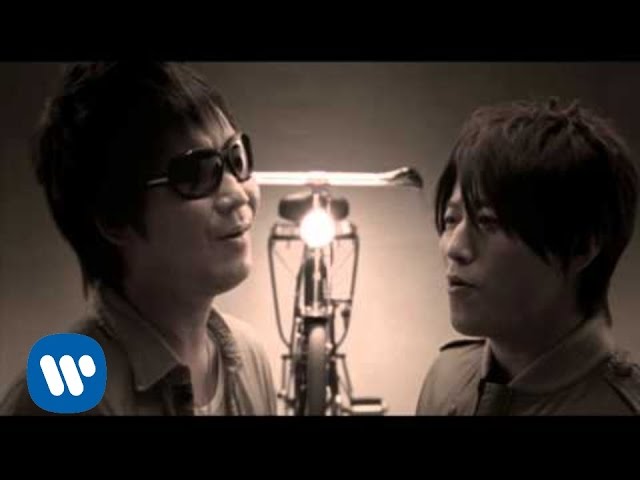
Kobukuro’s “Tsubomi” is also a real masterpiece, so I definitely recommend singing it whether you’re solo or a duo.
Since Kobukuro is a two-person act, the vocal range is fairly wide at A#2–A#4, and Kuroda’s part is quite low, so if you’re singing as a duo, taking Kuroda’s part might be a good idea! By the way, when I sang this song I had a male partner, and I left the entire melody line to him while I stuck to the harmony! The harmonies in this song are really beautiful, so if you have a partner, I’d love for you to try the harmonies too! Overall, try to sing it with a calm vibe so it doesn’t get belted or strained.
Is that okay?RADWIMPS82rank/position

One song that has earned strong support from many RADWIMPS fans is “Iindesuka?” That’s because this track holds special memories: a self-cover was released a decade later, and its music video was filmed with gathered fans.
The lyrics are also a major reason for its popularity.
Repeating the phrase in the title, the song conveys the wonder of being alive.
With its relaxed yet lively vibe, it should be easy to sing even for those who aren’t into ballads or intense tracks.

I want to hug you.Mr.Children83rank/position

It’s an eternal love song written and composed by vocalist Kazutoshi Sakurai.
It first appeared on the album “Kind of Love.” Although total sales were about 60,000 copies, it later received Gold Disc certification and continues to be loved across generations.
The overall vocal range spans D3 to A#4, expanding and building toward the latter half.
When singing, project your voice confidently without hesitation to maintain stability throughout.
Since head voice appears at the end of the chorus, keep resonance in your head so you can transition smoothly from chest voice to falsetto.
Also, the final chorus modulates upward.
Raise your energy and stay mindful so your pitch doesn’t drop!
HELLOFukuyama Masaharu84rank/position

Released in 1995, “HELLO” became a massive hit as the theme song for the Fuji TV drama “The Best Unrequited Love: WHITE LOVE STORY.” Since it’s sung by Fukuyama, the overall vocal range of the song is D#3 to F#4, which isn’t very high, so I think it’s easy to sing even for beginners or those who struggle with pitch.
However, the tempo is a bit fast, so be careful not to fall behind the rhythm.
The melody is very simple and easy to remember, so in the A and B sections, try not to rush—cut off the phrase endings and be mindful of the spaces as you sing.