

![Miles Davis Popular Songs Ranking [2026]](https://i.ytimg.com/vi_webp/zqNTltOGh5c/maxresdefault.webp)

Miles Davis, who made a name for himself as a jazz trumpeter.
Even across the sea in Japan, he seems to enjoy enduring popularity among jazz fans and critics.
The tone of his trumpet playing is distinctly different.
We’ve put together a ranking of his popular performances, so be sure to check it out!
- David Bowie's Popular Song Rankings [2026]
- John Coltrane Popular Song Ranking [2026]
- Bill Evans Popular Songs Ranking [2026]
- Quincy Jones Popular Song Rankings [2026]
- Louis Armstrong Popular Song Ranking [2026]
- Herbie Hancock Popular Songs Ranking [2026]
- Duke Ellington Popular Song Rankings [2026]
- Chet Baker Popular Song Rankings [2026]
- Dave Brubeck Popular Song Rankings [2026]
- Art Blakey & The Jazz Messengers Popular Song Ranking [2026]
- Radiohead Popular Song Rankings [2026]
- Michael Giacchino Popular Song Rankings [2026]
- Classic and hit Western pop songs from the 1970s
Miles Davis Popular Song Rankings [2026] (1–10)
So WhatMiles Davis1rank/position

Miles Davis, nicknamed “the Emperor,” was a legendary trumpeter who, unfettered by existing rules, led jazz’s possibilities into another dimension with his free-thinking approach.
His influence is immense not only among jazz aficionados but also across other fields such as rock.
The album he released in 1959, Kind of Blue, is hailed as a crowning masterpiece of modern jazz.
Its ensemble work, which advanced the approach known as “modal jazz,” secured its place in music history.
Commercially, it was an extraordinary success and is unquestionably indispensable when talking about jazz.
Its connection to BLUE GIANT is also highly significant: of the three jazz CDs the protagonist Dai Miyamoto first borrows from a friend, one is this very Kind of Blue.
In a sense, it’s one of the records that marks the beginning of BLUE GIANT, and if you haven’t listened to this album yet, you can share a feeling similar to Dai’s—so by all means, check it out.
Featured here is the famous track that opens the album, “So What.” The brilliance of the performance—delivered by some of the finest players in the jazz world—goes without saying.
Take this opportunity to savor a classic that is essential both to Miles and to the history of jazz!

Someday My Prince Will ComeMiles Davis2rank/position

This is the song “Someday My Prince Will Come,” performed by trumpet player Miles Davis.
Some people might think of the trumpet as a loud instrument, but it can also produce wonderfully romantic tones.
Pay attention to the richly atmospheric main melody, as well as the solos packed with dazzling virtuosity!

All BluesMiles Davis3rank/position

Nicknamed “The Emperor,” trumpeter Miles Davis continually revolutionized the jazz world.
His August 1959 release, the album Kind of Blue, is cherished worldwide as a monument of modal jazz.
The piece included here is a blues in 6/8 time—simple enough for jazz beginners to tackle, yet profound enough to make seasoned pros nod in admiration.
It’s also a session staple, so it’s definitely a tune worth learning.
When you play it, don’t just follow the score—let yourself sink into the distinctive sense of weightless motion created by the repeating bass line.
Cultivating an awareness of space will be your first step toward a cool, Miles-like performance!
John McLaughlinMiles Davis4rank/position

“John McLaughlin” is a track by Miles Davis, the jazz trumpeter who brought electric sounds into jazz and forged fusion.
The title comes from the name of guitarist John McLaughlin, who supported Miles’s band.
It’s included on the landmark 1970 album Bitches Brew, on which McLaughlin also appears.
Each musician’s improvisation creates a chaotic sound world, but that’s exactly what makes it innovative and cool.

Round About MidnightMiles Davis5rank/position
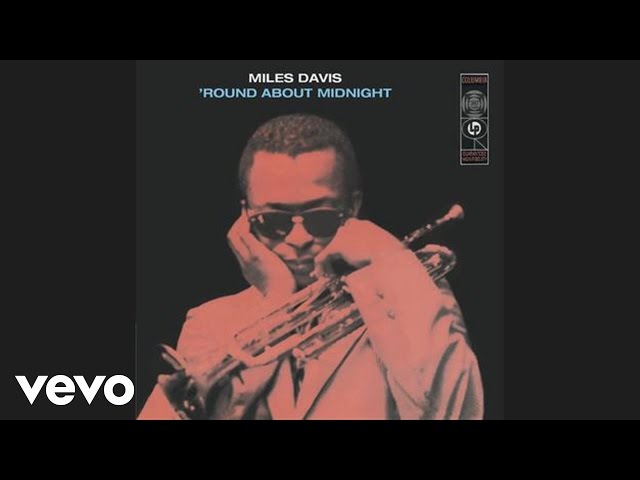
It’s no exaggeration to say that modern jazz began with him and ended with him.
Called both the “destroyer of bebop” and the “destroyer of modern jazz,” Miles’s delicate sound in this era is so lyrical that it seemed out of step with the prevailing movement of the time.
Time After TimeMiles Davis6rank/position

When we hear the term “standard number,” we tend to picture songs born before the war or in the ’50s and ’60s.
However, the piece introduced here is a gem of a standard that emerged in the 1980s.
“Time After Time,” included on American singer-songwriter Cyndi Lauper’s blockbuster 1983 album She’s So Unusual—she’s also widely known as a great admirer of Japan—is a quintessential ’80s ballad that remains beloved even now, in the 2020s.
It’s been used countless times in commercials, and even younger music fans can instantly recognize it when they hear its wistful melody.
In fact, “Time After Time” has also become a standard in the jazz world, continually covered by many artists.
A direct catalyst was none other than the emperor of jazz, Miles Davis, who recorded an instrumental version in 1984, shortly after the song’s release, and issued it as a single the following year, in 1985.
After that, it became a recurring feature in Miles’s live performances.
Of course, beyond jazz, it’s an eternal ballad that continues to be covered across genres.
Be sure to enjoy both the original version and Miles’s cover!
Blue in GreenMiles Davis7rank/position

This piece by Miles Davis gracefully sets the tone for a special night with a quiet, meditative atmosphere.
The whisper of a muted trumpet blends with the crystalline resonance of the piano, conjuring in the mind a scene like a watercolor where blues and greens softly bleed together.
Its introspective beauty elevates the space without intruding on dining or conversation.
The work appears on the 1959 August release Kind of Blue, an album renowned as a masterpiece of modern jazz.
Employing modal jazz techniques that are not bound by traditional chord progressions, this landmark recording has continued to be cherished worldwide, earning an exceptional 5× Platinum certification for a jazz album.
Brimming with charm, it adds a refined, adult mood to a calm dinner or an evening at the bar.