

Yutaka Ozaki Popular Songs Ranking [2026]

Back when he debuted, Yutaka Ozaki received overwhelming support from young people as a “spokesperson for teenagers.” Even now, long after his passing, his popularity hasn’t waned, and he still has a devoted fan base.
So this time, we’re bringing you a ranking of Yutaka Ozaki’s most popular songs.
- Karaoke Ranking of Popular Songs by Yutaka Ozaki [2026]
- Ballad Songs by Yutaka Ozaki: Popular Songs Ranking [2026]
- Yutaka Ozaki Love Songs: Popular Song Rankings [2026]
- Yutaka Ozaki’s Motivational Songs and Popular Tracks Ranking [2026]
- Kiyohiko Ozaki Popular Songs Ranking [2026]
- Easy-to-sing songs by Yutaka Ozaki. Songs you want to belt out at karaoke.
- Kazuyoshi Saito Popular Songs Ranking [2026]
- [Teens] Popular Songs Ranking by Generation [2026]
- [For People in Their 40s] Karaoke Songs That Are Easy to Sing: 2026 Ranking
- Kenji Ozawa Popular Songs Ranking [2026]
- Shigeru Matsuzaki’s Most Popular Songs Ranking [2026]
- Eikichi Yazawa Popular Songs Ranking [2026]
- Mr.Children Love Songs & Popular Songs Ranking [2026]
Yutaka Ozaki Popular Songs Ranking [2026] (31–40)
summer festivalOzaki Yutaka36rank/position

It brings back the excitement I used to feel before heading to summer festivals as a child.
It’s a song performed by the legendary musician Yutaka Ozaki, who blazed through the J-pop scene of the ’80s and ’90s.
It was included on the 1998 album “A 14-Year-Old’s Map.” The song was originally by Yosui Inoue, and this is a cover version.
Listening to it, you can feel the air of a summer night slip gently into your chest.
It’s a feeling we somehow forgot as we grew up.

Lost 1/2Ozaki Yutaka37rank/position

It’s a positive song that powerfully voices the contradictions of society and the loss of innocence over a driving band sound.
The overall vocal range is D3–G4, and according to JOYSOUND karaoke info, the key is set slightly higher at +2; if you want to sing in the original key, please press “Original Key Transfer.” When singing, the range gradually rises and the energy builds from around the pre-chorus, so be careful not to overstrain your voice.
The melody line isn’t difficult and has a lot of repetition, so once you learn the first verse, you should be able to sing the full song right away.

The City Where Love Has VanishedOzaki Yutaka38rank/position

It’s a rock tune included on the debut album “Seventeen’s Map,” released on December 1, 1983.
It’s a classic filled with cries of frustration at the contradictions and absurdities of the world and the powerlessness felt as a student, expressing inner conflict and pure desire.
The overall vocal range is D3–B4, and it features the passionate singing style typical of Ozaki.
If you push too hard, you may lose your voice even within an otherwise comfortable range.
Until you’re used to it, avoid using your throat and focus on resonating in your chest.
Even just placing your hand on your chest can help you feel the resonance and make your singing sound fuller.
Try singing with the sensation of projecting your voice strongly toward your chest.
Stained BondsOzaki Yutaka39rank/position
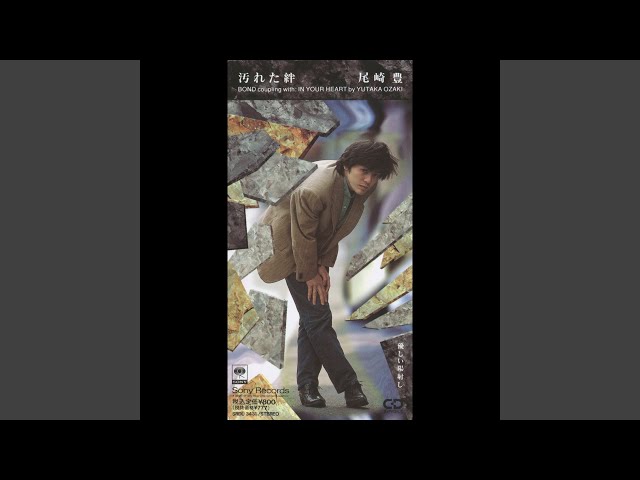
This was Yutaka Ozaki’s final single released during his lifetime, featuring his early-period arranger Akira Nishimoto returning after about four years, resulting in a bright sound that aims to revisit his roots.
While set against a backdrop of betrayal, the lyrics ultimately affirm the beautiful bonds of the past.
The structure raises the vocal range from the A verse to the B verse and then the chorus, building momentum so you can sing each section solidly.
For the chorus, it seems best to sing with a bold, confident mindset—really let it out so your voice projects well.
In the calmer parts around the three-minute mark, try placing your voice forward to avoid sounding too muffled.
Give it a try while using expressive gestures as you sing.
Distant SkyOzaki Yutaka40rank/position
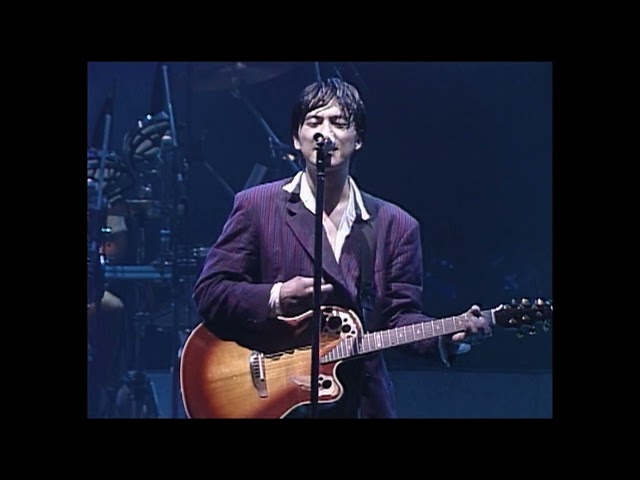
It’s striking how it’s arranged in an acoustic guitar singer-songwriter style, with the harmonica used to great effect.
It’s said that fragments of the lyrics were written during the 1986 stay in the U.S.
or during the subsequent detention, and the work blends the stifling atmosphere of that time with hope for the future.
“Tooi Sora” has relatively few lyrics, the chorus repeats phrases often, and the melody line is easy to remember.
If you sing the chorus with clear accents, it’s easier to project your voice and you’ll likely find it comfortable to sing.
Also, it might be good to sing it powerfully while moving with the groove.