

Richard Strauss Popular Songs Ranking [2026]

Richard Strauss, a composer who represents the late German Romantic era.
Among his major works is Also sprach Zarathustra, and he left behind numerous pieces including choral works, symphonies, and operas.
From among his many compositions, we will introduce his most popular pieces in a ranking format.
This ranking is a must-see not only for beginners to opera and classical music, but also for those who are already well acquainted with them.
- John Philip Sousa Popular Song Rankings [2026]
- Giacomo Puccini Popular Songs Ranking [2026]
- Fritz Kreisler Popular Song Ranking [2026]
- Hans Zimmer Popular Songs Ranking [2026]
- John Williams Popular Song Rankings [2026]
- Kraftwerk Popular Song Ranking [2026]
- Ranking of FRANK ZAPPA’s Popular Songs [2026]
- Sigur Rós Popular Songs Ranking [2026]
- Astor Piazzolla Popular Song Rankings [2026]
- Barbra Streisand Popular Songs Ranking [2026]
- Leroy Anderson Popular Song Rankings [2026]
- Dream Theater Popular Song Ranking [2026]
- Frank Sinatra Popular Songs Ranking [2026]
Richard Strauss Popular Songs Ranking [2026] (1–10)
Symphonic Poem “Don Quixote”Richard Strauss8rank/position

It is Don Quixote, a tone poem by Richard Strauss.
Composed by Richard Strauss—born in 1864 and a leading figure of the German late Romantic period—the work bears the subtitle “Fantastic Variations on a Theme of Knightly Character for Large Orchestra.” It is also famous for its prominent parts for solo cello and solo viola.
Suite for 13 Wind InstrumentsRihyarto Shutorausu9rank/position

Composed when he was 20, this work is an ambitious piece by Richard Strauss that follows the classical suite form while incorporating elements of Romanticism.
Scored for 13 wind instruments, it consists of four movements.
It showcases Strauss’s mastery of instrumental writing, meticulous motivic development, and skillful counterpoint throughout, and is highly regarded as a substantial achievement by the young composer.
It premiered in Munich in October 1884, conducted by Strauss himself.
Highly recommended for those interested in classical music or wishing to savor the appeal of wind instruments.
ElektraRihyarto Shutorausu10rank/position

From the master of the late German Romantic era, Richard Strauss, I’d like to introduce a work from his masterpiece operas that draws on Greek tragedy as its motif.
This piece is known for its complex musical structure, yet it has been highly acclaimed abroad and is popular among classical music enthusiasts.
Scored for a large orchestra in a single act, it uses dissonance and polytonality to portray the characters’ psychology.
The themes are revenge and madness.
The protagonist’s intense emotions—driven by the murder of her father—are reflected in the music, so you may enjoy it even more by listening while imagining her inner turmoil.
Premiered in Dresden in January 1909, the work initially provoked mixed reactions, but today it is performed worldwide as one of Strauss’s signature masterpieces.
Richard Strauss Popular Songs Ranking [2026] (11–20)
SalomeRihyarto Shutorausu11rank/position

This piece is an opera that premiered in 1905, with a story based on an episode from the New Testament.
It is characterized by sensual and decadent content, which stirred controversy at the time of its premiere.
The role of the heroine, Salome, is known as a challenging part that combines delicacy and madness.
Its rich orchestration and profound psychological portrayal are captivating, and the “Dance of the Seven Veils” is especially famous.
It has been performed in opera houses around the world and continues to fascinate many.
Its profound themes depicting human desire and madness remain undimmed in the modern era and are sure to leave a strong impression on viewers.
SerenadeRihyarto Shutorausu12rank/position

Let me introduce a sweet serenade by a late-Romantic master of whom Germany is proud.
Composed in Munich in December 1886, as the winter cold set in, this piece sets a poem by Schack—so cherished by Strauss—to music infused with the stirrings of love.
Over a sparkling accompaniment, a melody that opens with an octave leap sings of love’s joy.
Riding a 6/8 meter, you can almost see it beckoning you lightly, step by step, into a moonlit garden.
It’s a perfect choice for anyone seeking a romantic evening.
It’s also lovely to sing with piano accompaniment.
Won’t you immerse yourself in Strauss’s world?
Thus Spoke ZarathustraRihyarto Shutorausu13rank/position
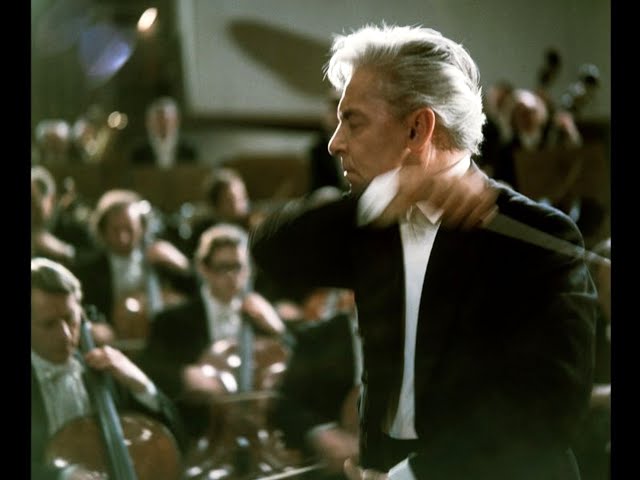
In the Tanto commercial titled “Carrying Every Way of Life,” a grand and sacred-sounding piece of music is used.
Many viewers might have felt, “I think I’ve heard this before.” In fact, the music in this ad is a remixed version of the introduction to Richard Strauss’s symphonic poem Also sprach Zarathustra.
The title alone might not ring a bell, but mentioning that it was used in a Cup Noodles commercial might jog your memory.
Try comparing it with the original.

Don JuanRihyarto Shutorausu14rank/position

Here is a piece by Richard Strauss, a master of the symphonic poem and arguably one of the composers who helped establish the genre.
Composed in 1888, this symphonic poem takes as its subject the legendary Spanish figure Don Juan.
It portrays the protagonist’s psyche and fate—his relentless pursuit of ideal love, his inability to find fulfillment, and his ultimate downfall—through rich orchestration.
From the passionate ascending figure in the strings at the opening, to the beautiful woodwind melodies, and the powerful horn themes, its diverse colors captivate the listener.
It is recommended not only for those interested in classical music, but also for anyone who enjoys music with a dramatic, narrative quality.