

![Toshihiko Tahara’s Most Popular Songs Ranking [2026]](https://i.ytimg.com/vi_webp/585XYrAKzlQ/maxresdefault.webp)

It has been over 35 years since Toshihiko Tahara debuted as a singer and actor.
Over those many years, he has produced numerous classic songs and is supported by a wide range of age groups.
Among his many tracks, we will introduce the most popular songs in a ranking format.
Find your favorite song.
- Hiroshi Itsuki Popular Songs Ranking [2026]
- Most Popular Songs Among Men Ranking [2026]
- Yujiro Ishihara Popular Songs Ranking [2026]
- Takao Horiuchi Popular Song Ranking [2026]
- Tomohisa Yamashita’s Most Popular Songs Ranking [2026]
- Ranking of Popular Japanese Music and J-Pop Artists Among High School Students [2026]
- Toshinobu Kubota Ballad Songs: Popular Songs Ranking [2026]
- Popular Dance Songs Ranking [2026]
- A heart-wrenching story that tightens the chest! A Showa-era unrequited love song
- Teruhiko Saigō’s Most Popular Songs Ranking [2026]
- Masahiko Kondo’s Most Popular Songs Ranking [2026]
- Mitsuhiro Mihashi Popular Song Rankings [2026]
- Ichiro Toba’s Most Popular Songs Ranking [2026]
Toshihiko Tahara’s Most Popular Songs Ranking [2026] (1–10)
Hold Me TonightTahara Toshihiko1rank/position

A melody that embraces the ache of love and a gentle message that resonates with the heart.
Released by Toshihiko Tahara in April 1988, this single was chosen as the theme song for the Fuji TV drama “Kyōshi Binbin Monogatari” and became a hit, reaching No.
1 on the music show “The Best Ten.” Consistently carrying the sentiment of “let’s express our feelings just as they are,” the song charms with its tender consideration for a lover and its heart-fluttering storyline.
Its lyrics, which emphasize caring for the other person and the importance of honestly conveying one’s feelings, continue to move many hearts even today.
It’s also a longtime karaoke favorite, and with a relatively low key and narrow vocal range, it’s quite easy to sing even for those who struggle with high notes.
Startled and GoodTahara Toshihiko2rank/position

Toshihiko Tahara, who gained attention on “3-nen B-gumi Kinpachi-sensei” and helped lead the 1980s idol boom as part of the “Tanokin Trio.” Following his debut song, this track also reached No.
1 on the Oricon charts, and its charm lies in a brisk, pop sound infused with a jazz flavor.
Released in September 1980 as his second single, it was also well known as the CM song for Glico’s Almond Chocolate, in which he co-starred with Seiko Matsuda.
This song, which earned him the Best New Artist award at the 22nd Japan Record Awards, features a dazzling brass arrangement that is sure to lift your spirits just by listening.
Sing it at karaoke with friends who shared those youthful days, and if you mimic the choreography as you go, the whole place is bound to be filled with a happy vibe!
Sentimental and DearTahara Toshihiko3rank/position

Toshihiko Tahara was one of the quintessential idols of the 1980s.
His popularity surged not only through his own work but also thanks to the “Tanokin Trio,” the unit he formed with Masahiko Kondo and Yoshio Nomura after co-starring on the TV drama Mr.
Kinpachi in Class 3B.
One of Tahara’s signature songs is his debut single, “Aishu de Ito.” The original is Leif Garrett’s “New York City Nights,” noted for lyrics that capture the bittersweet sorrow and frustration felt at the end of a romance.
Tahara skillfully conveys that world in the Japanese version as well, infusing the lyrics with a poignant sense of melancholy.
The song’s unexpectedly mature aura—unusual for an idol—revealed a new facet of him when he was still in his teens.
This youthful ballad about aching love remains as radiant as ever, untouched by time.
Sorry, tears.Tahara Toshihiko4rank/position

This is the 35th single by singer Toshihiko Tahara, who, along with Yoshio Nomura and Masahiko Kondo, dominated the idol scene of the 1980s as a member of the “Tanokin Trio.” The song was used as the theme for the TV drama “Kyoshi Binbin Monogatari II,” in which he starred and which became a major hit.
The opening, driven by a passionate Latin-style beat, really gets you pumped.
The melody has dramatic rises and falls, but those in their 40s and 50s—the generation that grew up with it—will likely find it comfortable to sing.
It’s a highly entertaining karaoke song that we hope you’ll perform while recalling the time you listened to it in real time.

The rain is screaming.Tahara Toshihiko5rank/position

Toshihiko Tahara, who debuted with “Aishu de Ito” in 1980, took the nation by storm as a male idol.
Riding the momentum of late-’80s hits like “Dakishimete TONIGHT” and “Gomen yo Namida,” he released “Ame ga Sakenderu” in 1992, a Japanese cover of Mr.
Zhivago’s “Tell by Your Eyes.” It became a classic that matched the mood of the drama it was tied to, selling over 200,000 copies.

Something like… Bara Bara for youTahara Toshihiko6rank/position

Toshi-chan, aka Toshihiko Tahara, back when he was still a bit baby-faced, and his song “Kimi ni Barabara…
To Iu Kanji.” I remember the choreography and turn at the start of the song didn’t feel completely locked in yet, and from the next single, “Harajuku Kiss,” there started to be a lot more of that signature ‘THE Tahara’ choreography.
Christmas without snowTahara Toshihiko7rank/position
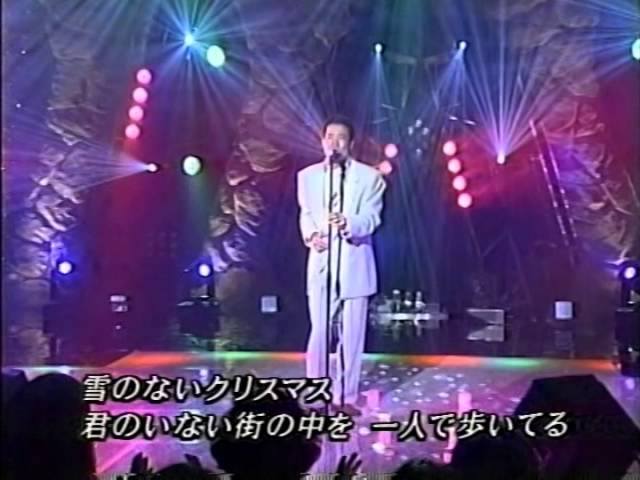
A ballad song marked by a distinctly Christmassy sound.
Released in November 1994 as a single by Toshihiko Tahara, it was also used as the ending theme for Fuji TV’s “Ohayō! Nice Day.” The lyrics intertwine the emptiness after a breakup with a budding sense of hope.
The emotional depiction, which contrasts with the light, brisk rhythm, vividly reflects the unique sentiment of ’90s J-pop.
Its softly wistful melody makes you forget the winter chill.
Close your eyes, and you can picture yourself walking through a snowy night city—the song’s storytelling will linger deeply in listeners’ hearts.
Under the cold winter sky, hearing that soul-soothing melody might make the season’s days feel just a little warmer.