

Cool songs from the Showa era. Masterpieces from Showa that shine with sensuality, passion, and rugged charm.

The Showa era gave birth to a wide range of timeless hits.
With the global city pop boom and more, classic songs from the Showa era continue to attract attention today.
This time, we’ve handpicked especially cool tracks from among those Showa classics!
From the intense coolness of rock to the smooth coolness of city pop, we’ve selected standout songs from a variety of angles.
We’ve highlighted both male and female artists, so feel free to use this as a go-to list for karaoke as well!
- A collection of iconic, cool Showa-era kayōkyoku classics sung by male vocalists
- [Revisited] A roundup of popular and classic Showa-era songs that are trending now [2026]
- Thrilling to Cool Showa-Era Tunes! Classic Songs from Female Singers and Artists of the Showa Period
- Heart-touching, tear-jerking masterpieces from the Showa era
- [Songs from the Showa Era] Introducing classic tracks that are easy to sing at karaoke.
- Showa-era nostalgic songs: Popular ranking
- Showa-era kayōkyoku: hit songs by male singers, classic masterpieces of Japanese popular music.
- [Classic Showa Kayō Hits] The captivating Showa-era pop songs beloved even by younger generations
- [Nostalgic Hits] Big Hits with the Showa Generation! Classic and Popular J-Pop Songs Sung by Female Vocalists
- A collection of cool songs that sound great when sung by women, originally male songs
- A Showa-era duet song. A timeless karaoke/snack-bar classic!
- Revival hits driven by social media! Classic Showa-era songs popular with Gen Z
- Showa-era classic songs that brightened the 1990s
Cool songs from the Showa era: Classic hits from Showa where sensuality, passion, and rugged charm shine (21–30)
As time goes bysawada kenji

Kenji Sawada, an idol who represents the Showa era.
He’s an artist for whom the word “charisma” fits perfectly.
Among his many famous songs, the one I especially recommend is “As Time Goes By.” It’s a track that exudes Showa-era allure and conveys a passionate, romantic feel, yet it has a narrow vocal range and the pitch is easy to catch, so even women in their 50s who struggle with pitch should find it easy to sing.
Since the original key may be hard to project in, make sure to figure out your own key before you sing.

Tears aren’t just for show.Nakamori Akina
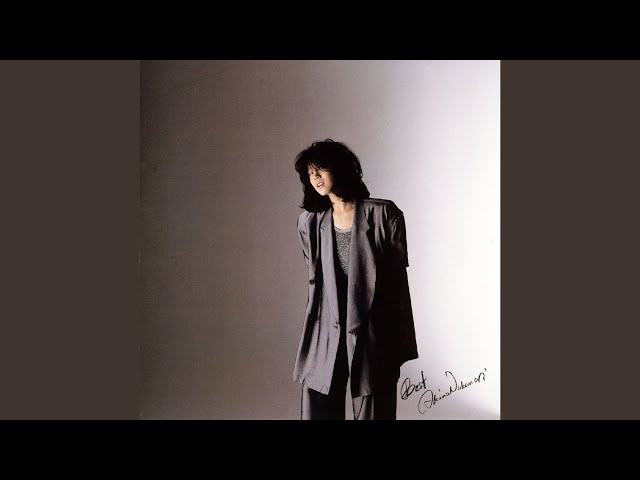
Akina Nakamori debuted with “Shojo A” at 17.
Even allowing for the generational gap that makes it hard to compare a 17-year-old idol then with one now, her presence was exceptional.
The song considered a masterpiece that Yosui Inoue, the artist, poured his heart into for Nakamori is “Kazarijanai no yo Namida wa,” released in 1984.
This track arguably cemented her position as a “cool beauty idol,” the rightful successor to the lineage of Momoe Yamaguchi.
The powerful female image Nakamori projected—declaring that “a woman’s tears are not mere decoration” and overwhelming even men—reportedly grew her fanbase among women as well as men.
And that seemingly nonchalant gesture she makes in the intro is pitch-perfect, isn’t it?
AGAINHOUND DOG

LOVE is the album released in 1986 by HOUND DOG, led by Yasuhiko Otomo, whose powerful rock vocals are undeniably cool.
It came out after their 1985 classic ff and showcases a band sound with even greater stability and appeal.
Among the tracks, AGAIN—the eighth song—is a rock ballad that sings of a man’s lingering regrets and sentimentality.
It’s highly recommended for its prominent electric guitar tones and Otomo’s deeply resonant vocals, both of which you can fully savor.

A street corner where even lovers get wetNakamura Masatoshi

These days, Masatoshi Nakamura thrills us with his wonderfully understated, seasoned performances, but when he was younger he was brimming with hot-blooded energy.
He might have been like today’s Shuzo Matsuoka—a fiery presence.
Above all, his passionate performance in “Prime Minister of Yūhigaoka” left a strong impression! He was a hero of his time and truly cool.
Among the songs he put real effort into as a singer, his signature hit is “Koibito mo Nureru Machikado” (“A Street Corner Where Even Lovers Get Wet”).
The lyrics and music were by Keisuke Kuwata of Southern All Stars, and the lyrics—very Kuwata-like—expertly portray the idea that “any man can lose his way in love and suffer for it.” It’s a song you’ll want to listen to while reminiscing about the Showa era.
Shot In The DarkBOWWOW

A track from VOW WOW’s third album, “III,” by a Japanese HR/HM band that was active not only in Japan but also globally—especially in the UK.
It was released in 1986.
This was a time when HM/HR was in the spotlight alongside the LA metal boom, but bands like VOW WOW, where keyboards and guitar duel on equal footing, were very rare.
In the featured song “Shot in the Dark,” a thrilling performance unfolds, starting with a high-speed keyboard arpeggio intro.
Another highlight is Genki Hitomi’s powerfully un-Japanese vocal style!

Solid SliderYamashita Tatsuro

When it comes to artists who represent Japanese city pop that’s drawing worldwide attention, Tatsuro Yamashita is indispensable.
“SOLID SLIDER” is a track featured at the end of his 1977 masterpiece “SPACY.” The drum pattern, which slips the accent forward from where it should land on the fourth beat, is striking and meshes perfectly with the gritty, buzzing bass line.
The electric guitar solo in the interlude also hits all the right spots—an outstanding performance.
Forbidden Rouge MagicImagawa Kiyoshiro + Sakamoto Ryuichi

A collaboration song by Kiyoshiro Imawano and Ryuichi Sakamoto, released in 1982.
Although it was produced as Shiseido’s spring campaign song, it went beyond a simple commercial track to become a captivating work in its own right.
The lyrics, which stress the importance of living freely without worrying about others’ eyes, resonated deeply with the youth of the time.
In the promotional video, the striking image of the two racing through the city at night and scattering bundles of cash stands out.
During a TV performance, the scene where Imawano kisses Sakamoto became a major talking point and brought a fresh breeze to the music scene.